Designer: Tom Bendelow (1901, 9 holes), Unknown (1905, 9 additional holes), Stephen Kay (1995, Redesign)
Location: Woodhaven, New York
History: Built in Queens’ Forest Park, the first golf course here was a 9-hole design from Tom Bendelow in 1901. Due to its popularity, 9 additional holes were added in 1905. The course underwent numerous changes throughout the years with a remodeling in the 1940s after the construction of the Jackie Robinson Highway and a significant redesign from Stephen Kay in 1995.
Conditions: 5/10, Similar to other New York City munis, Forest Park suffers from lackluster conditioning with slow greens, torn up teeboxes, and soggy, spotty fairways.
Value: 5/10, A round in peak season will cost you about $65 but there are plenty of discounts depending on the season, time, and age of the golfer.
Scorecard:
Tee Par Yardage Rating Slope
Blue 70 6053 68.4 117
White 70 5635 66.5 112
Red 70 5300 68.9 115
Hole Descriptions: Although New York is objectively the best golf state, I sympathize with New York City golfers who have to travel well over an hour to play anywhere worth playing. Many of these New Yorkers don’t have a car either, restricting their options to the 13 municipal courses in the five boroughs. When I lived in Brooklyn for a year, the closest course to me was Forest Park and I will admit I played the course several times during this time due to its proximity.
True to its name, Forest Park is a parkland design cut through the forests straddling the Brooklyn-Queens border. The course is relatively short and easy and features a quirky and tight outward 9 followed by a repetitive, more boring back side. The best features of the course are the land movement and greens, which while slow, are often interesting and contain classic mounds and plateaus. The design itself is average, but unfortunately Forest Park falls into the pitfalls of many other NYC munis with a tired overall feel, poor conditioning, and glacial pace of play. I’ve seen some terrible golfers and golf etiquette here and several times I’ve been held up by 7-somes (!) as a single. For New Yorkers on a budget or with limited transportation options, Forest Park serves its purpose, but this is not somewhere I’d recommend playing to anyone else.
Forest Park opens with one of its better holes in the 380 yard par 4 1st. Playing straight and slightly downhill, this hole features a straightforward teeshot to a generous fairway containing a speed slot. This approach plays back uphill towards a back-to-front sloped green containing several tiers. There are only seven bunkers on the course and one can be found just long left of the green here.

The 2nd hole runs back the opposite direction and parallel to the 1st as a 340 yard par 4. Accuracy is more important than length here, as thick forest lines the left side of a rather tight fairway that ends around 275 yards. This pedestal green sits well above the end of the fairway and is on the flatter side. After a somewhat lengthy uphill walk past the clubhouse, you reach the par 3 3rd. Officially 172 yards on the scorecard, I have never seen this hole play this long as the back teebox has always been closed or under construction. This is a level one-shotter with a circular green containing a central mound.
At 475 yards, the 4th hole is the first of three relatively short and easy par fives at Forest Park. Similarly to the 3rd, the teebox has been moved up every time I’ve played here, making it essentially a long par 4. This is an interesting hole with a forced carry on the teeshot to a fairway that plateaus and then ends at around 285 yards with a dip into a valley. Thick trees line either side the entire way and longer hitters will likely end up towards the end of this fairway in a patch of rough. The approach then runs straight uphill towards a back-to-front sloped green.
Forest Park is an easy course, but the 5th is an exception as a 412 yard par 4. This deserving number 1 handicap is a very narrow 90 degree dogleg right that turns to the right at only about 210 yards. It’s tough to cut the corner here, as tall, thick trees run down either side the entire way and the fairway is very tight. With long iron or wood in hand, this approach plays downhill through a tight corridor of trees to a tiny green that slopes hard back left-to-front right. Pars are well-earned here.
The 6th hole is the shortest par 3 on the course at 135 yards and has played even shorter from a temporary mat teebox each time I’ve played. This one-shotter feels somewhat like an afterthought and runs slightly uphill to a small, back-to-front sloped green. The 7th hole is one of the more memorable holes here as a risk/reward 325 yard par 4. This is somewhat of an awkward dogleg left with a significant 185 yard forced carry over a hazard to a tree-lined fairway that turns left immediately. The green is only about 260 yards from the teebox, and aggressive plays over the left trees can get close to it. This putting surface is elevated and quite small.

The 8th is my favorite hole at Forest Park as a strong 395 yard straightaway par 4. Playing downhill from an elevated teebox, your teeshot must play through a tight chute of trees to a narrow fairway lined by trees down the left and OB right. There is a rare bunker down the right at about 300 yards, but this is only in play for the longest hitters. This green is fascinating and features a large right hump you must navigate.
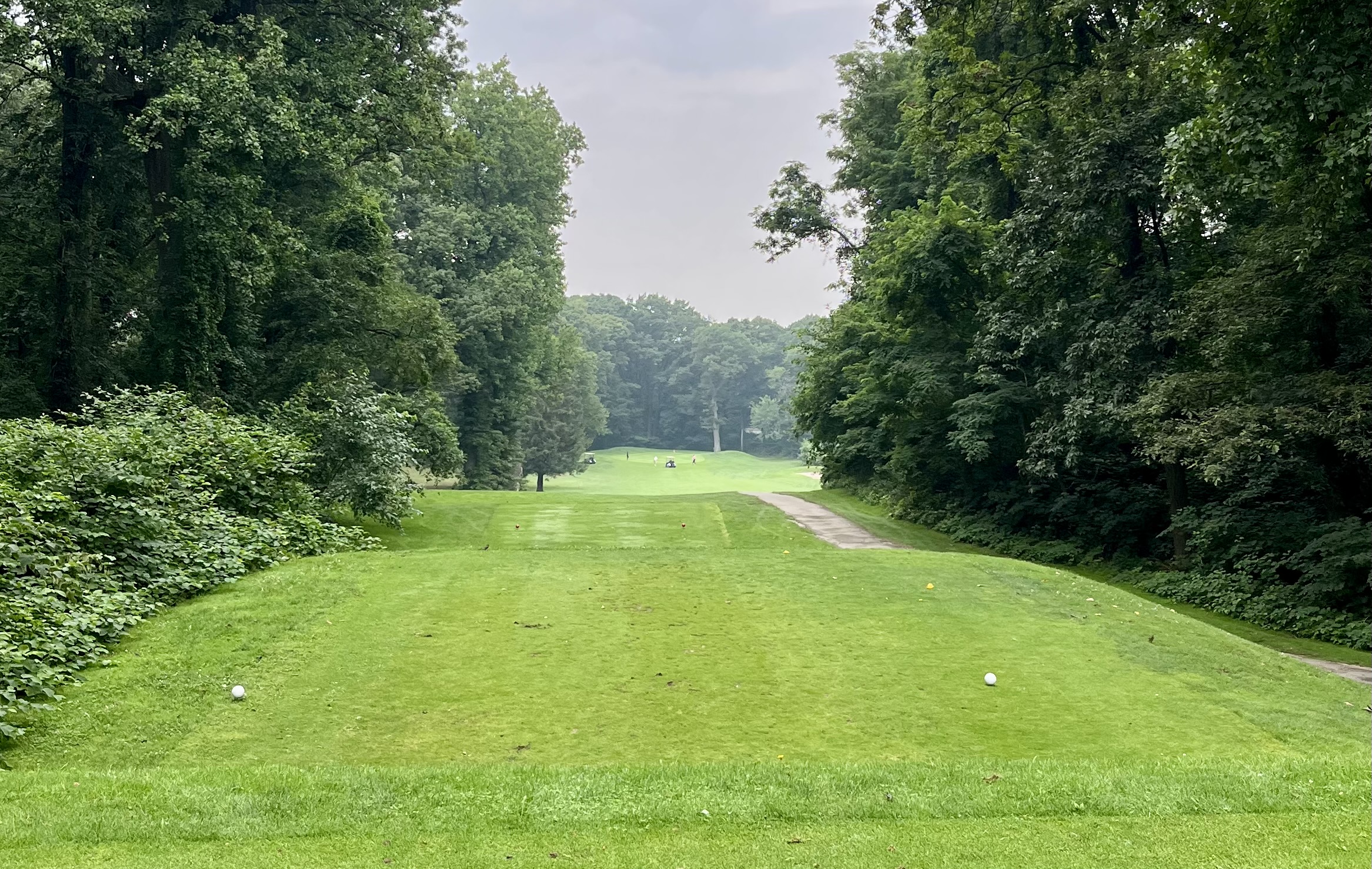
The front 9 closes with an 175 yard par 3 running slightly downhill to a circular back-to-front sloped green.
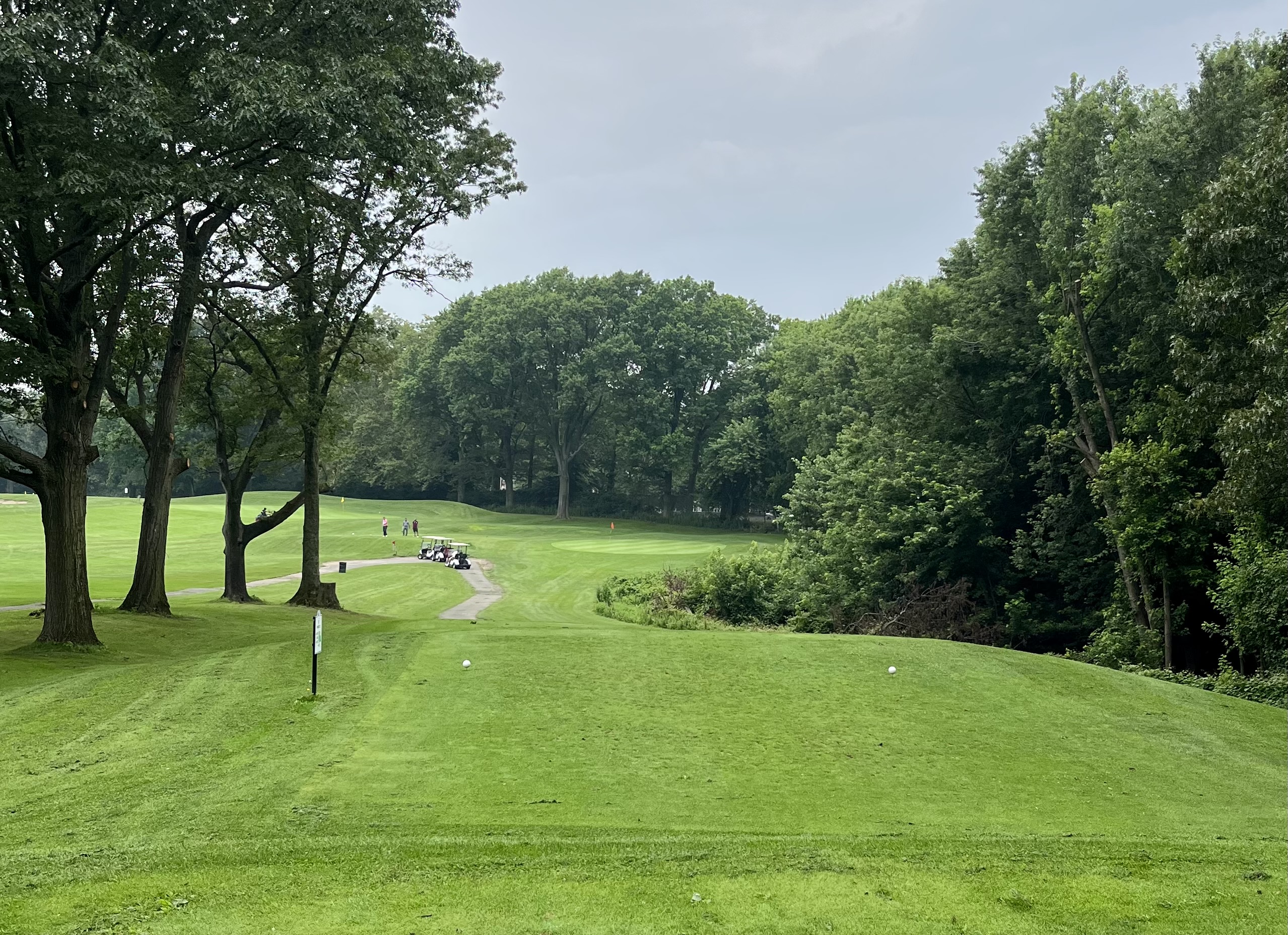
Whereas the front 9 is short, tight, and quirky, the back 9 opens up a bit and is longer, containing a number of holes running parallel to each other in somewhat boring fashion. This stretch begins with the 10th, a 409 yard par 4 and one of the tougher holes on the course. A slight dogleg right, this hole presents quite narrow with tall trees down either side to navigate on your teeshot. It remains narrow on an uphill approach to an elevated, back-to-front sloped green. Like the 5th, par is an solid score here.

The 11th hole turns back the opposite direction as a 510 yard par 5. From an elevated teebox, this tree-lined par 5 features a more generous fairway, allowing you to be aggressive and give yourself a chance to reach in two. With about 130 yards remaining, this fairway ends with a valley of rough and no more trees down either side. This putting surface is one of the most interesting on the course and contains two distinct plateaus with a higher one on the left and lower portion on the right.
At 435 yards, the 12th hole is the longest par 4 on the course and turns back the opposite direction. Like the 10th, this hole runs uphill the entire way with trees lining a generous fairway. For a hole of this length, the green is on the smaller side and runs back-to-front with a higher back left plateau. The 13th is another tough hole as a 210 yard par 3 running uphill. While this green is large and fairly flat, golfers will likely be hitting long iron or wood here.
The 14th hole is the last of the parallel holes and plays downhill from an elevated teebox as a 400 yard par 4. This is probably the best hole on the back 9 and features a tough teeshot to a narrow fairway lined by thick trees down the left the entire way. You might face an uneven lie on this approach to a flatter green lined by a pond left.
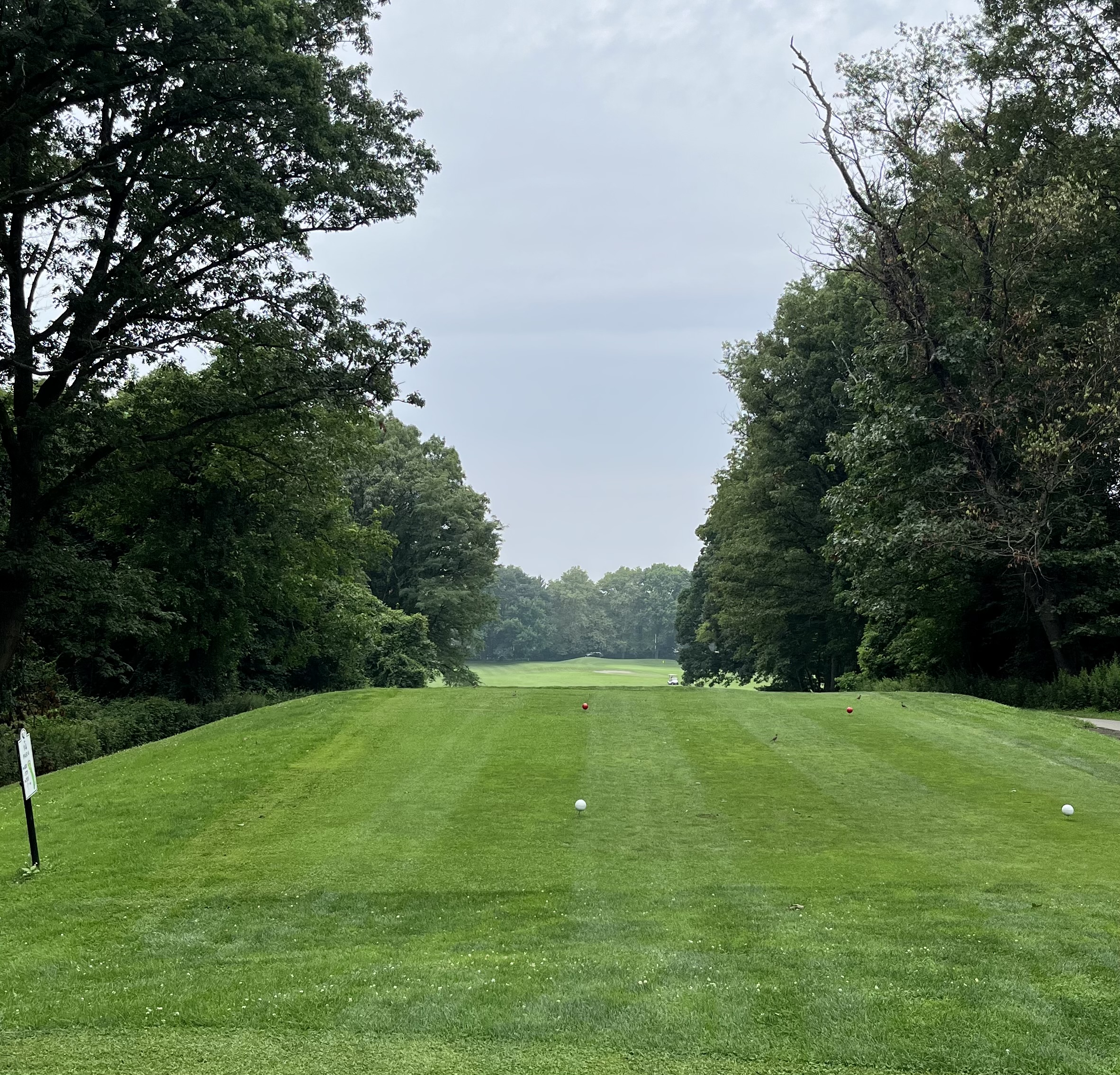
With your back at the busy Jackie Robinson Highway, the 15th is the final par 3 on the course at 145 yards. This is one of the more memorable holes playing over a pond the entire way to a narrow, back-to-front sloped, diagonal green surrounded by rough.
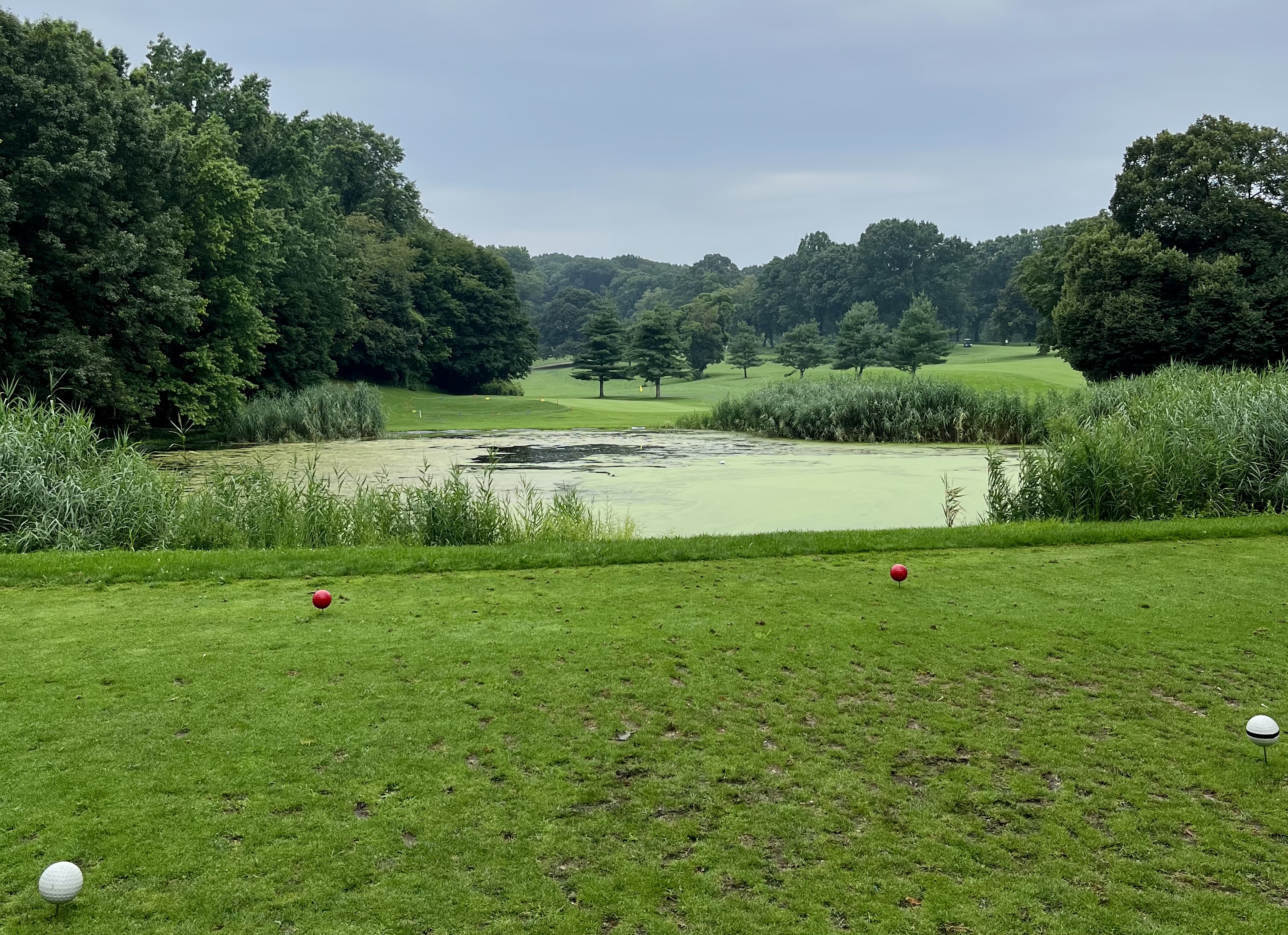
After a long and somewhat awkward walk past four other holes, the 16th sits along the edge of the property as a 310 yard par 4. This straightforward reachable par 4 features a generous fairway lined by OB to the far right and a pesky tall tree down the left around 230 yards. This green is pretty subtle and lined by rough and a slope to the left. The 17th hole turns back the opposite direction as a 350 yard par 4. Playing like a dogleg left on the teeshot, this hole is very narrow with tall trees down either side for its entire length. A flat putting surface sits just beyond the trees and is defended by a slope of rough to the right.
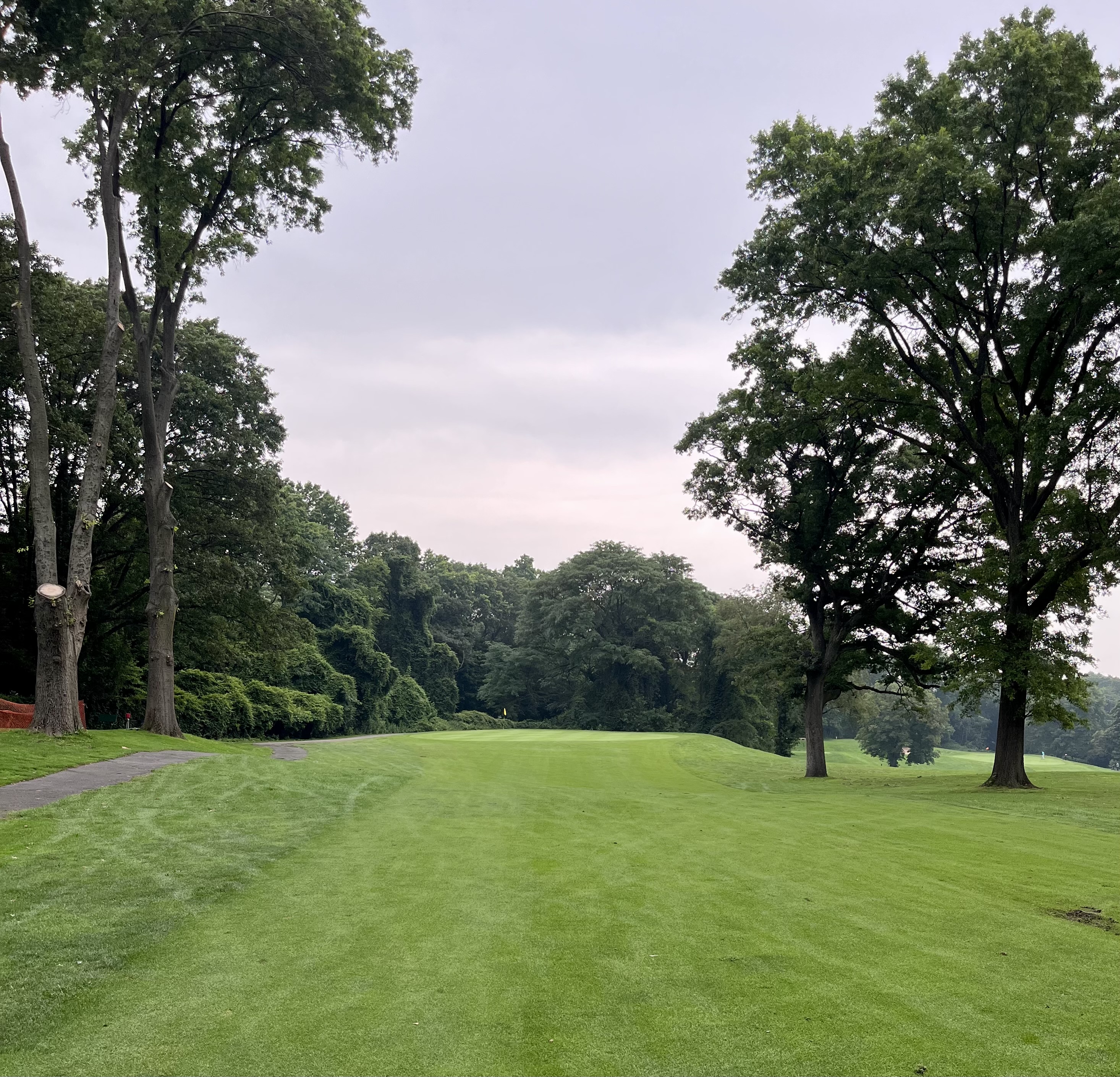
Forest Park closes with a chance for a final birdie with a short 475 yard par 5. Sandwiched between the 1st and 17th, this hole features an uphill teeshot to a tight, tree-lined fairway with significant fall-offs down the left for those who miss the fairway. Ideal teeshots should leave a blind, downhill approach into a large green that slopes mostly left-to-right towards a large swale.
General Comments: Practice facilities are slim at Forest Park with a small putting green near a simple clubhouse and no range. While the course is hilly, it is a fairly simple walk. Like all NYC munis, pace of play can be absolutely brutal here.
Verdict: An average design at best, Forest Park falls into many of the same pitfalls as other NYC munis with poor conditioning, brutal pace of play, and an overall tired feel. It serves its purpose for New Yorkers on a budget, those learning the game, or those with limited transportation, but isn’t a course I’d recommend otherwise.
 Worldgolfer's Golf Course Reviews
Great and accurate review! I learned to play golf on this course way back in the 1970s shagging balls for pro Gene Tomaselli. Mr. Tomaselli should be given golf sainthood for striving as he did within the confines of the NYC Parks Department. The course, as it is today, is the work of John Van Kleek, not Tom Bendelow. Van Kleek was partnered with Wayne Stiles (Taconic etc.) but left to work for Robert Moses. Although the course was “redesigned” by Stephen Kay, the redesign work was minimal, consisting of partial remembering of the holes (Number 4 was originally Number 1 etc.). And the building of new tees that slightly lengthened several holes. However, the course still retains all of Van Kleek’s design elements including the two tiered greens,
LikeLiked by 1 person