Designer: Charles Banks (1926), Stephen Kay (2023, Renovation)
Location: West Orange, New Jersey
History: Originally built in 1926 by Charles Banks, Francis Byrne was part of the adjacent Essex County Country Club and was the West Course at the 36-hole facility. The course operated as private for many years, but the Club began offering the West Course to the public due to financial difficulties at some point. In the 1980s, it was officially sold to Essex County and renamed Francis A. Byrne. In 2023, Francis Byrne underwent an extensive renovation under Stephen Kay.
Conditions: 7/10, After the renovation, Francis Byrne has improved conditions with firm fairways and smoother, faster greens. The fescue they planted also looks gorgeous and is very penal. Let’s hope this lasts!
Value: 9/10, Like other Essex County courses, Francis Byrne offers strong value. Passholders pay $42 to walk weekdays while the general public pays $56. There are additional discounts for twilight, seniors, juniors, and off-season.
Scorecard:
Tee Par Yardage Rating Slope
Blue 70 6971 74.1 140
Blue/White 70 6616 72.8 136
White 70 6415 71.6 136
White/Gold 70 5924 68.7 133
Gold 70 5451 66.7 125
Red 70 4829 68.7 125
Hole Descriptions: While New York City’s public golf scene is generally viewed poorly, nearby Essex County in New Jersey has one of the strongest and most underrated municipal collections in America. Newly public Rock Spring (Raynor) has gotten a lot of attention lately, but munis Francis Byrne (Banks), Hendricks Field (Banks), and Weequahic (George Low) provide affordable classic architecture and are at least close to Rock Spring in terms of quality. While I enjoy all three munis, Francis Byrne is the best in my opinion and is one of the better public courses in New Jersey. This is especially true following Stephen Kay’s recent renovation, which improved turf conditions, enhanced templates, and cleaned up some of the more awkward holes here. This is a must play for New York City public golfers and packs a strong challenge with a fierce 74.1/140 rating from the Blue Tees and numerous hilly, long par fours.
Although they often start you on the 10th hole, Francis Byrne officially begins with a 418 yard slight dogleg right par 4 that’s meant to be a “Road” hole. This hole was apparently a par 5 originally with a teebox well-behind the current clubhouse. Today, the teebox is set up at an awkward angle to a tight, right-to-left sloping fairway defended by mounds down the left and a bunker on the right between 230 and 275 yards. This approach plays to an elevated, severely back-to-front sloped green defended by a massive pot bunker short.

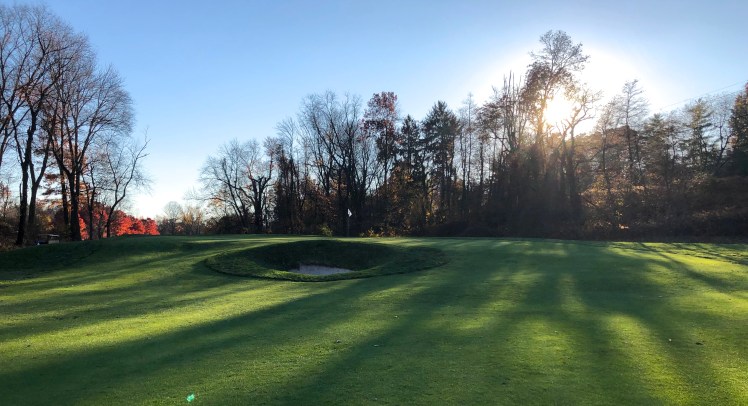
The 2nd hole is one of the best and most memorable on the course as a lengthy 209 yard par 3. From an elevated teebox, this hole features OB right the entire way and a classic Biarritz green defended by skinny bunkers on either side. Previously, the first half of the green was fairway but Kay’s renovation greatly enhanced this hole and it is now a full-fledged Biarritz worthy of any Raynor course.
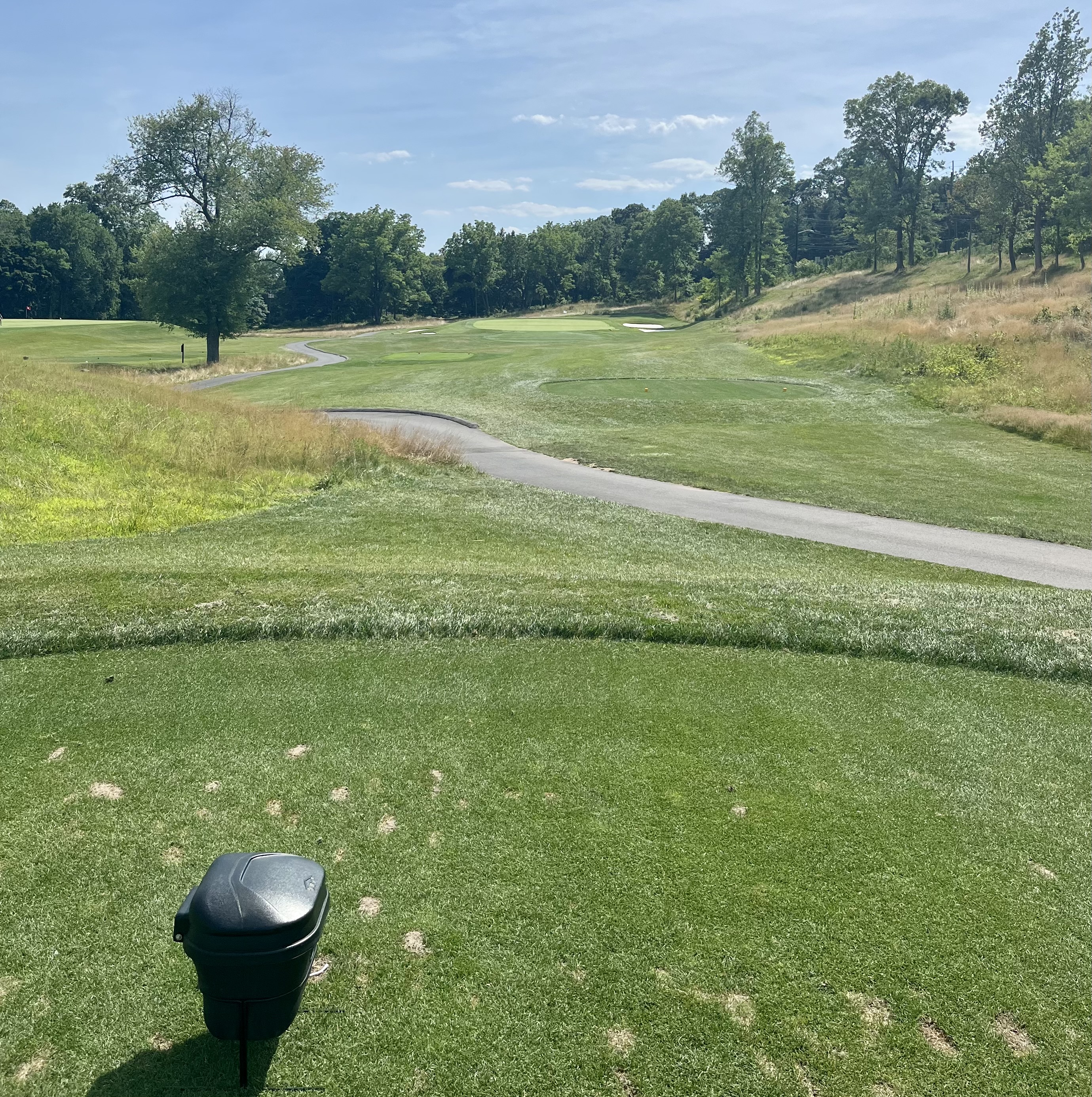

The 3rd is another nice hole playing straightaway from an elevated teebox at 398 yards. While this fairway is generous, trees line either side and your teeshot must carry a small creek to reach a fairway 170 yards away. A new crossbunker down the right around 245 yards improves visuals and strategy here. This approach then runs back uphill at least half a club to a Leven-like, back-to-front sloped green defended by a bunker left.
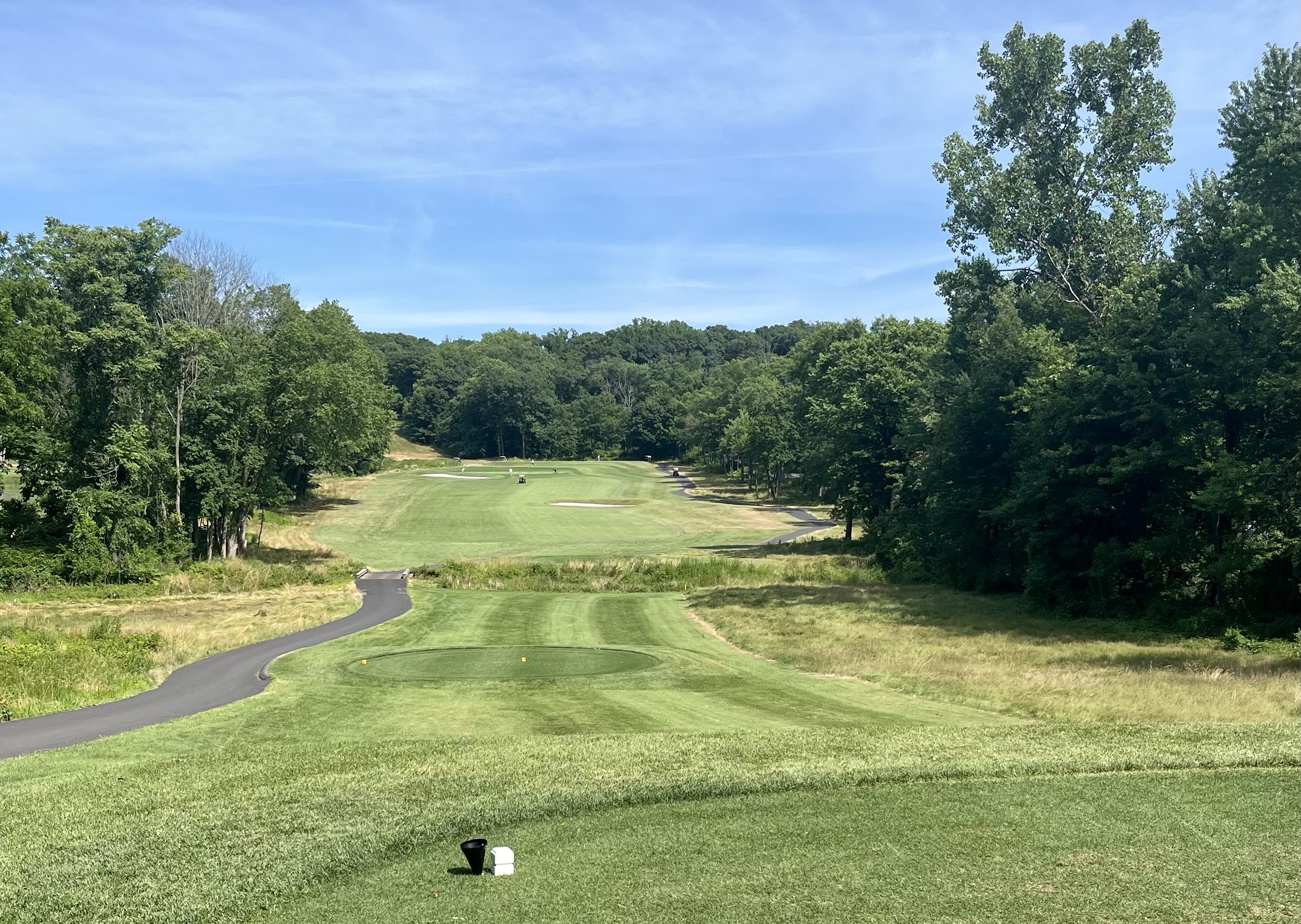
At 348 yards, the 4th is perhaps the most interesting and unique hole at Francis Byrne. Featuring an uphill teeshot to a fairway that immediately turns hard left, it might not be clear to first time golfers where to aim here. The good news is that the fairway is extremely generous, but drives further left will yield easier shots in. This approach also plays uphill towards an elevated, right-to-left sloped green. I truthfully don’t know how I feel about this strange hole but am somewhat partial to it considering I made my first ever par 4 eagle here.

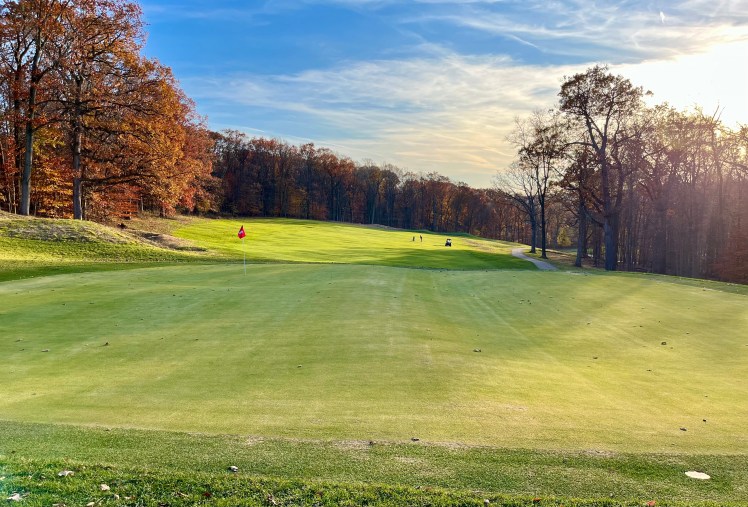
At 144 yards, the 5th hole is the shortest of Francis Byrnes’ par threes. Originally designed to play as a Redan, the builders made a mistake on the routing and instead made this a Short template. It’s still a pretty hole featuring a slightly elevated, small green perched on the side of a hill. A deep bunker guards short left and this green primarily runs back-to-front with pinching in from both sides.
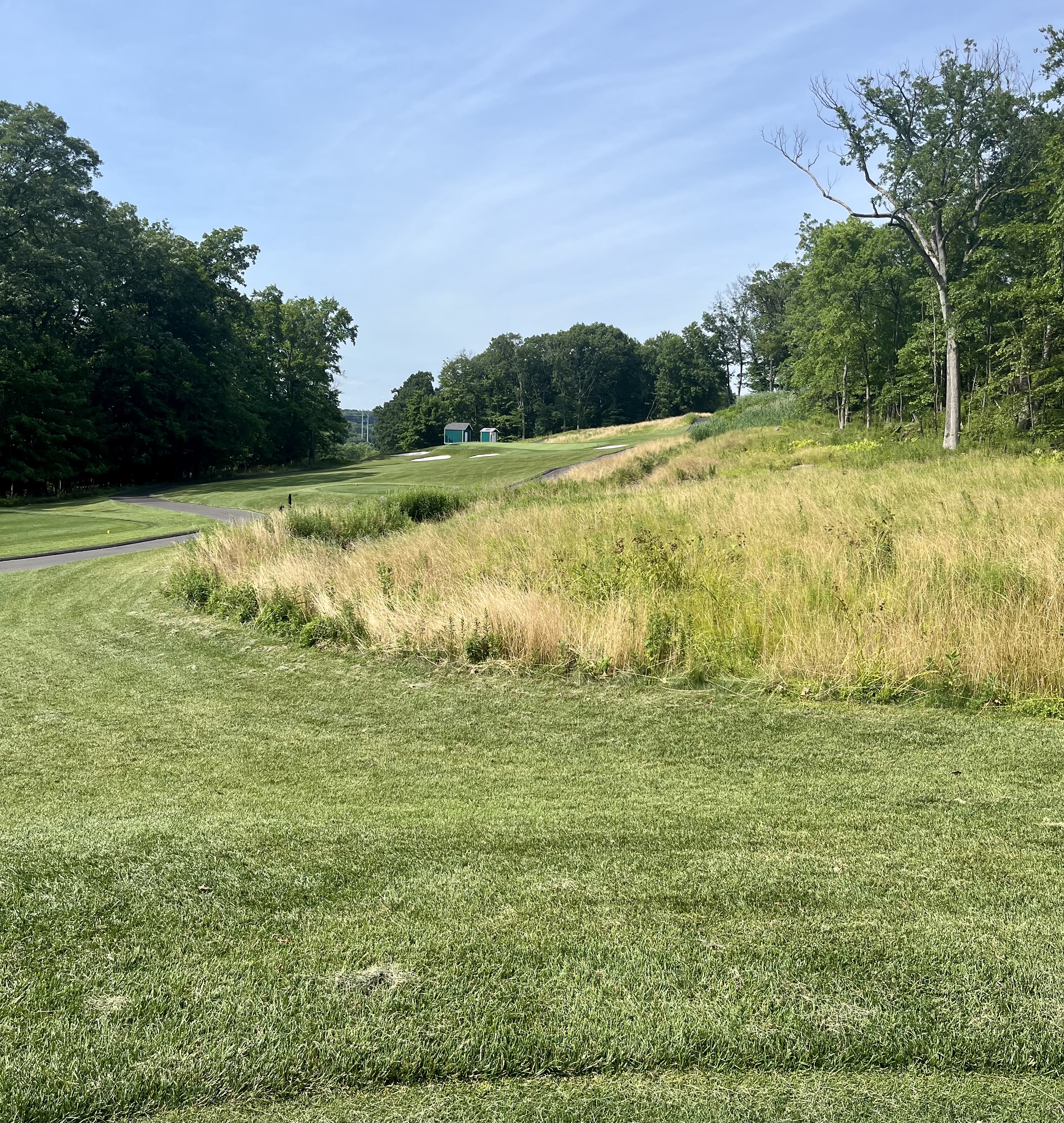
The next three holes run parallel to each other along the side of the hill beginning with the 424 yard 6th hole. Running slightly downhill, this fairway slopes hard right-to-left with OB left the entire way. This green is defended by a very steep bunker left and runs both back-to-front and right-to-left.
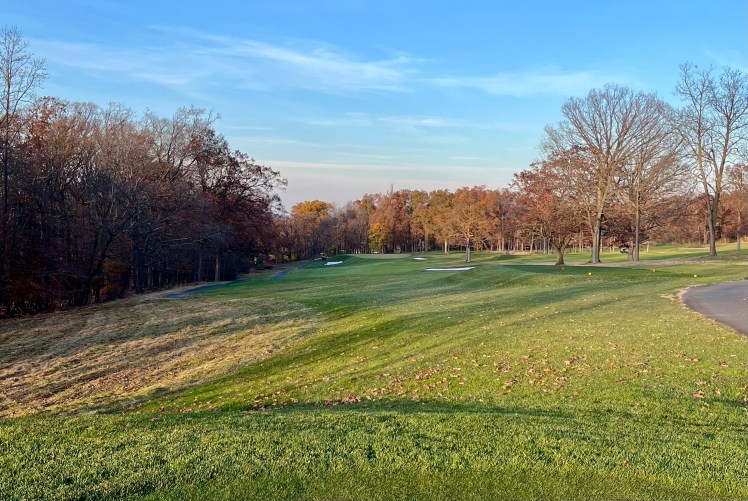
The par 4 7th hole runs back uphill and straightaway at 362 yards. While the fairway is generous here, it slopes severely left-to-right leaving difficult lies for this approach. This elevated green plays at least one club extra and is one of the best on the course with a severe false front and back-to-front tilt with two tiers.
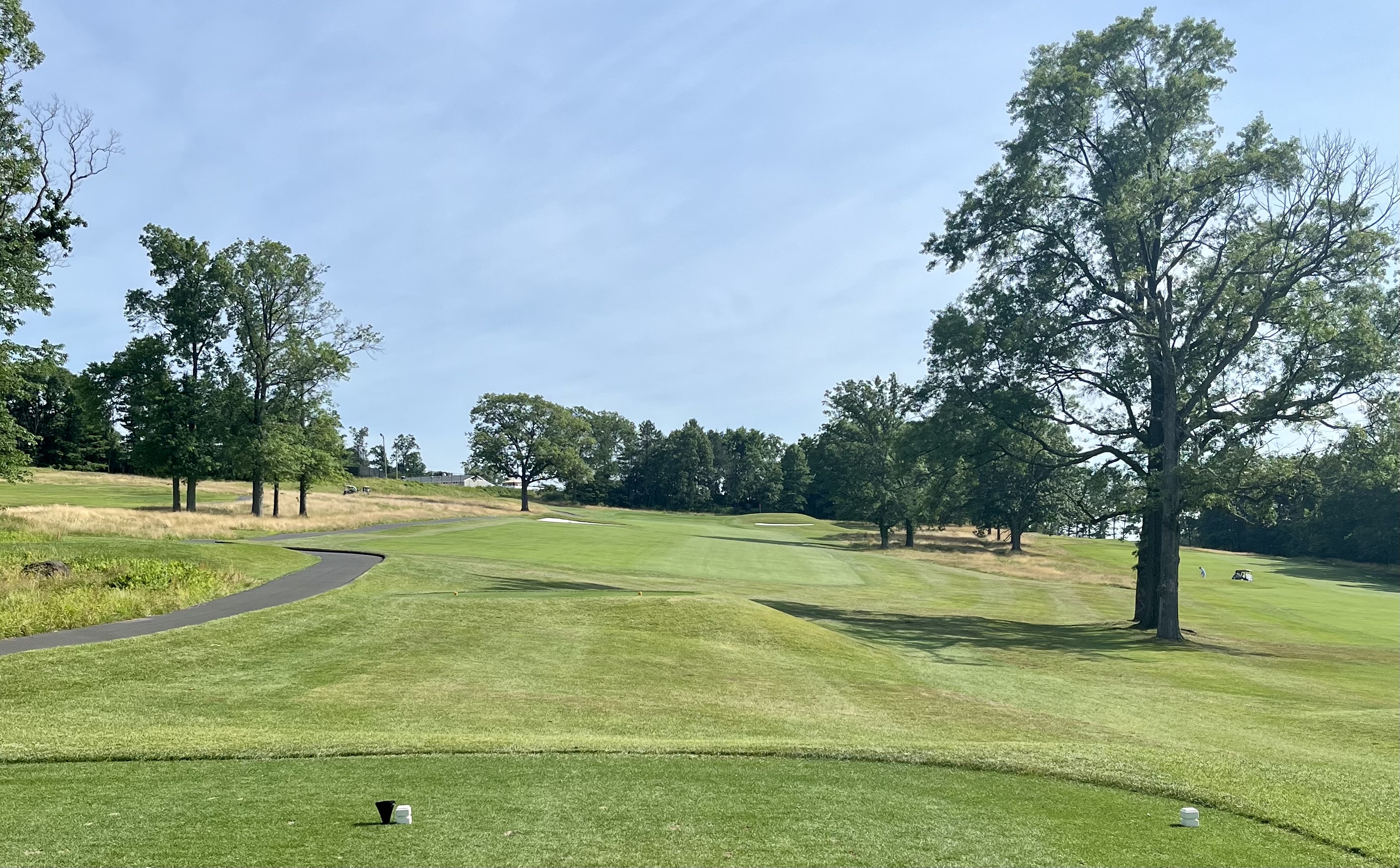

Continuing the string of nice par fours, the 8th hole runs back downhill at 380 yards. With the teebox occupying the tallest point on the property, you can best see neighboring Essex County Country Club from this hole. This hole is most notable for its excellent front-to-back sloped green with a massive left swale.

Among the holes most improved by the renovation is the 9th, a lengthy 440 yard downhill par 4. While always an exhilarating teeshot down the hill, there wasn’t much else to this hole before. It is now strategically and visually enhanced with a crossbunker down the left at 250 yards and a moat-like bunker short of the green that discourages running approaches. This green slopes back-to-front and features a gorgeous thumbprint in the middle you can see from the teebox. Bravo, Stephen Kay.
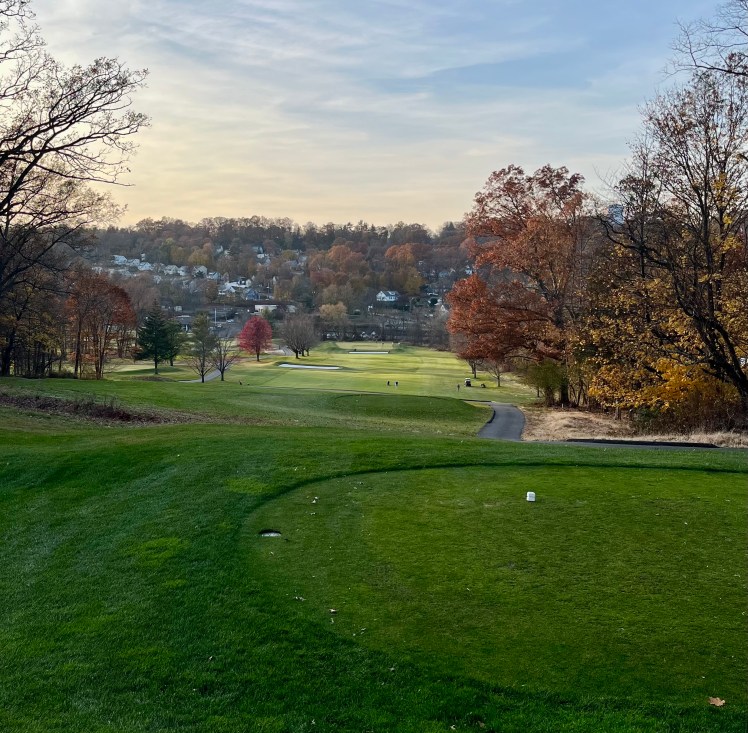
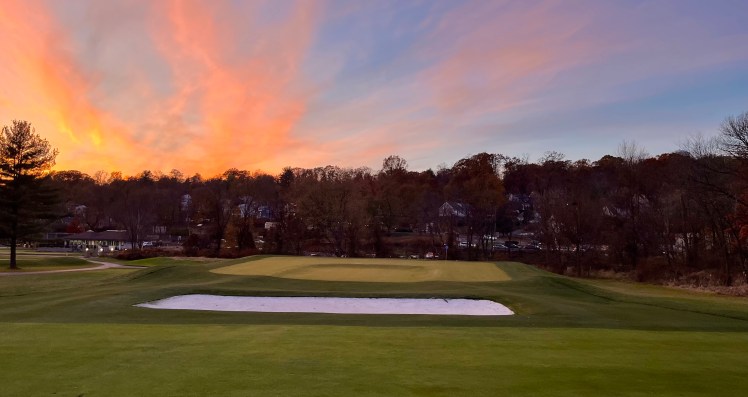
As I mentioned earlier, I’ve started on the 10th hole every time I’ve played and this is definitely a tougher start with the back 9 playing over 300 yards longer. The 10th hole is a 411 yard par 4 running uphill the entire way. This is a really fun “Bottleneck” template with a left-to-right sloping split fairway divided by a midline bunker between 190 and 240 yards. This approach runs half a club uphill towards a narrow, back-to-front sloped green defended by an extremely deep “steamshovel” bunker right. Tight fairway lies were added to the left of this green and leave a difficult up-and-down.
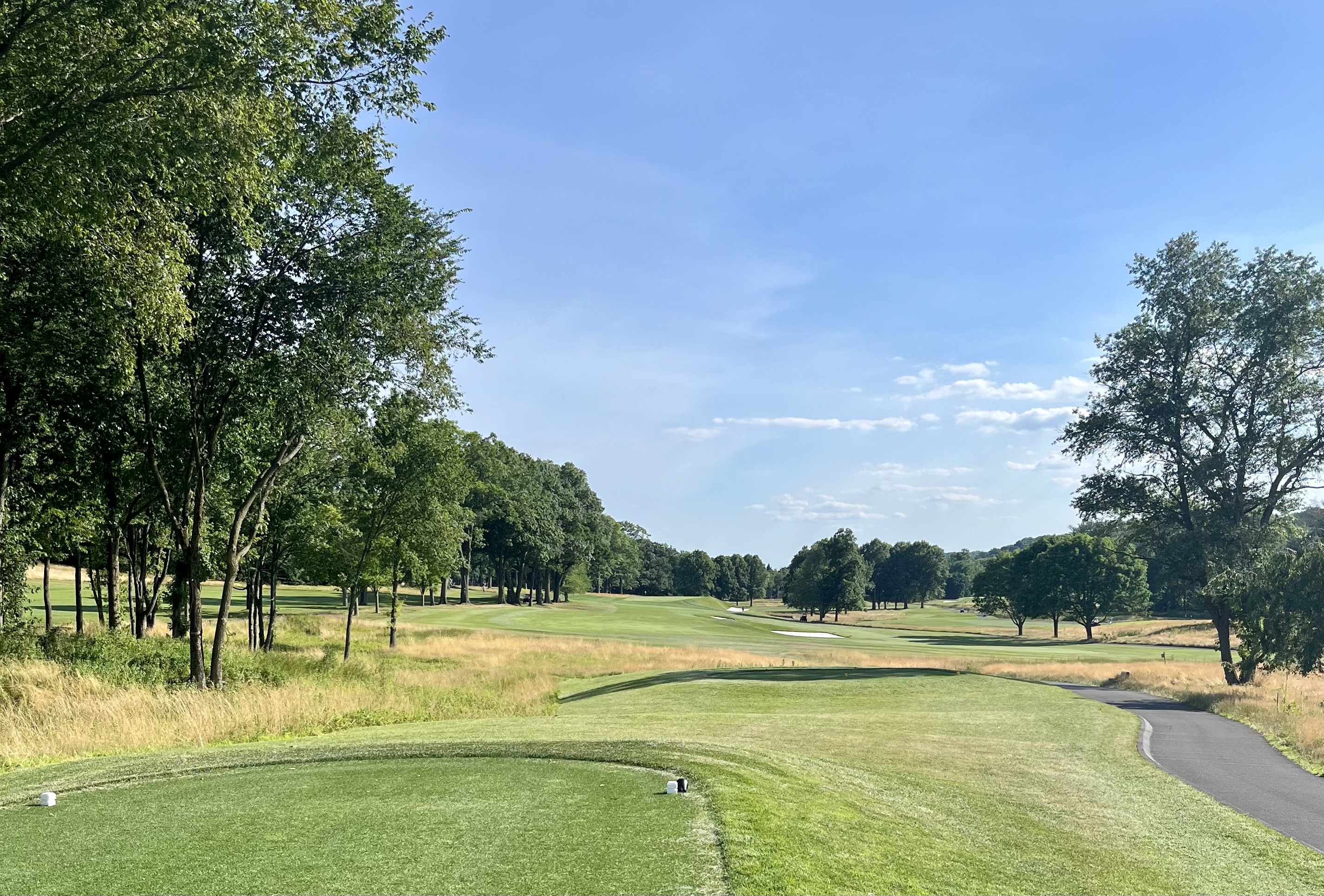
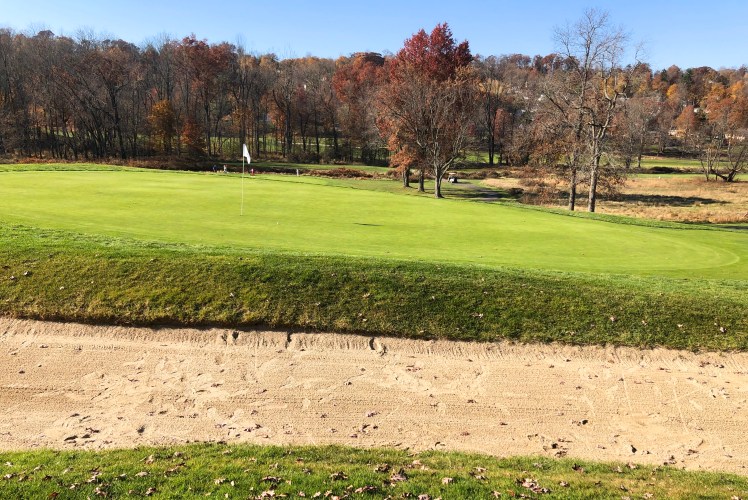
The 11th hole runs parallel to the 10th as a slight downhill dogleg left par 4 at 409 yards. A new crossbunker down the right was added to encourage more aggressive teeshots down the left and another new bunker was added short left of this green. This green overall slopes back-to-front with multiple humps and bumps.
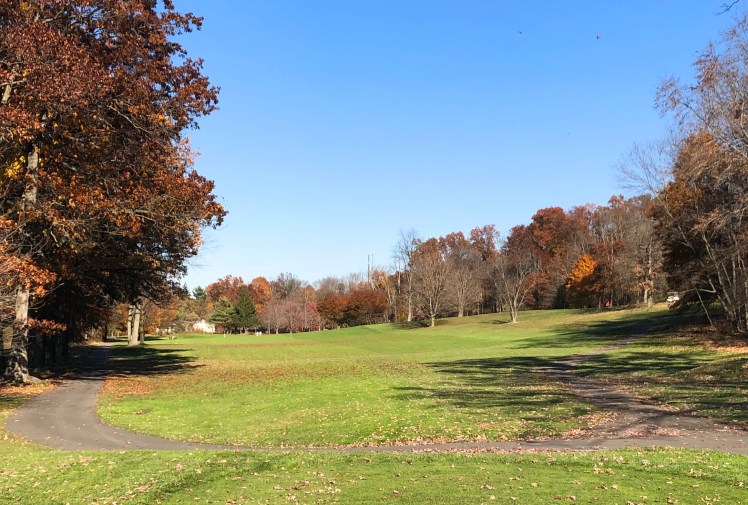

The 12th is probably the toughest hole at Francis Byrne, playing 437 yards straight uphill the entire way. With thick forest left and a left-to-right sloping fairway, you’ll need a big teeshot to reach this bunkerless green in two. This approach plays at least one club extra to a tricky green that slopes both severely left-to-right and back-to-front.

At 378 yards running downhill the entire way, the par 4 13th is an easier hole featuring a generous left-to-right sloping fairway lined by trees. A principal’s nose bunker was added about 260 yards down the center of the fairway and makes golfers consider their club choice off the tee. This green is excellent and features two tiers, sloping back left-to-front right with a bunker short right.
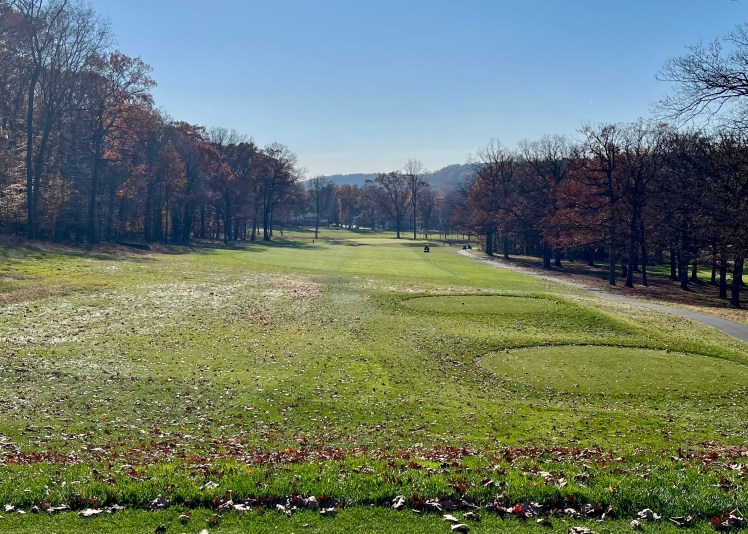
At 163 yards, the 14th hole is an Eden par 3 playing slightly downhill. This is a good-looking hole featuring bunkers left and short of a back-to-front sloped green that’s crowned along the back edges.
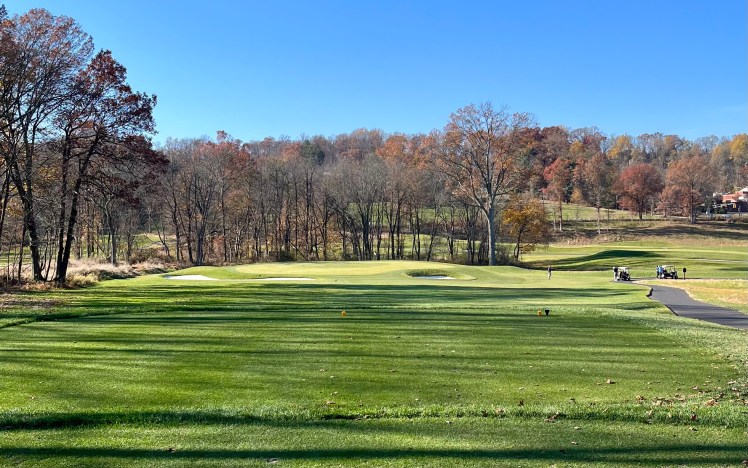
At 503 yards, the 15th hole is the shorter of two par fives at Francis Byrne, but this hole wasn’t always a par 5. Originally, it was a long and difficult par 4 “Prized Dogleg” template that Bobby Jones supposedly made a 12 on. From the current extended teebox, this teeshot is quite awkward playing uphill to a severe dogleg left fairway guarded by a bunker down the left at 260 yards. The problem here is that it requires a 220 yard carry just to reach the fairway, taking a lot of strategy and interest out of this hole. From the dogleg, this hole is treelined with a crossbunker down the right about 90 yards short of a shallow, back-to-front sloped green defended by a bunker left. I understand the course’s hesitancy to become a par 69, but this hole would be dramatically improved if the teebox were moved up about 50 yards and it became a par 4 again. This is one of the biggest missed opportunities with Kay’s renovation.
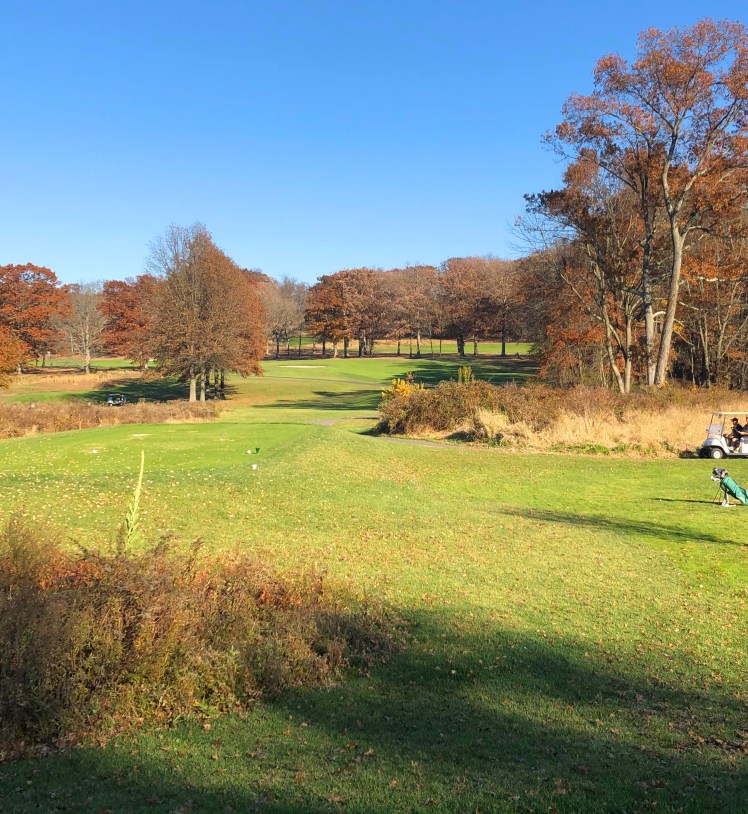

The 16th hole is another tough par 4 as a 442 yard dogleg right. Featuring a tight, downhill teeshot, this hole could probably benefit from some tree removal as tall trees crowd the fairway as it turns right around 260 yards. From here, this approach plays over a creek to an elevated Maiden green defended by a false front. Par is a strong score here.
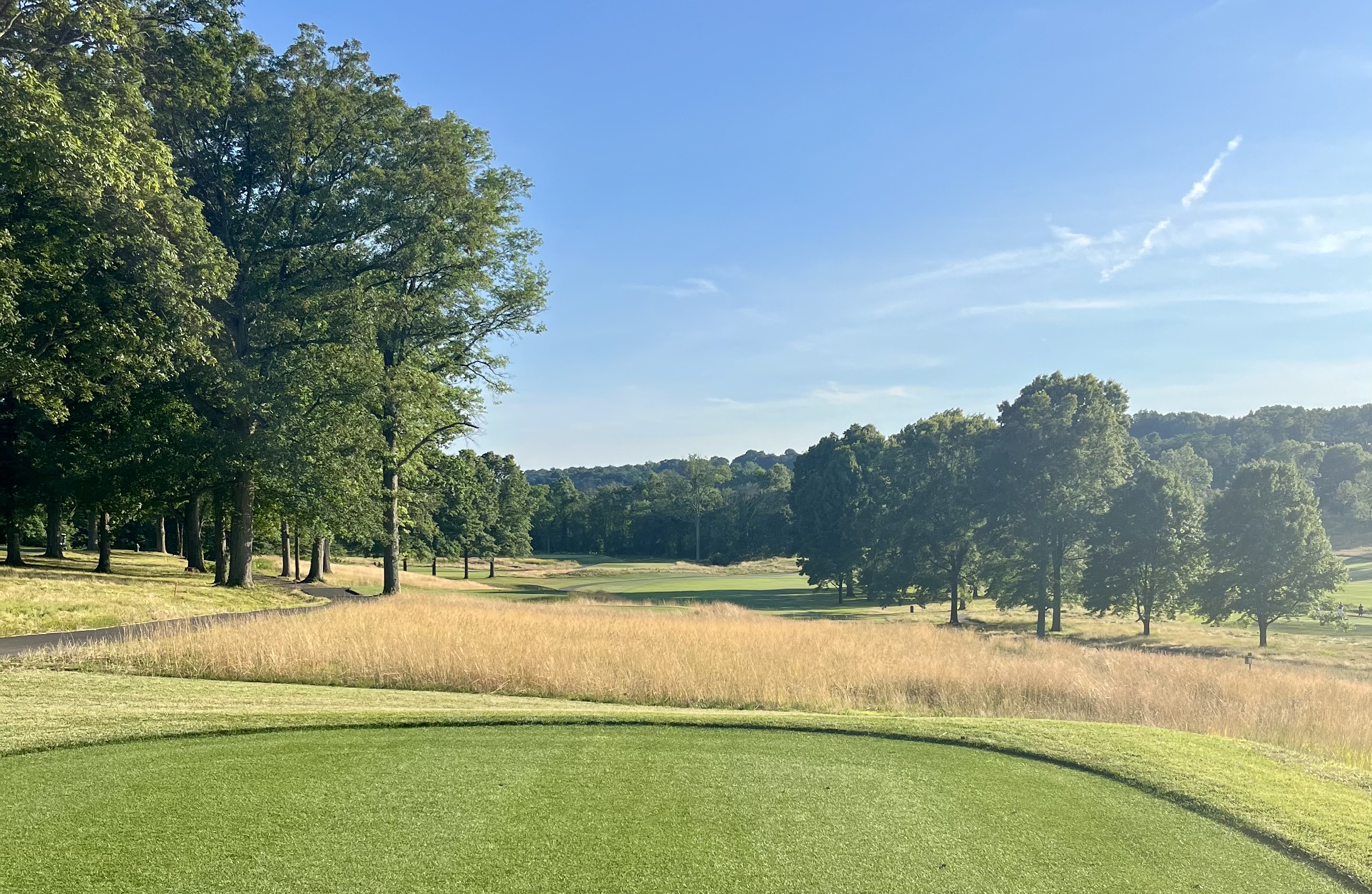
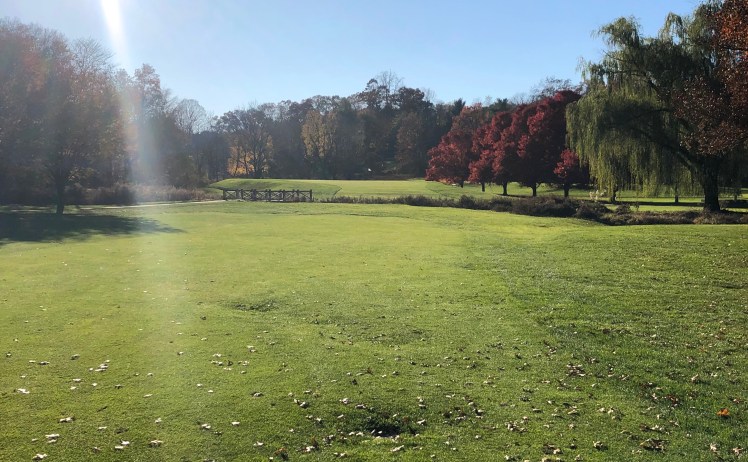
The two holes that changed the most during Kay’s renovation were the closing two. Initially, the 17th hole was an awkward dogleg left par 4 over water and the closer was a dull, flat straightaway par 4. Now, they are much improved with a long par 3 and then par 5 closer. The new 17th is a 218 yard reverse redan one-shotter with a bunker right and creek down this side the entire way. It is a challenging penultimate hole and contains a fun green.
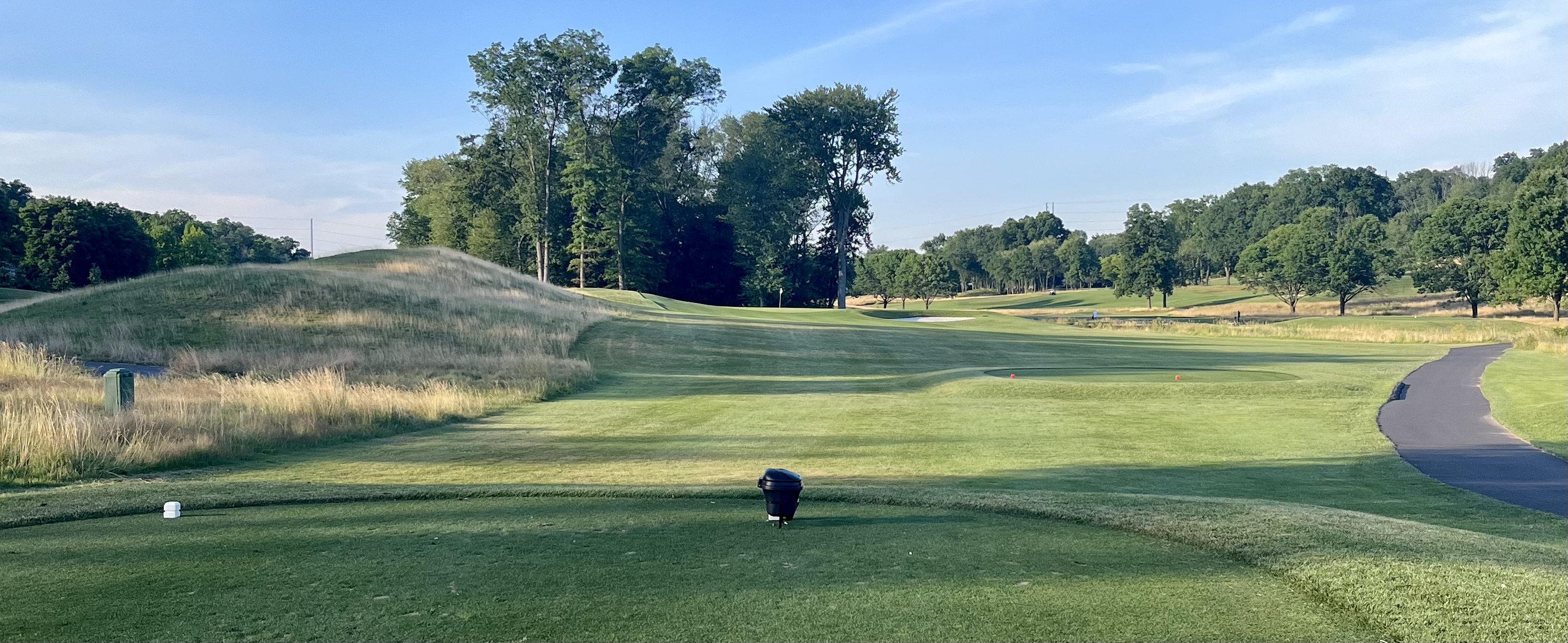

What was once a boring straightaway par 4, the new 18th is the longest hole on the course as a snaking 531 yard par 5. With the teebox pushed back and to the right where the old 17th fairway was, this hole features a compelling teeshot to a fairway that snakes left around the creek with a giant crossbunker right. New crossbunkers guard short on either side of this green, which was also expanded and slopes back-to-front with two tiers.
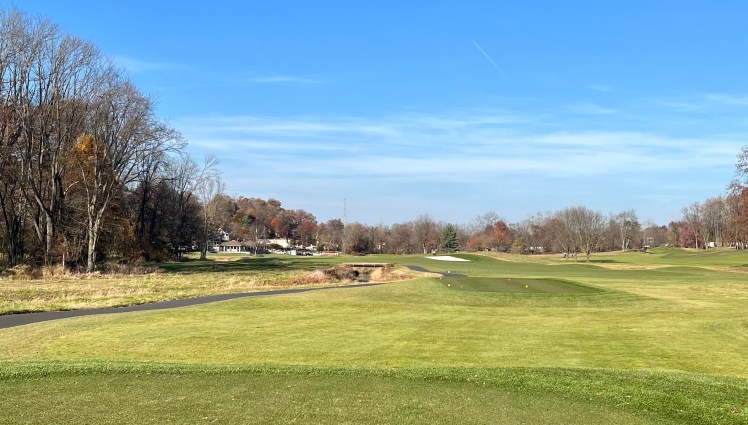
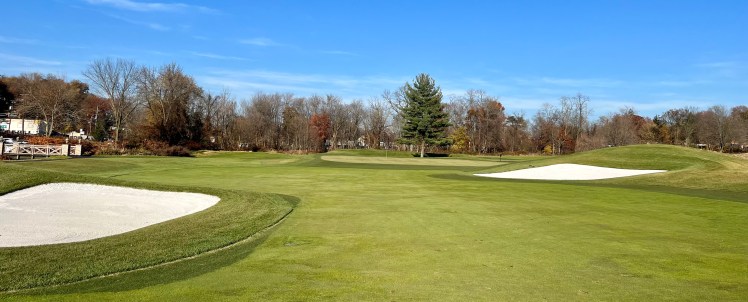
General Comments: Francis Byrne’s amenities are mediocre at best with nets to hit balls into near the 1st tee and a practice green adjacent to the clubhouse. The clubhouse is extremely rudimentary and not a place you’d want to spend extended time. Pace has play has been average the times I’ve played here.

Verdict: Offering a strong challenge on a hilly property, great value, and classic template architecture from Charles Banks, Francis Byrne always had great bones but is even better after Stephen Kay’s renovation. It is a must play public course for those in the area.
 Worldgolfer's Golf Course Reviews
15 on FAB was 8 on ECCC West. Jones made a 5 as did Francis Ouimet and Billy Burke. George Von Elm made a par 4. The match was played on Sep 23, 1931 and is memorialized in the ECCC men’s locker room.
LikeLike