Designer: Tom Doak (2001)
Location: Bandon, Oregon
History: The story of Bandon Dunes Golf Resort begins with Mike Keiser, an entrepreneur who set out to find links land to build a golf course on the West Coast. His vision came to fruition with David McLay Kidd’s 1999 award-winning design, Bandon Dunes. Tom Doak’s Pacific Dunes became the second course to open in 2001 and today there are seven courses on property. Pacific Dunes hosted the 2006 Curtis Cup, 2015 U.S. Women’s Amateur Four-Ball, and 2019 U.S. Amateur Four-Ball. It is the highest ranked of the courses at Bandon Dunes, earning the following accolades:
- #35 Best Course in the World – Golf Magazine (2025)
- #26 Best Course in the World – Top100golfcourses.com (2025)
- #13 Best Course in North America – Top100golfcourses.com (2025)
- #23 Best Course in America – Golf Digest (2025)
- #19 Best Course in America – Golf Magazine (2024)
- #13 Best Course in America – Top100golfcourses.com (2024)
- #3 Best Modern Course in America – Golfweek (2025)
- #2 Best Public Course in America – Golf Digest (2025)
- #3 Best Public Course in America – Golf Magazine (2024)
- #2 Best Public Course in America – Golfweek (2025)
- #2 Best Resort Course in America – Golfweek (2026)
- #1 Best Course in Oregon – Golf Digest (2025)
- #1 Best Course in Oregon – Golf Magazine (2024)
- #1 Best Course in Oregon – Top100golfcourses.com (2024)
- #1 Best Public Course in Oregon – Golfweek (2025)
Conditions: 9/10, Pacific Dunes is one of the best conditioned courses at the Resort, with slick greens and firm and fast links-style fairways.
Value: 8/10, All championship courses on property offer solid value, with rates ranging from $120 to $370 depending on the month. The second round of the day is half price and the third round is free! Because Pacific Dunes is the best course here, it technically offers the best value.
Scorecard:
Tee Par Yardage Rating Slope
Black 71 6633 73.2 143
Green 71 6142 70.8 135
Gold 71 5775 68.9 131
Orange 71 5088 70.3 131
Royal Blue 71 3920 63.9 115
Hole Descriptions: One of the best things about Bandon Dunes Golf Resort is the sheer amount of golf available, with seven courses and 122 holes on property. Naturally, this leads to debates over which of these courses is best and I think by now, I’ve heard ever permutation possible. While I really enjoyed every course there, in my opinion there is only one correct answer when asked about the best course at Bandon Dunes, and that is Pacific Dunes. Pacific Dunes combines all of the best things about Bandon – the insane views of the Pacific, firm and fast links conditions, and a minimalist rugged layout – with an unbelievable routing full of strategy and variety. This course begins inland near its clubhouse and weaves back and forth from the coastline in dramatic fashion. While postcard holes like the 4th, 10th, and 13th hug the cliffs and are among the most gorgeous holes in the world, the inland holes here are likewise incredible with short par fours at 6 and 16 standing out as particularly strategic and memorable. In a way, it feels like Sheep Ranch and Bandon Dunes need the coastline to achieve their lofty rankings, but Pacific Dunes could stand alone in any environment and be an amazing course given the strategic angles, routing, and greens. When you consider the fact that it sits along the Pacific Ocean, you have a world-class course that is clearly one of the best in America, public or private.
I don’t think there is a weak hole at Pacific Dunes, but if I had to choose one hole I think is weaker than the rest, it would be the 1st. More than anything, I think that’s because the Black Tees were playing up, making this a 330 yard straightaway par 4 and not 370 yards like it should be. This hole plays to a fairway containing wild undulations and a speed slot over a plateau at about 260 yards. It is initially very narrow with a giant bunker down the right and trees on the left, but does open up a bit with the major danger coming in the form of two crossbunkers down the right at 270 yards. This large, right-to-left sloped green sits in a natural hollow off to the right, with bunkers defending left and long.
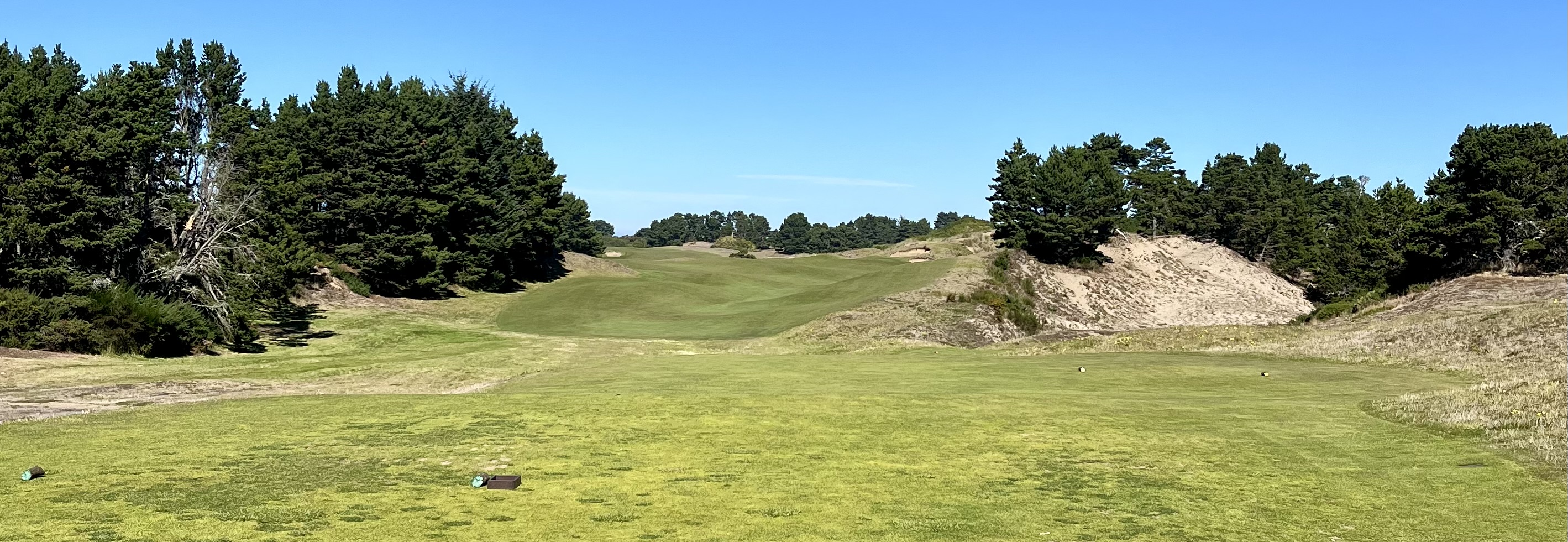
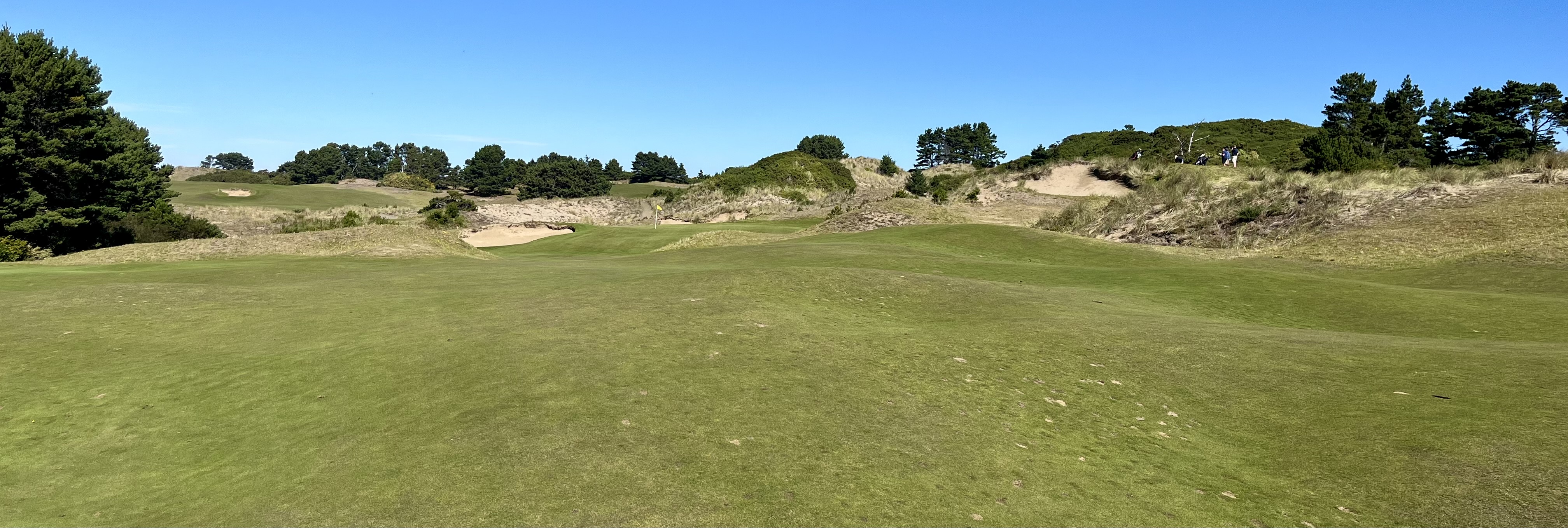
The 2nd hole continues in the same direction and gives you your first glimpse of the Pacific as a 368 yard par 4. This is an excellent medium-length hole featuring an 165 yard forced carry over dunes to a fairway that cants hard right-to-left. A tiny potbunker sits in the center of the fairway at 220 yards while a penal left crossbunker at 240 yards catches many balls. Another large bunker defends just short of a giant green that contains lots of movement, most notably off a back left hump.
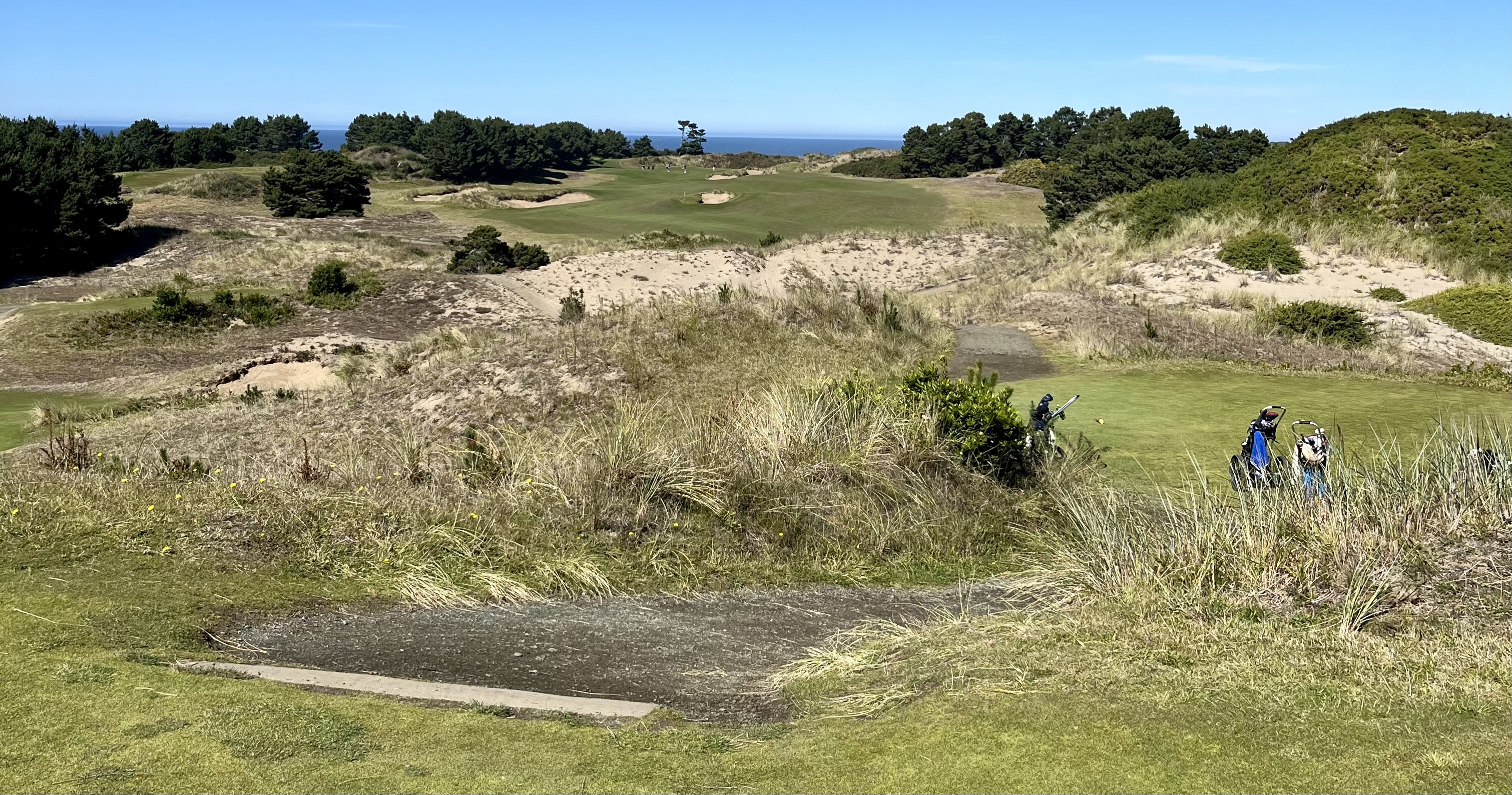
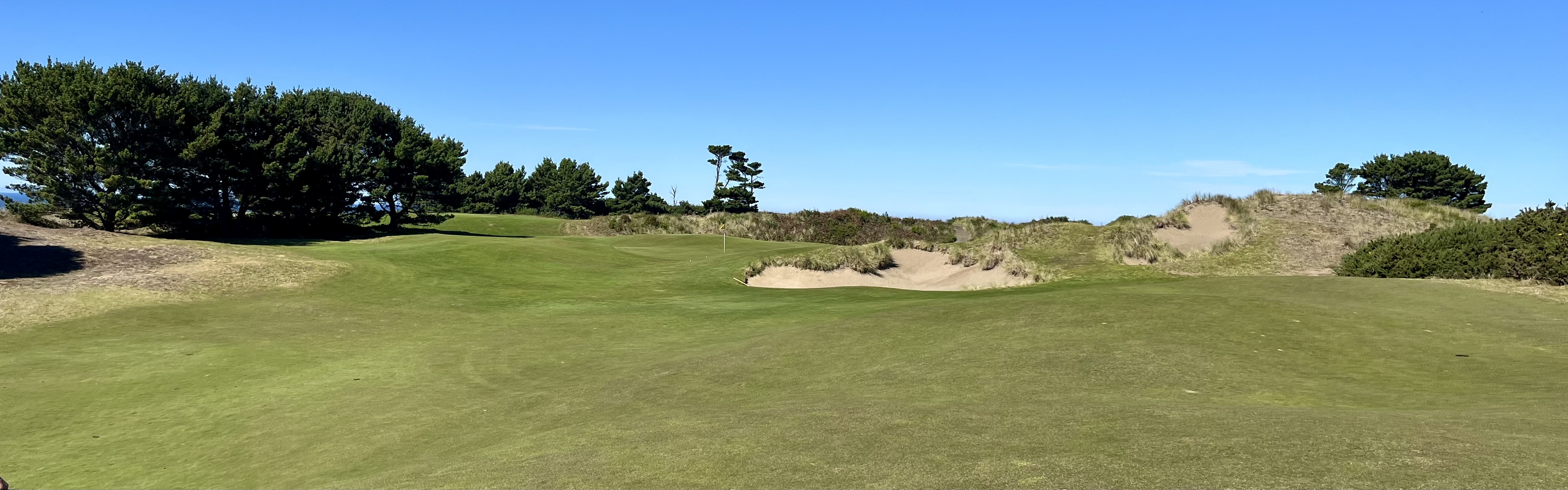
The 3rd hole takes you to the cliff’s edge as the shortest par 5 on the course at 499 yards. From an elevated teebox, this hole offers gorgeous views of the Pacific Ocean and an extremely generous fairway lined by gorse. Golfers can swing freely off the tee here, but should look to avoid centerline bunkers at 230 and 295 yards. The fairway becomes a bit tighter on the lay-up, with gorse encroaching down both sides and a large left bunker about 100 yards short of the green. While this hole is definitely reachable in two (especially downwind), this flatter green sits elevated, with a false front and bunkers short, and gorse surrounding its other three sides.
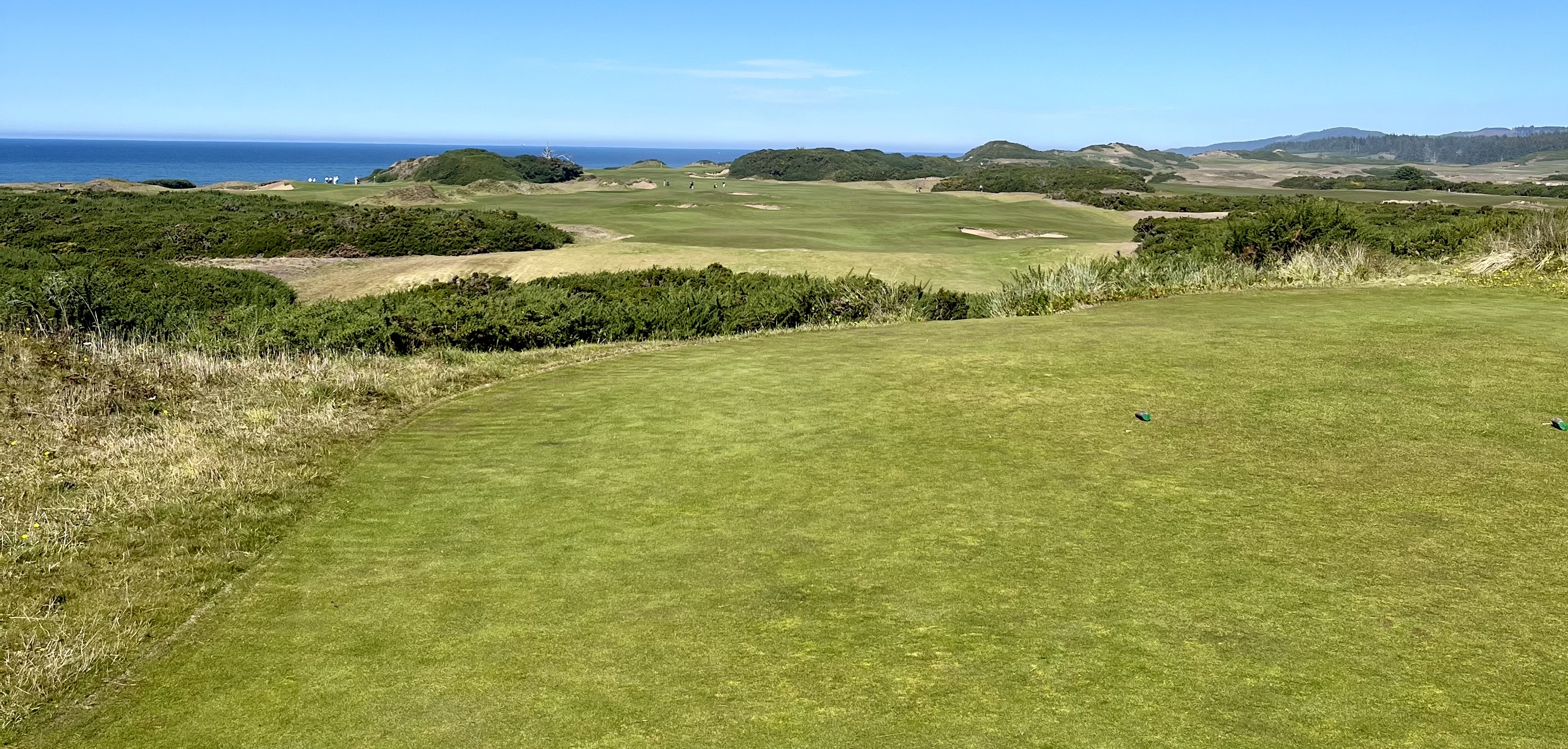
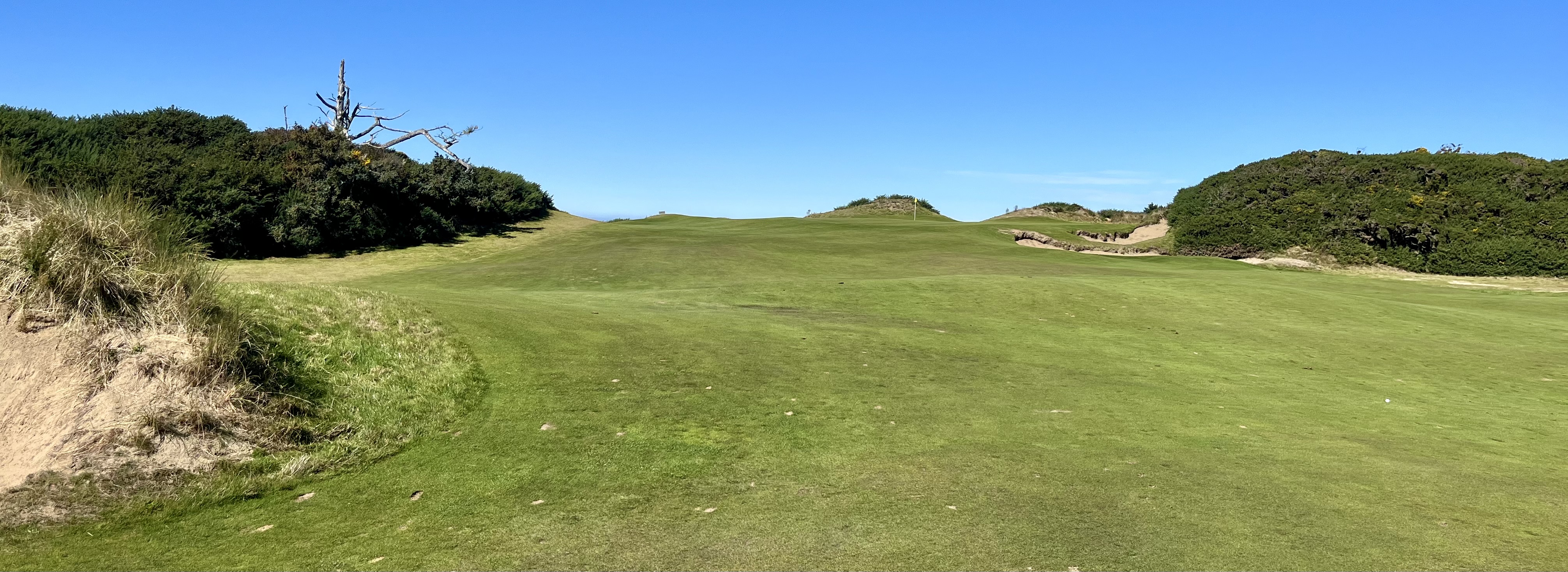
At 463 yards, the 4th hole is a long, dramatic par 4 stretching north-to-south along the coastline. The strategy here is simplistic but effective, with an immediate forced carry of 130 yards to a wide fairway lined by the Ocean down the right the entire way. I imagine the common miss is left to avoid the beach, but a collection of large bunkers begins down the left around 260 yards, narrowing the fairway. This green is open up front, but lined by bunkers down the left and cliffs on the right. The green is huge and mostly slopes left-to-right with a false front.
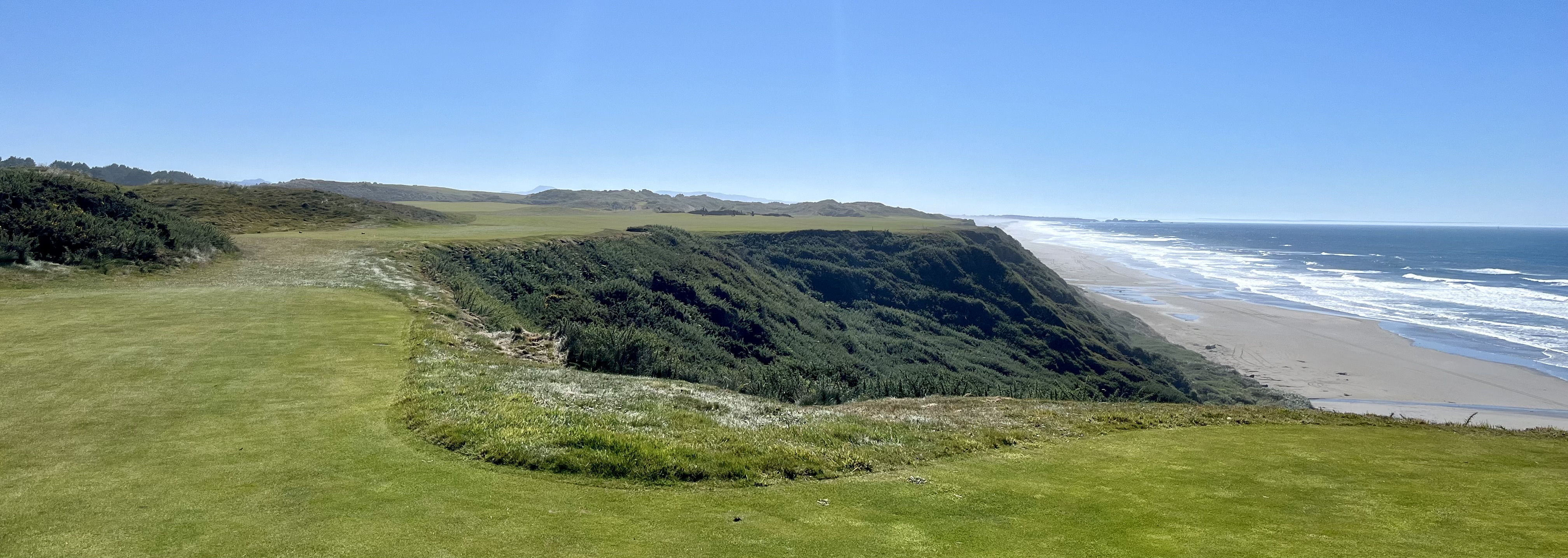
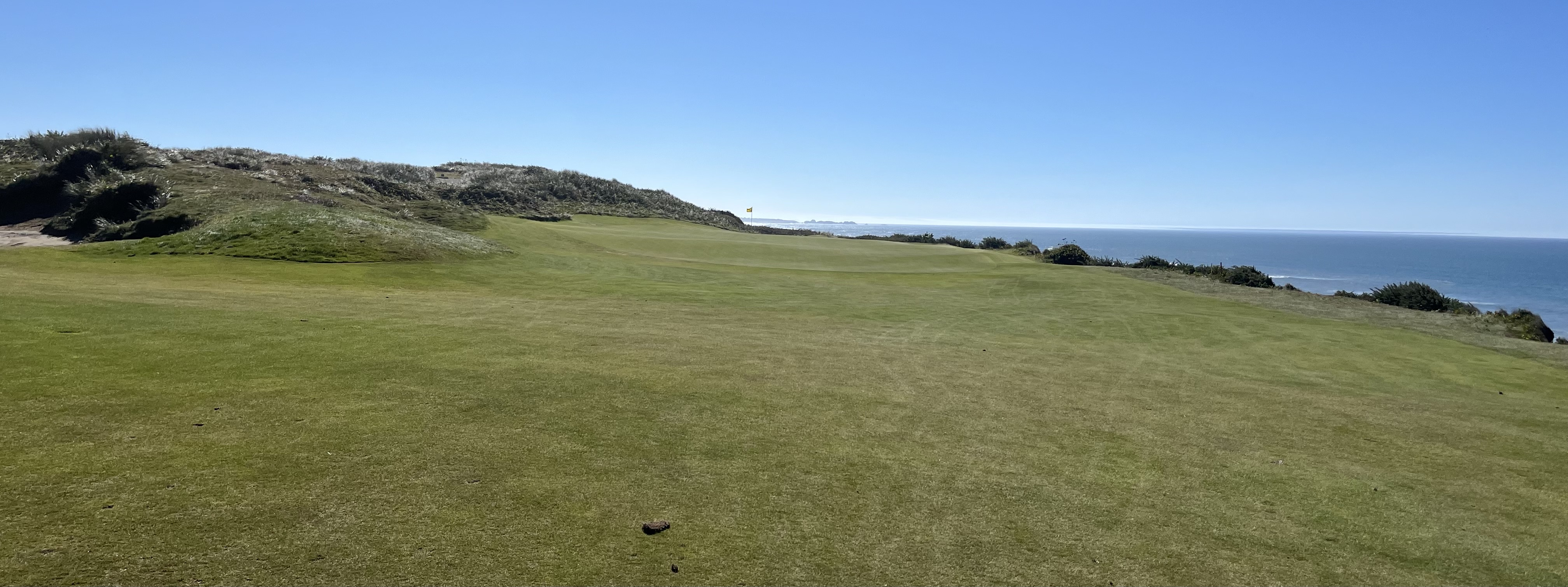
After finally reaching the coast at the 4th, the 5th hole takes you back inland as the only par 3 on the front at 199 yards. This is an excellent one-shotter, playing slightly uphill to a narrow, hourglass-shaped putting surface that slopes left-to-right with several tiers. There’s really no good miss here, as deep bunkers can be found on either side and steep slopes of tight lies line the green short and right.
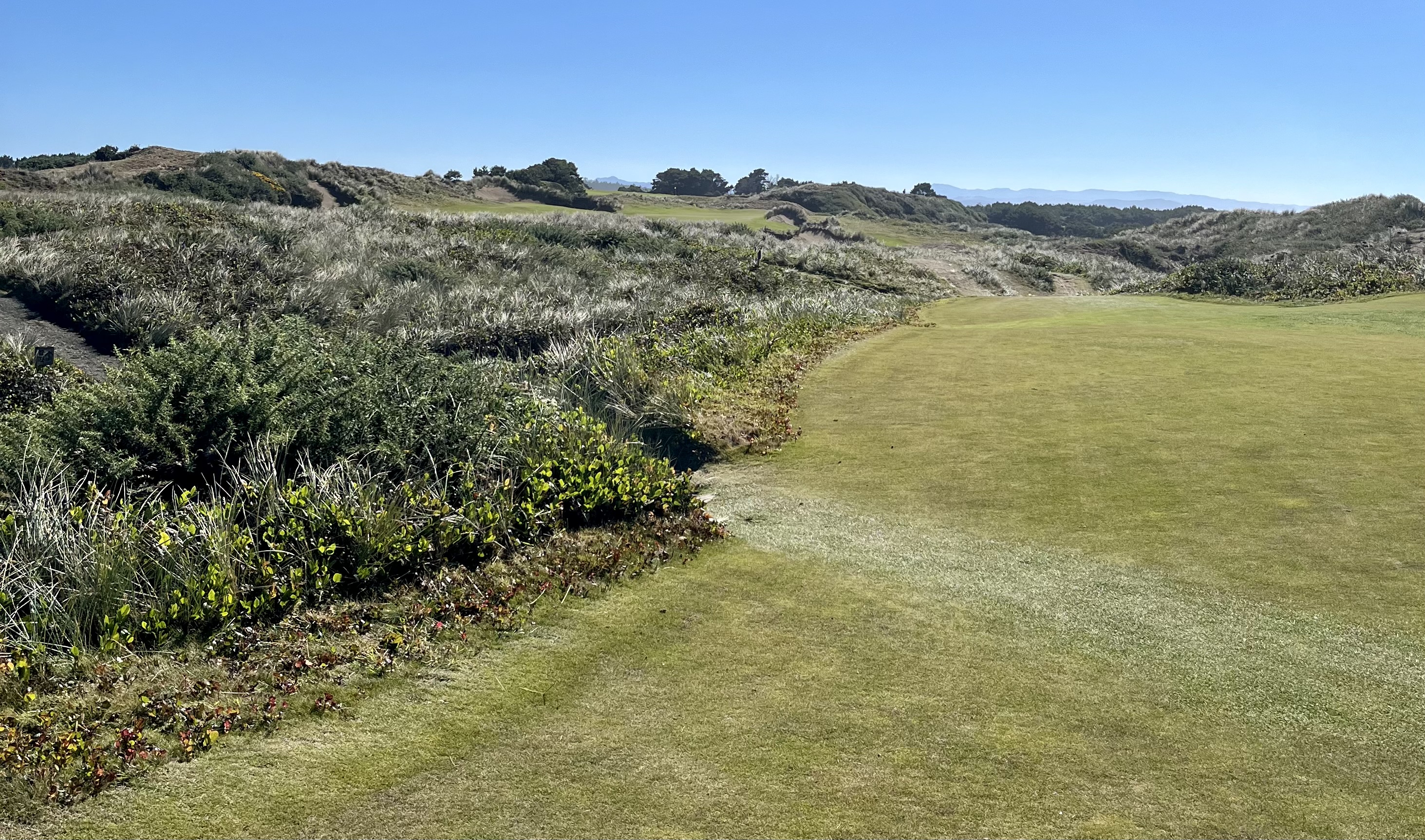
The 6th hole turns you back to the north, marking the fourth different direction you’ve seen so far on a course that features an ever-present wind. At 316 yards, this is the shortest par 4 at Pacific Dunes and one of the best risk/reward short par fours in America. From an elevated teebox, this is a puzzling hole, with a ridge and bunker down the right for the first 200 yards, but plenty of fairway down the left. After this point, the fairway opens up and is quite generous on both sides. The real challenge comes on the approach to an extremely narrow, back-to-front sloped green that sits perched on a ledge. Because of the way the green is angled, the preferred approach comes from the right half of the fairway. Anything down the left side of the fairway or rough faces a near impossible pitch over a menacing bunker short left. Steep fall-offs right and short as well make it so that anything but absolute precision raises the possibility of big number here. In this way, the hole is somewhat similar to the infamous short par 4 14th at Bandon Trails.
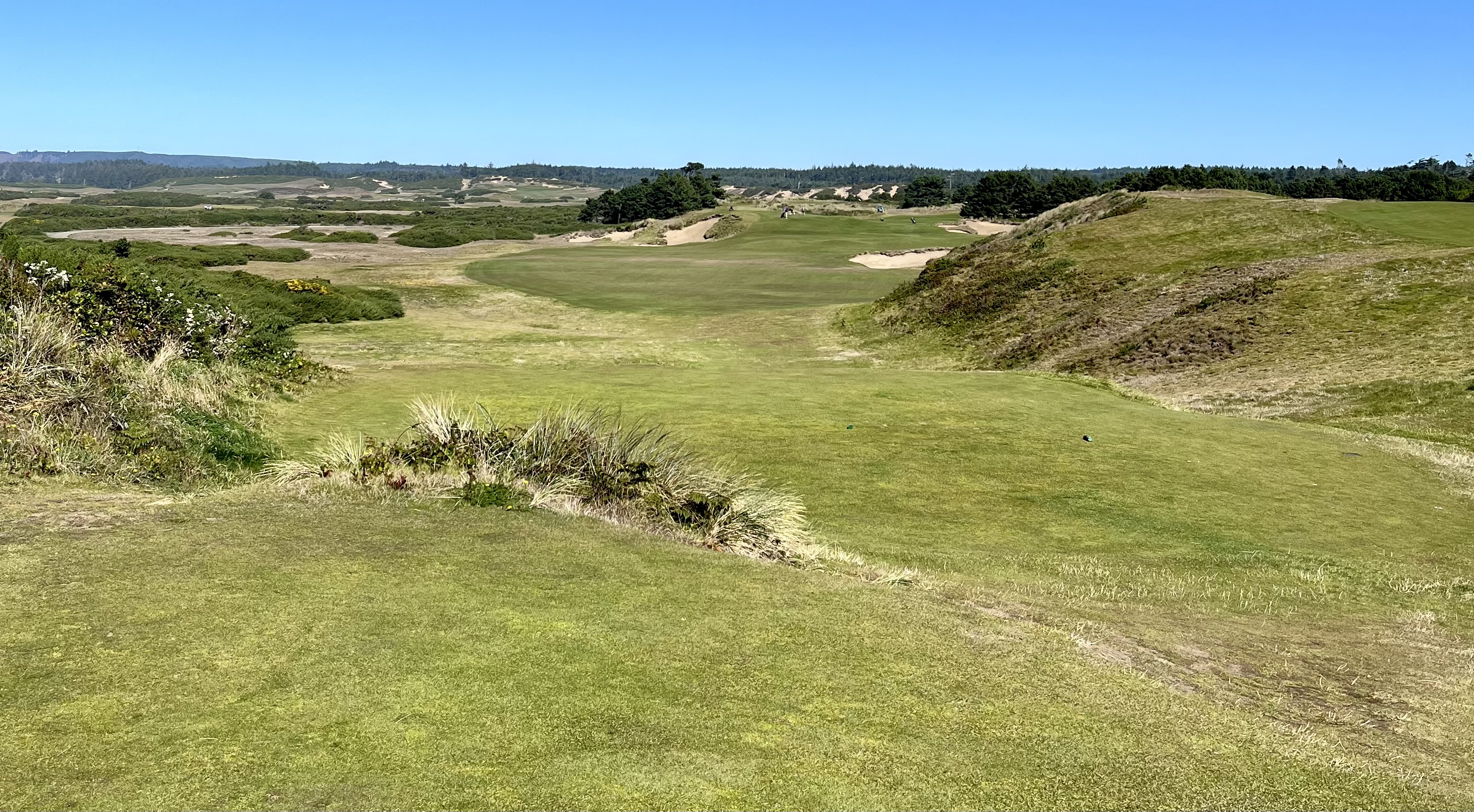
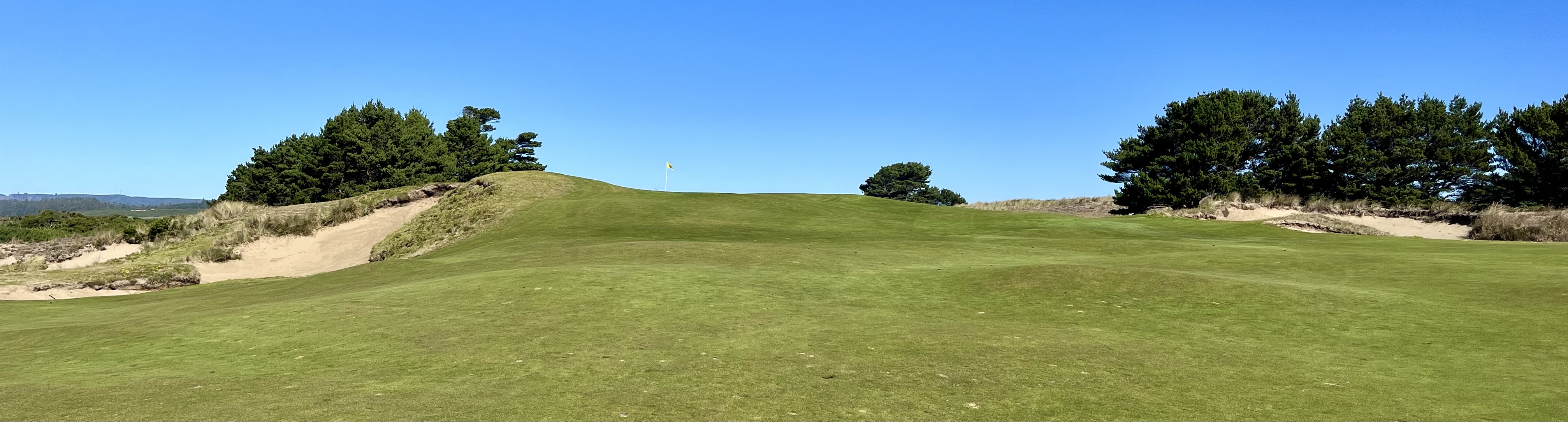
Another hole that is similar to what you find at Bandon Trails is the 7th, a 464 yard par 4. This deserving number 1 handicap plays inland, with forests lining both sides of an undulating, left-to-right sloped fairway. This approach runs slightly uphill over mounds and moguls towards a large, back-to-front sloped green with lots of internal movement. Five deep bunkers defend left of the green while another sits short right. Par is a great score at this difficult hole.
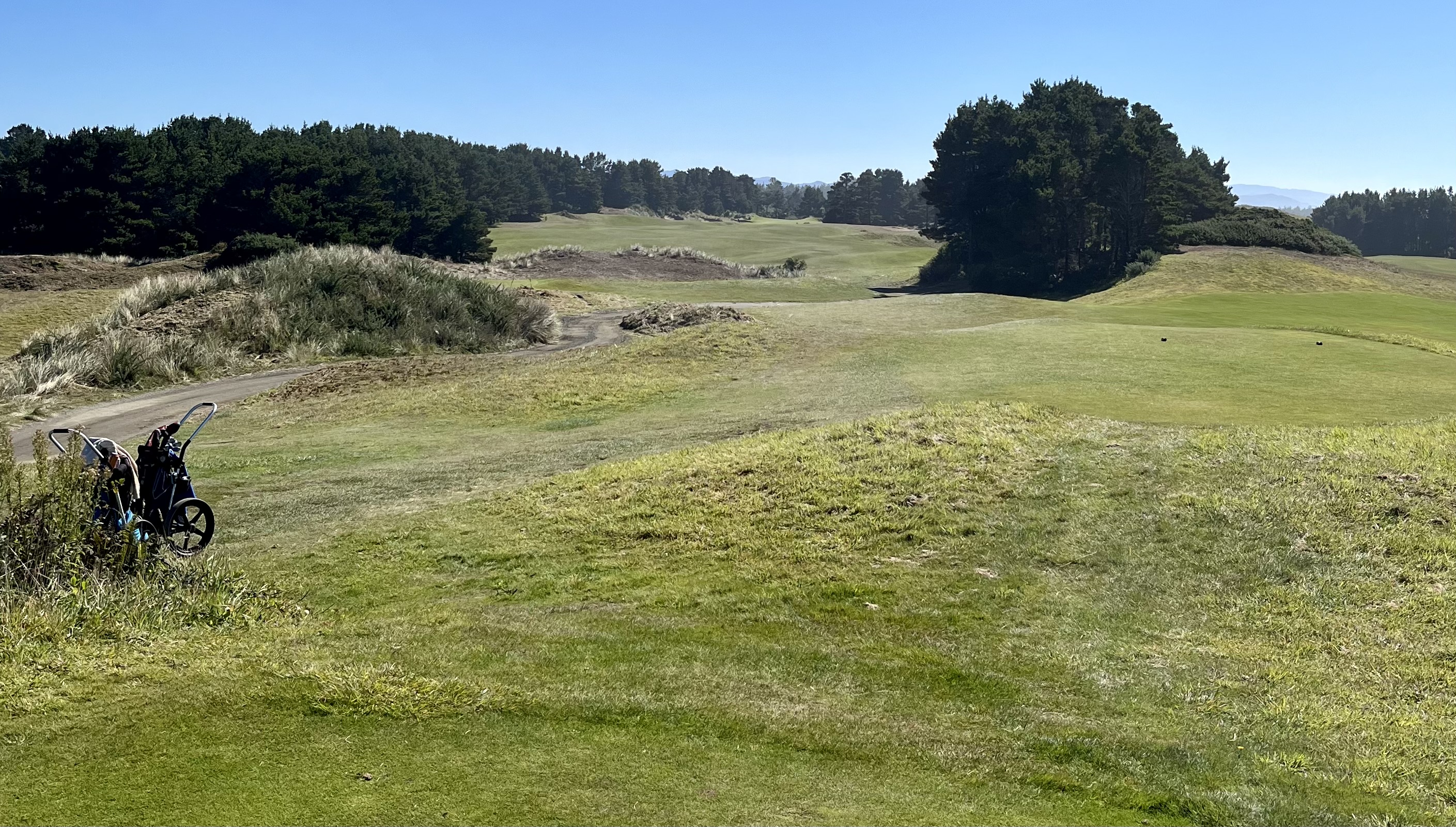
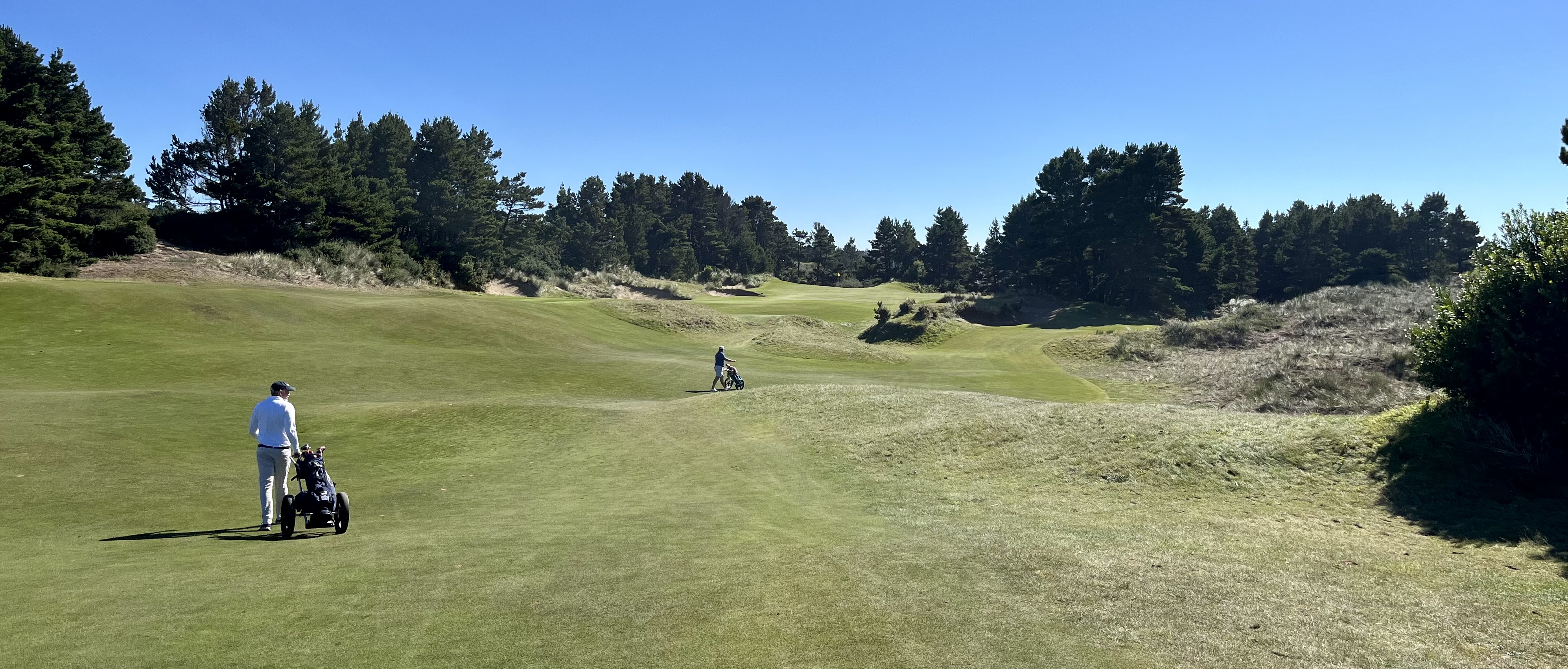
The 8th hole is a slight dogleg right par 4 at 400 yards that turns back the other direction. Golfers should favor the left side of this wide fairway, as it offers a better angle into the green. This putting surface lies diagonally, with a predominant left-to-right slope and a pesky bunker right which caused issues for me on both my rounds.
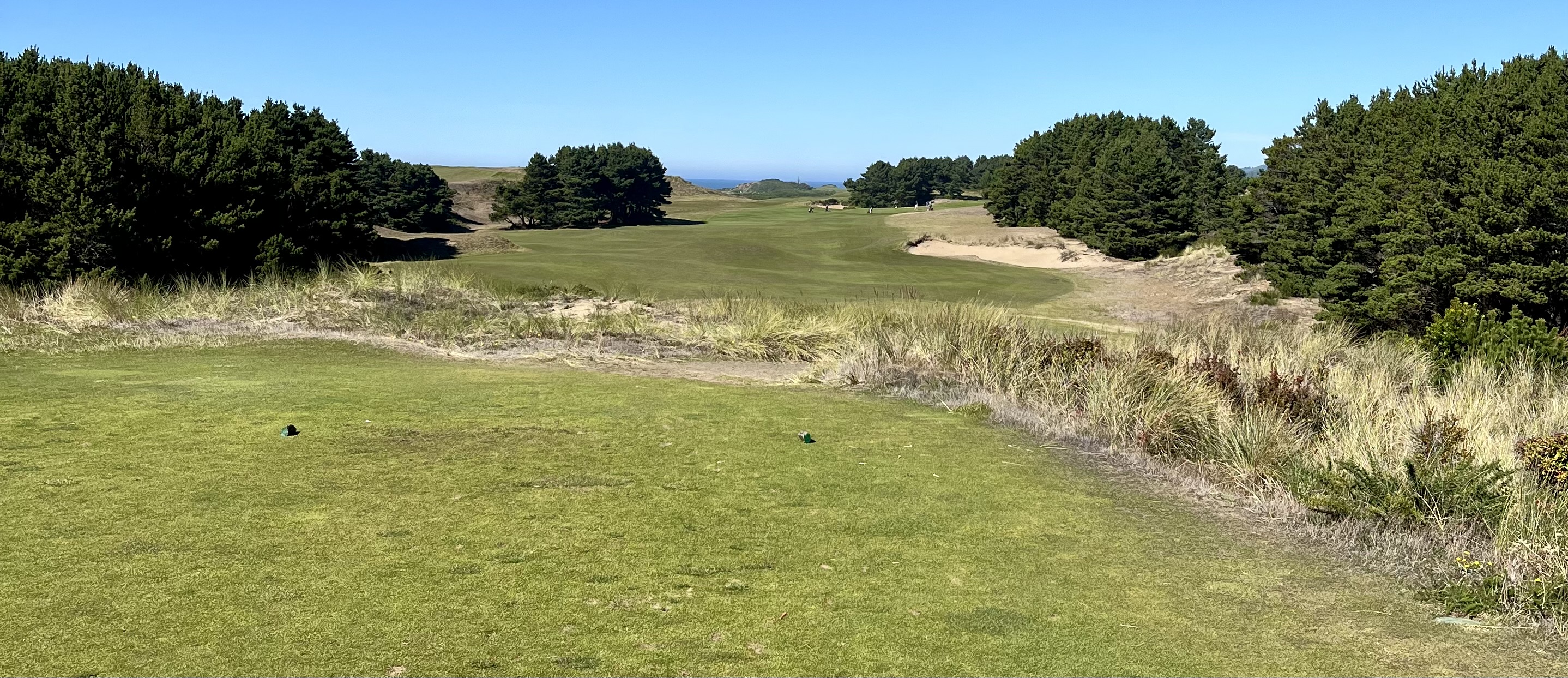
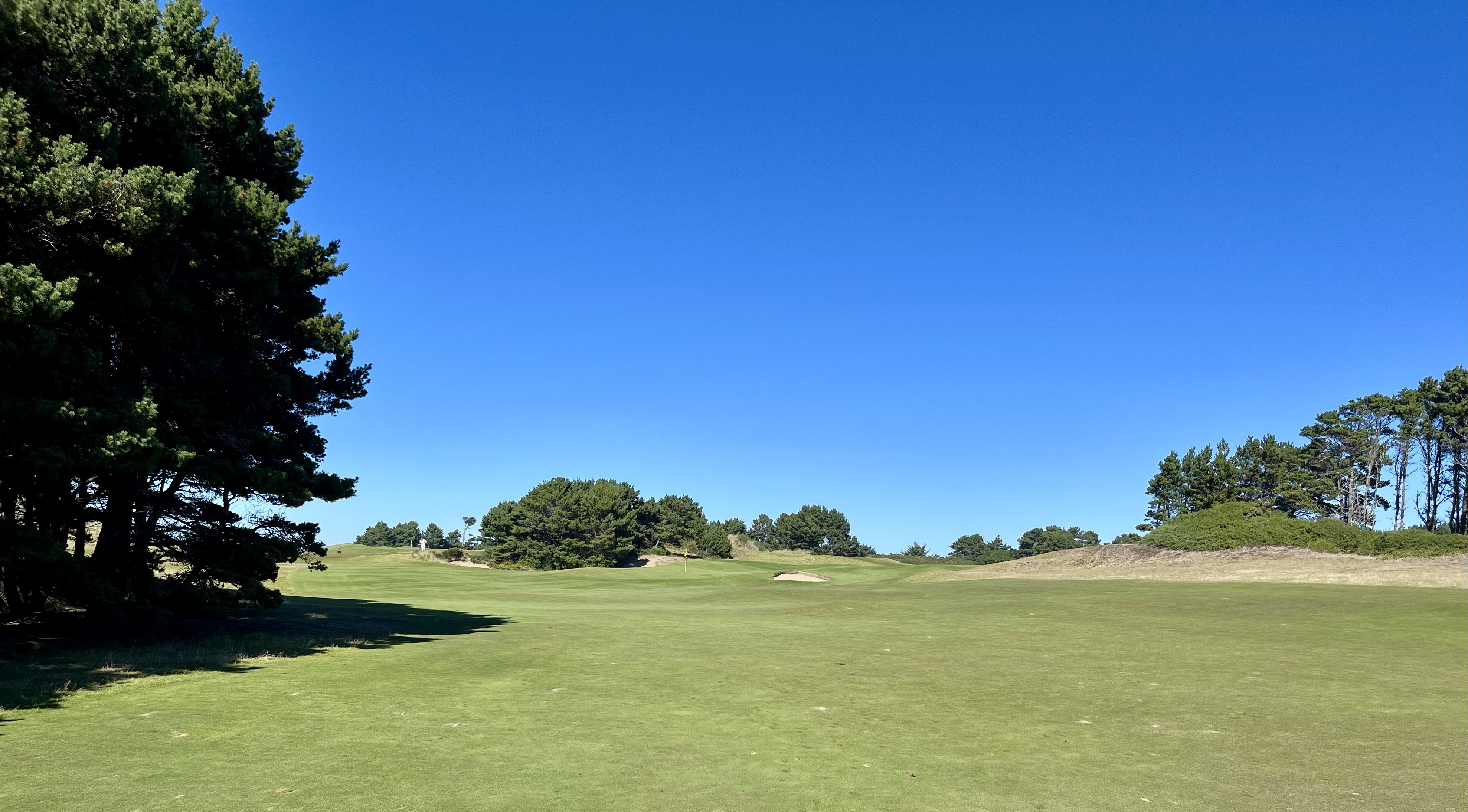
The 9th is an underrated hole as a dogleg left par 4 at 406 yards. For first time golfers, this is a somewhat confusing teeshot that must carry a ridge to find a wide fairway that turns left. The defining feature of this hole is the fact that it contains two greens – one perched higher up on the right and one down lower to the left. These greens are divided by a giant mound of bunkers and fescue. With a speed slot, it almost seems like the lower green is reachable from the shorter tees, but we only played the upper green. This green is lined by bunkers and is huge, sloping both front-to-back and left-to-right.
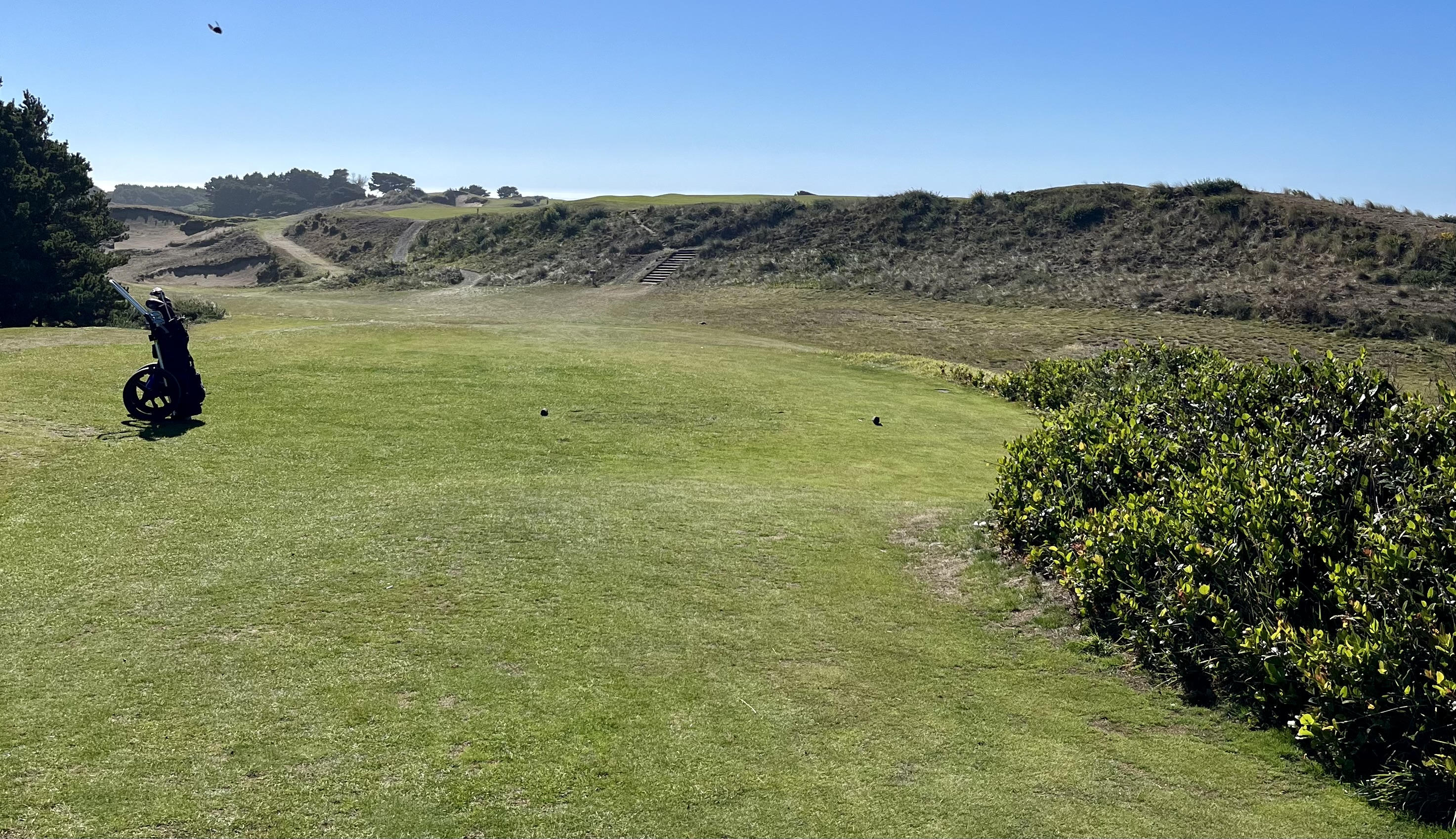
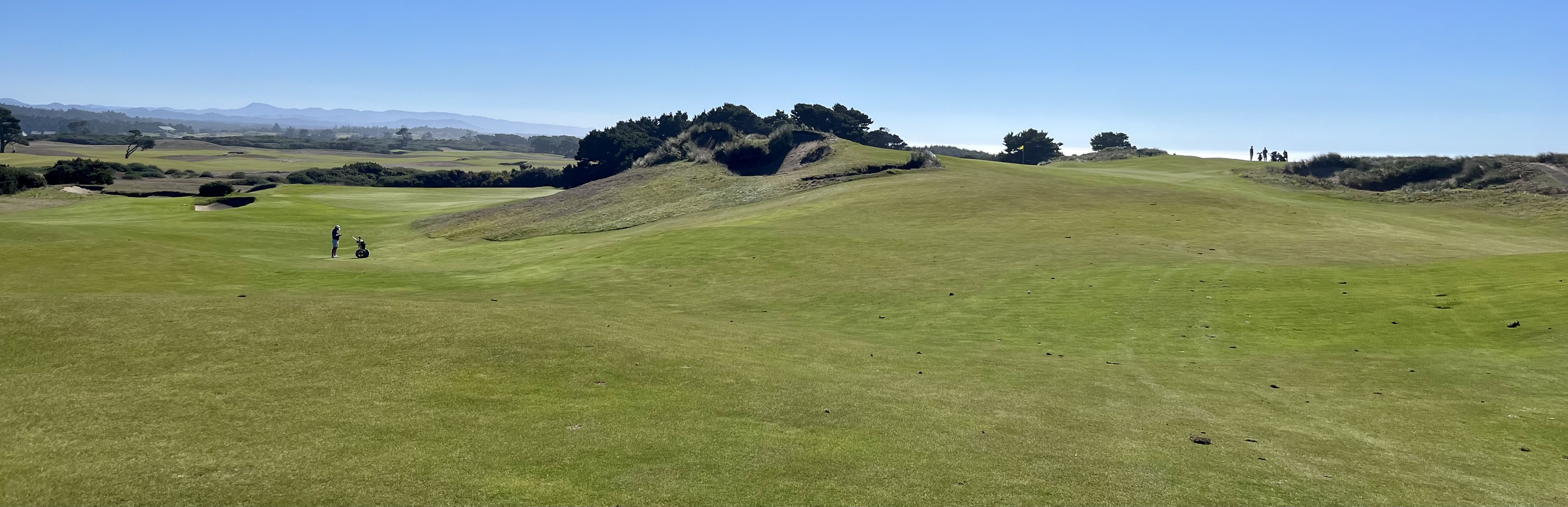
Pacific Dunes features somewhat of an unconventional back 9 routing as a par 35 with four par threes and three par fives. It begins with back-to-back, breathtaking par threes that are among the best one-shotters in America. At 206 yards, the 10th is long par 3 with numerous teeboxes from differing angles. The conventional tee plays downhill over dunes to a large, subtle green lined by gorse. With the Pacific Ocean glistening in the background, this is one of the most photogenic par threes you’ll ever play.
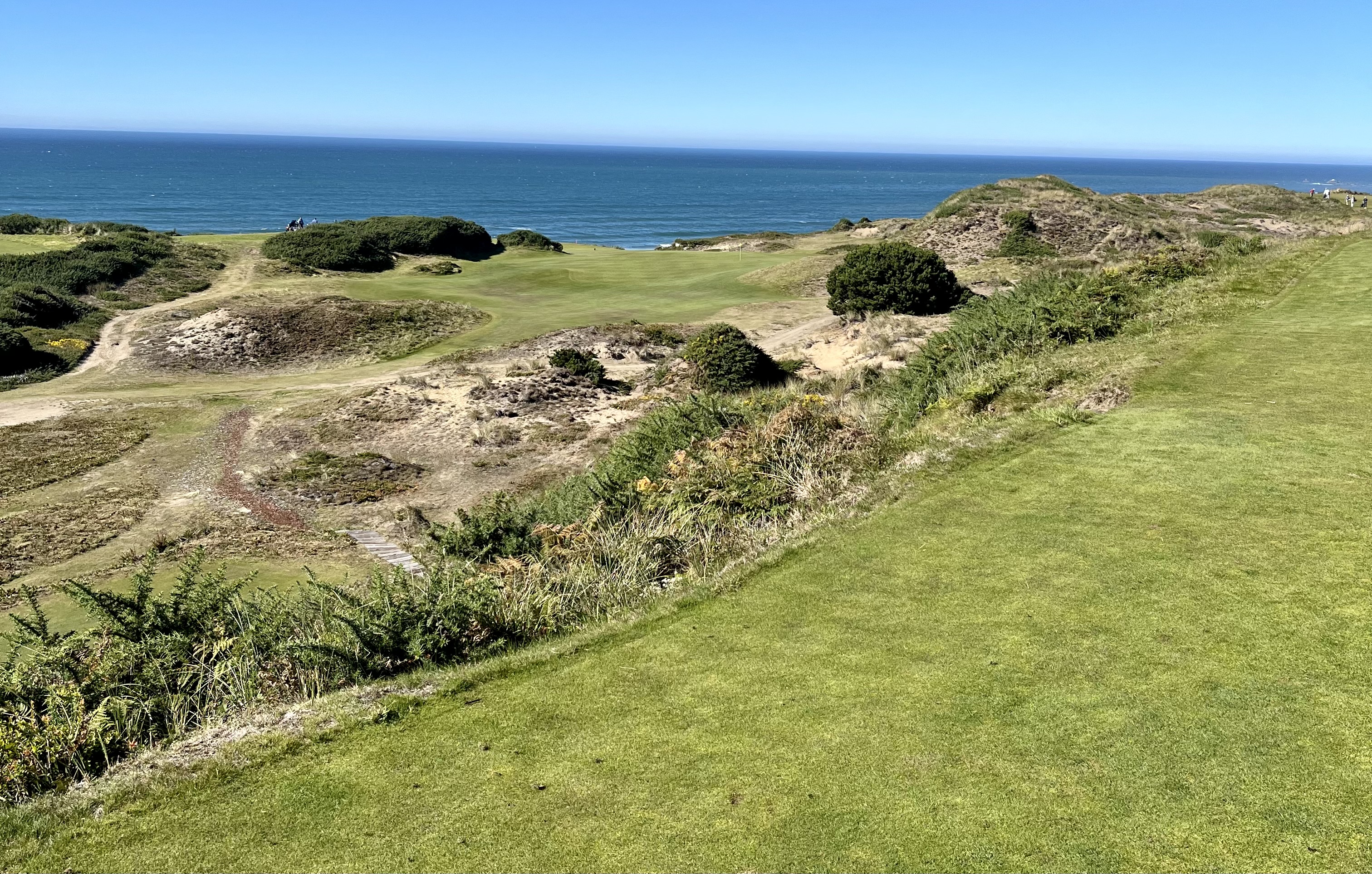
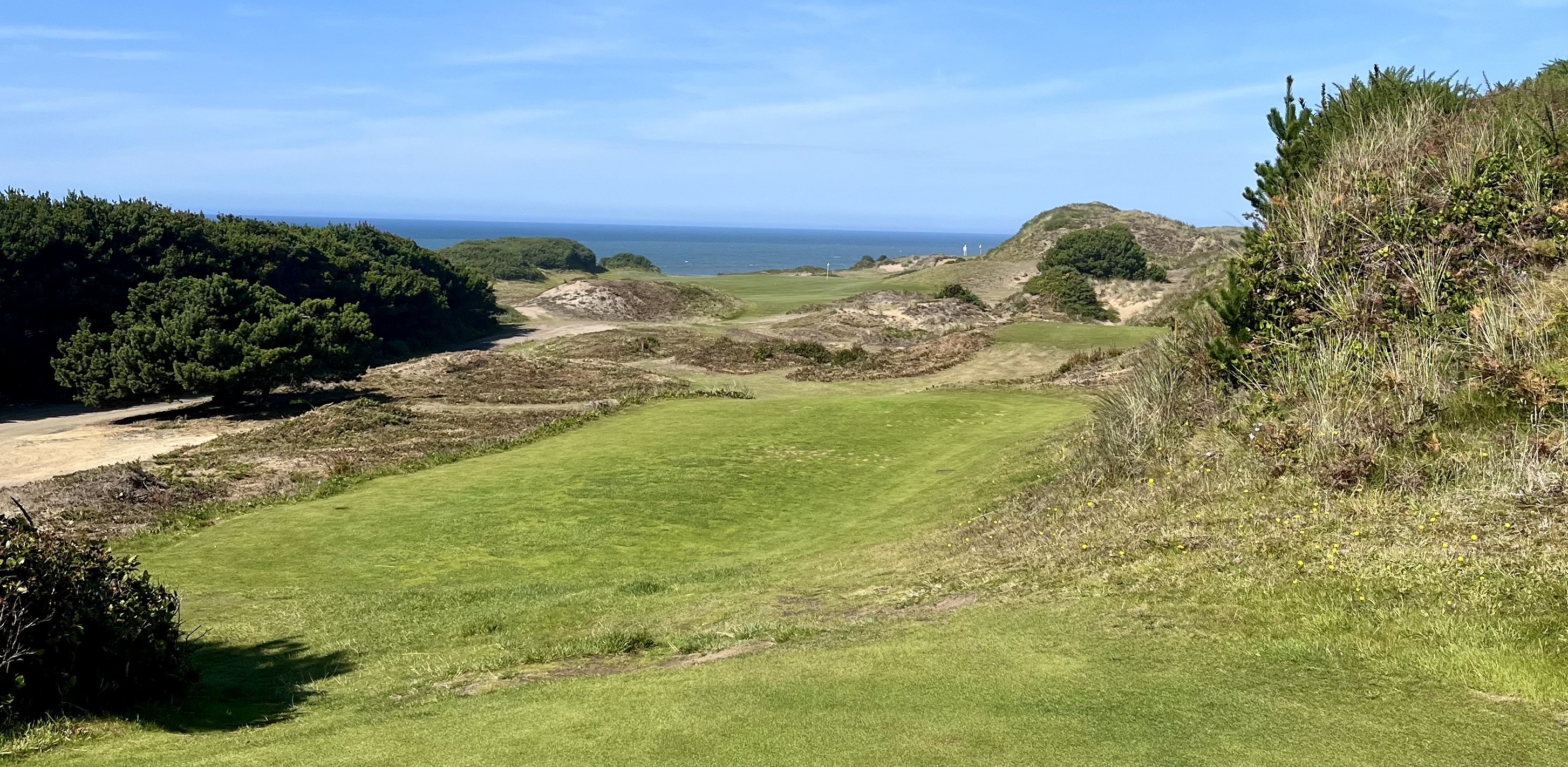
The 11th hole turns north and sits along the cliff’s edge at 148 yards. Playing over gorse and bunkers, this small, narrow putting surface slopes right-to-left towards the Ocean and is lined by numerous bunkers on either side. Despite its short distance, the wind is usually gusting here and this hole can play anywhere from wedge to wood.
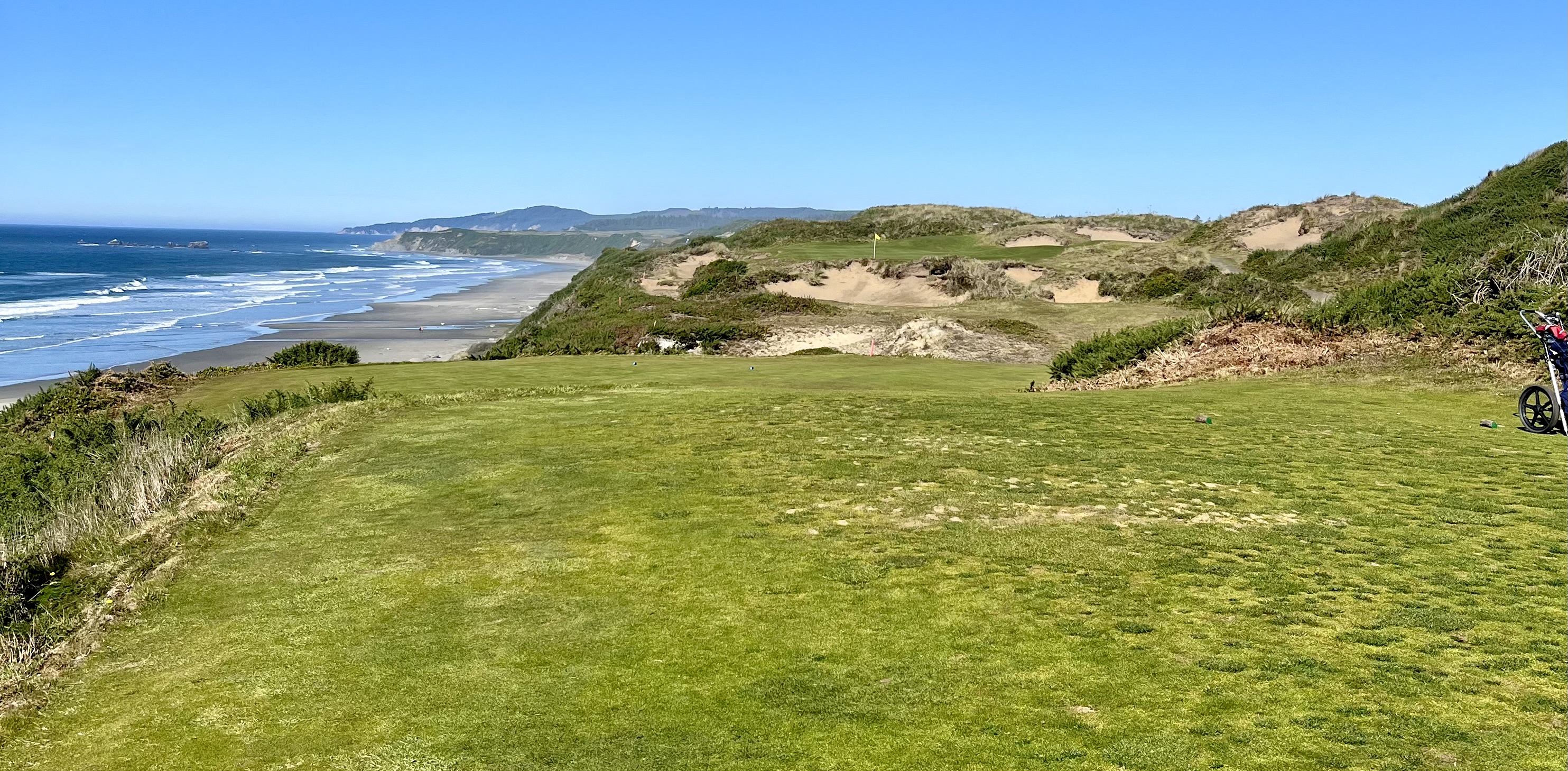
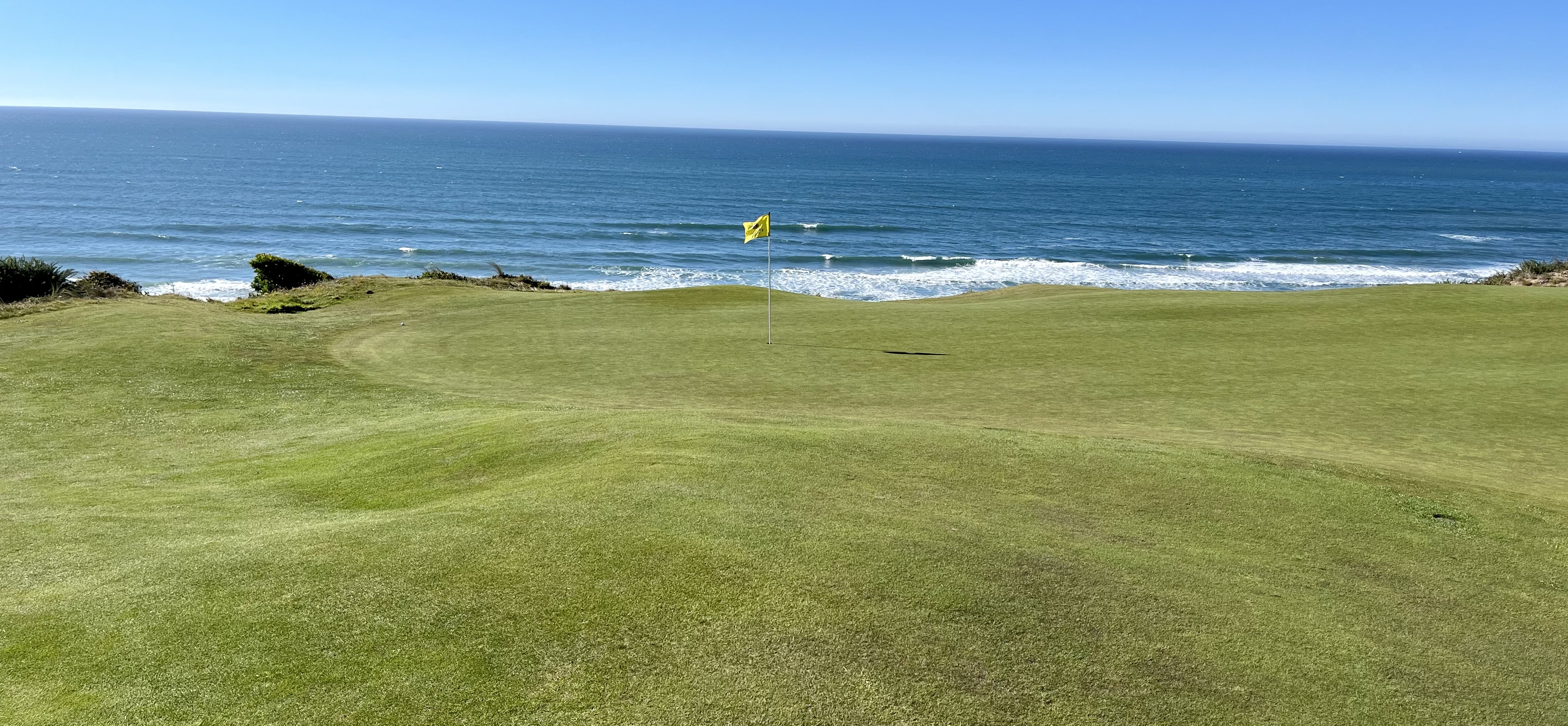
The par fives on the back 9 act as transition holes and the 12th takes you back inland for a bit before returning to the coast. At 529 yards, this hole begins with a fairly straightforward teeshot to a generous fairway lined by gorse down the far right and several bunkers on the left. With about 150 yards remaining, the fairway turns slightly left with a centerline bunker at this point and mounds beginning on the left. Another intimidating bunker lies just short of a front-to-back sloped, angled green.
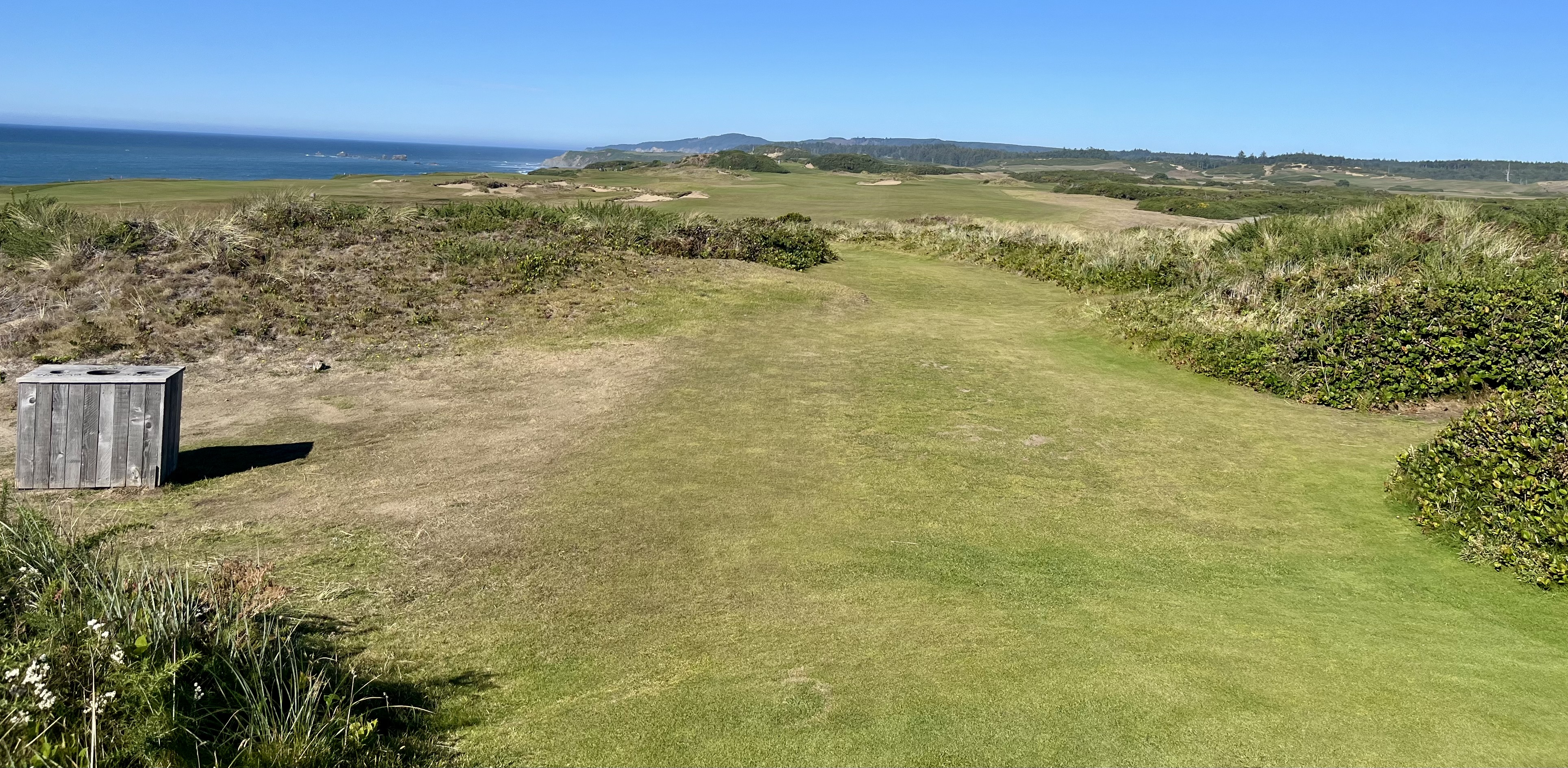
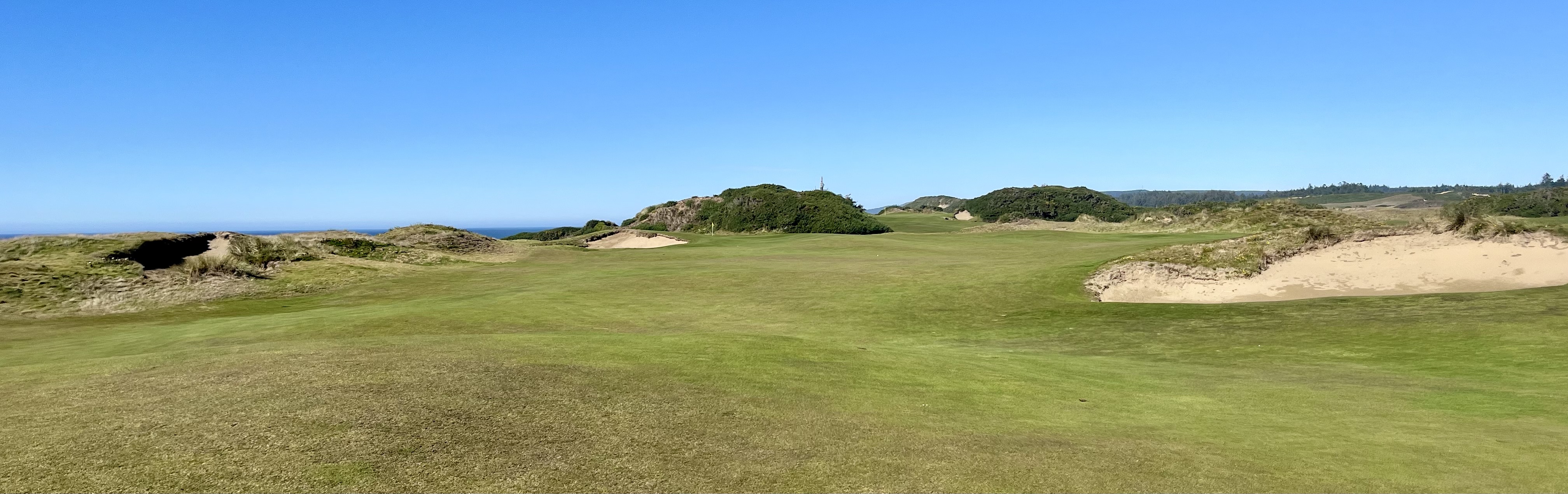
The 13th hole takes you back to the coastline as an epic 444 yard par 4. While the fairway is very generous, you’ll need a carry of at least 225 yards to reach the preferable left edge of the fairway and giant natural dunes run down the right side, making for somewhat of an intimidating teeshot. This approach runs slightly uphill to a narrow green sandwiched between the Pacific Ocean on the left and a 60-foot tall dune to the right. This is a very difficult hole due to the length, wind, and hazards, but is one of the best par fours in America. Shockingly, this hole was not part of the original design, but was later added after David McLay Kidd was given land from the original routing to finish Bandon Dunes.
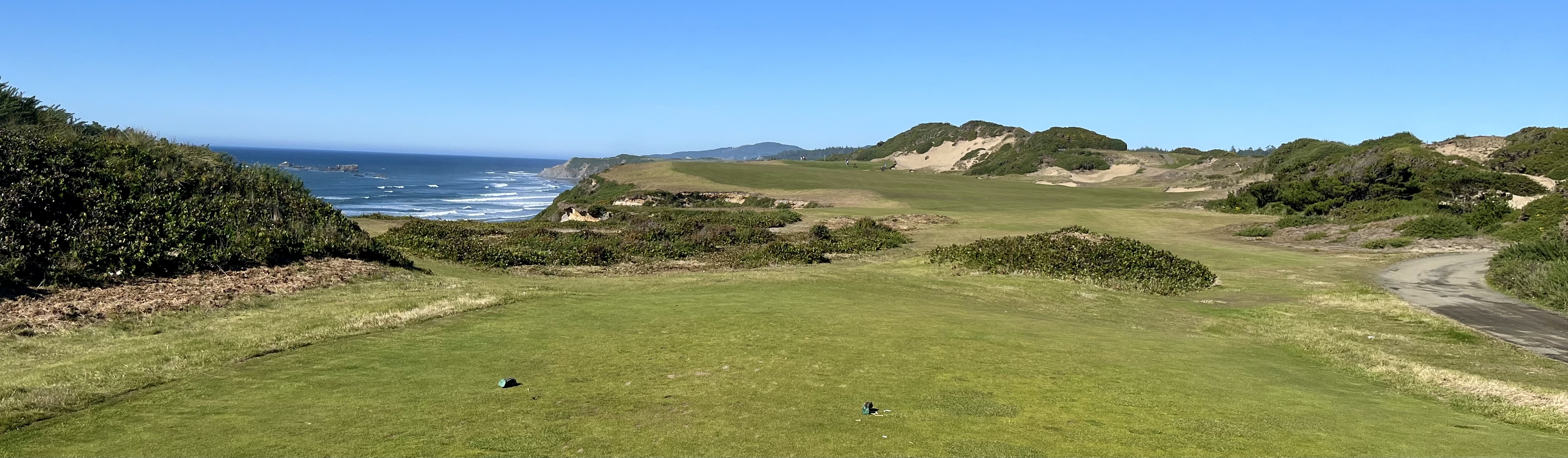
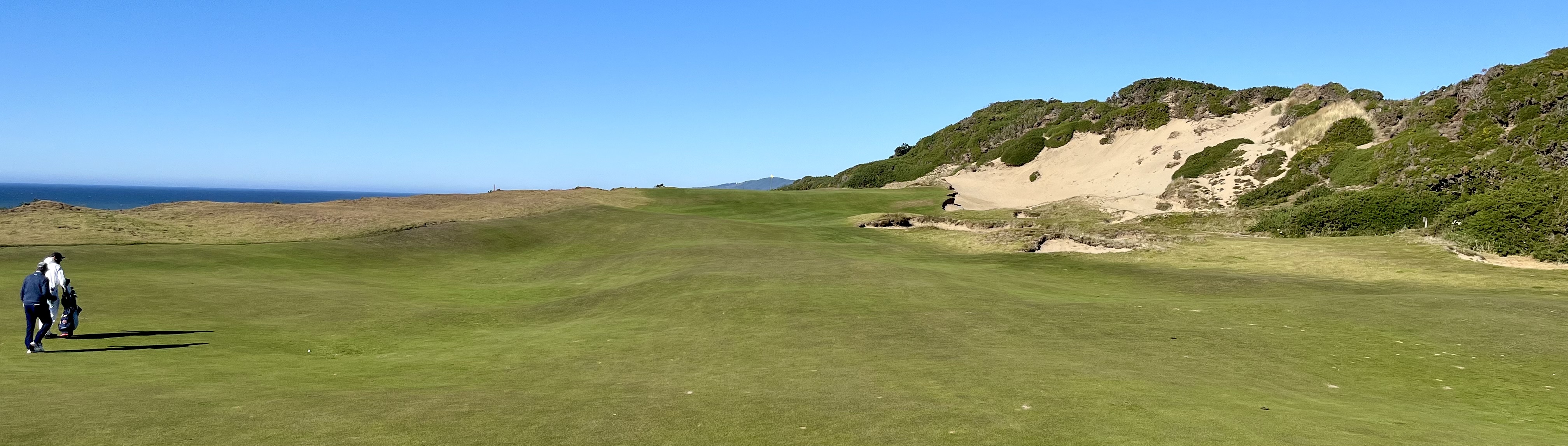
The 14th hole sits on top of the dunes just to the right of the 13th green as an 145 yard par 3. This is a neat little hole playing over a valley towards a wavy green flanked by deep bunkers.
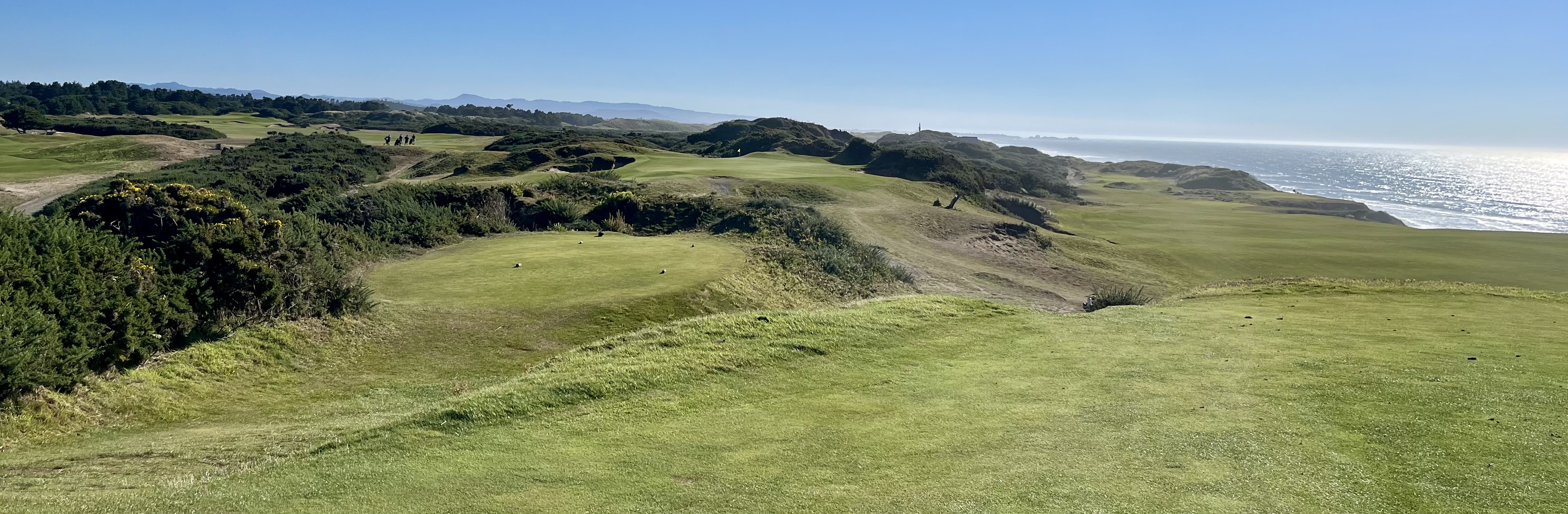
The 15th hole turns east and takes you back inland where you’ll play the rest of your round. This 539 yard par 5 plays straightaway with a generous fairway and little danger until a right crossbunker at 330 yards. Several other bunkers dot the fairway for much of the lay-up area, but longer hitters should be able to carry all of them on their second shot. This elevated, large putting surface slopes back-to-front with steep slopes of tight lies surrounding it.
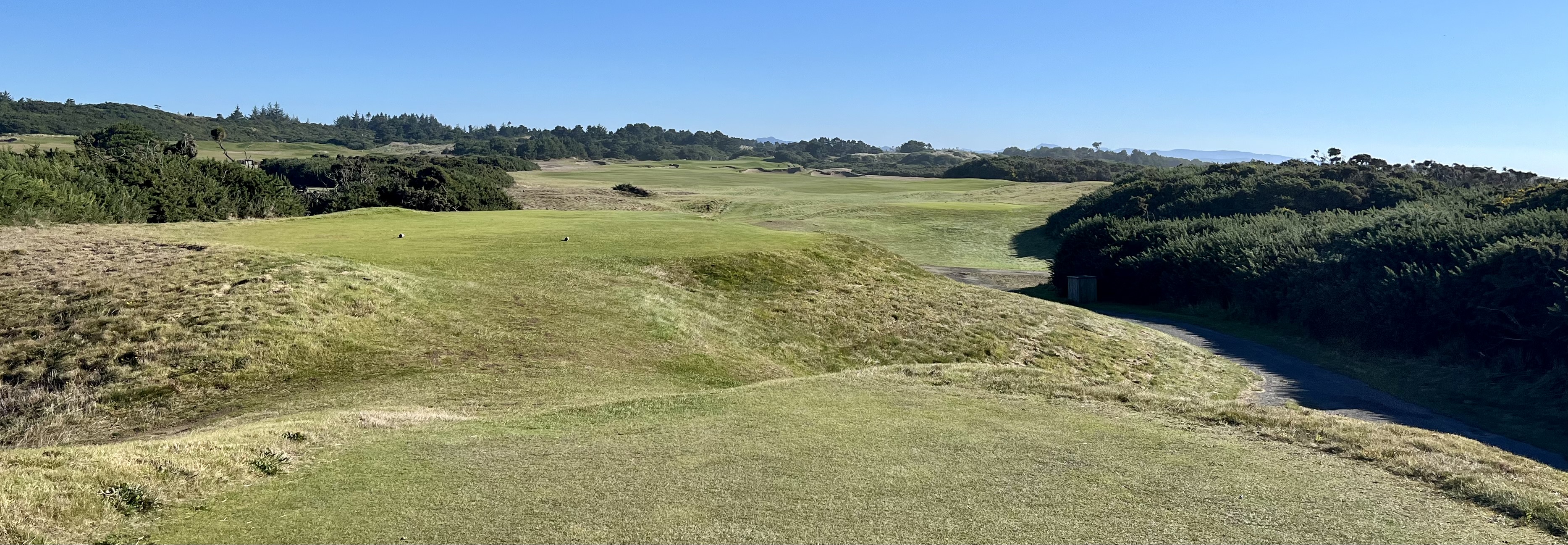
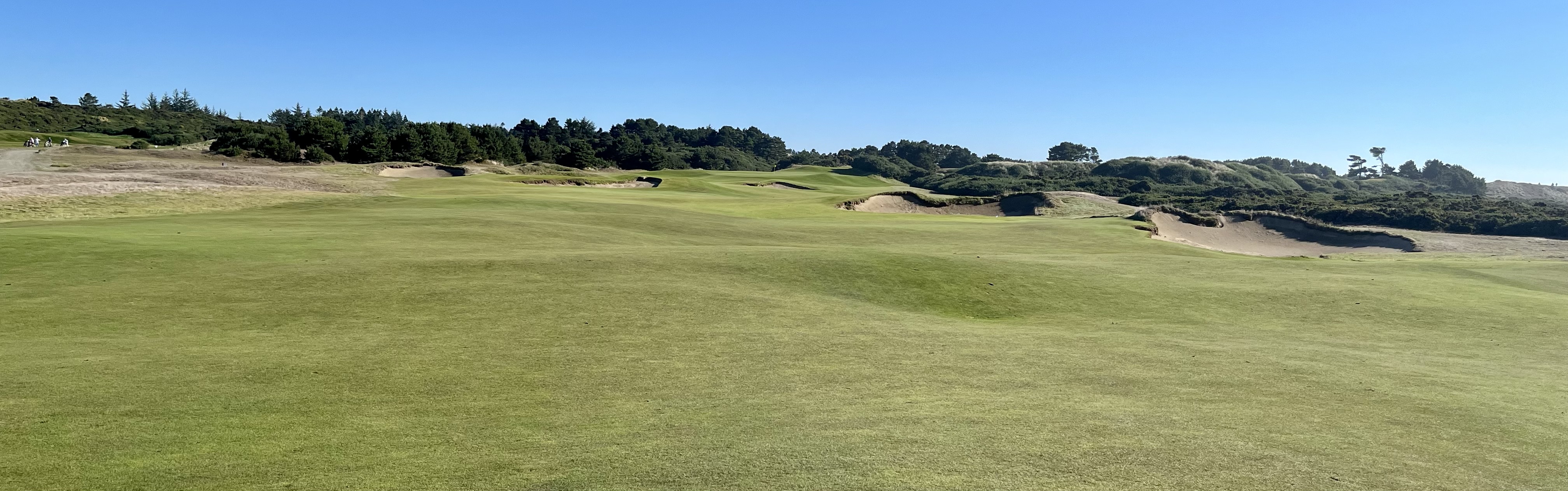
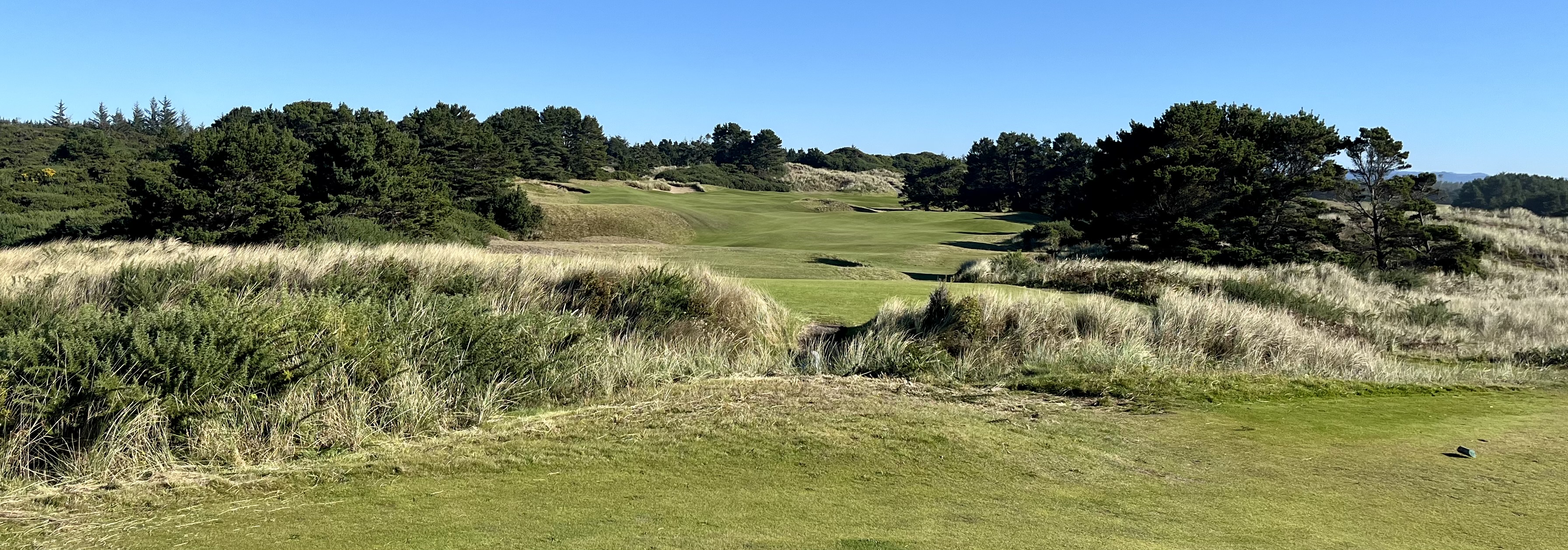
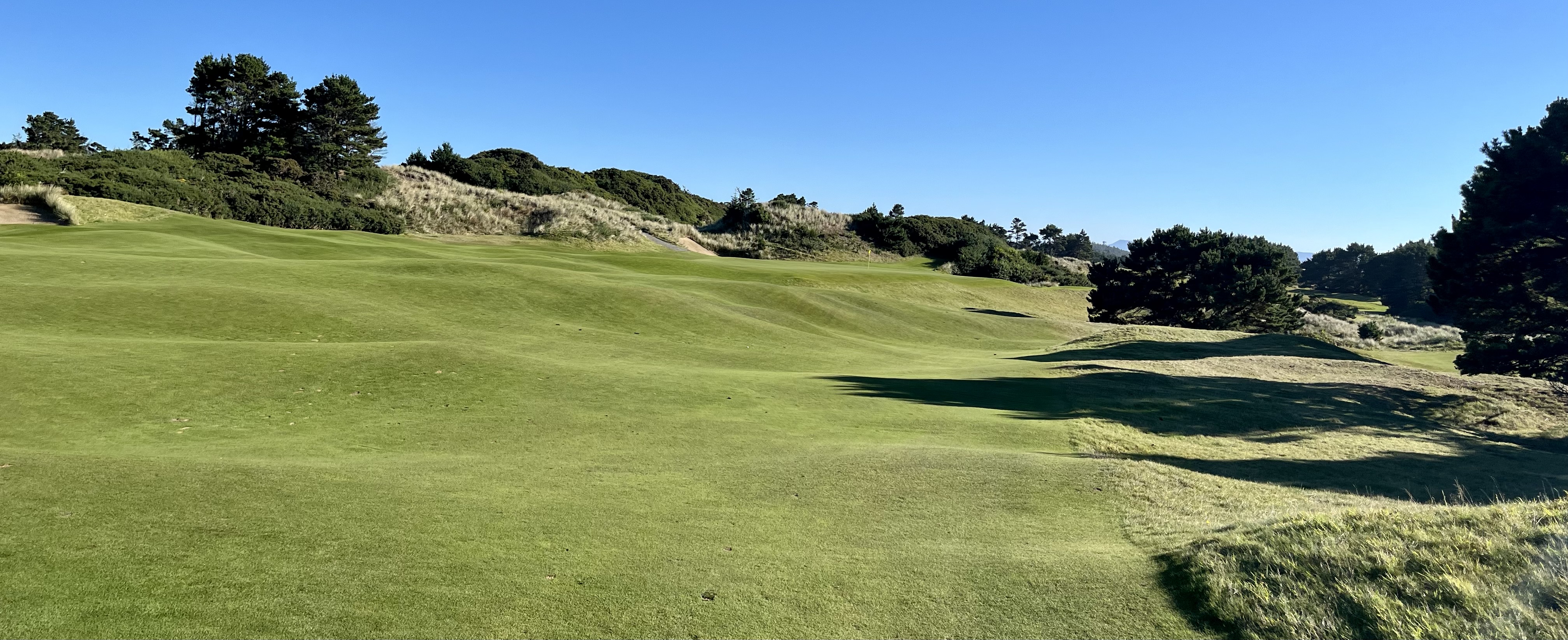
Now firmly inland, the 16th hole is another fantastic short, risk/reward par 4 at 338 yards. This is a fascinating dogleg that begins to turn right around trees at around 220 yards. The fairway is wonderfully undulating and bunkers line the left side at 200 and 270 yards to keep golfers honest. While cutting the corner and reaching the green is an option for the longest hitters, most golfers will face an awkward wedge shot into a narrow, diagonal green that slopes hard left-to-right. Deep, coffin-like bunkers defend left and long of the green, while steep, tight lies line the green to the right.
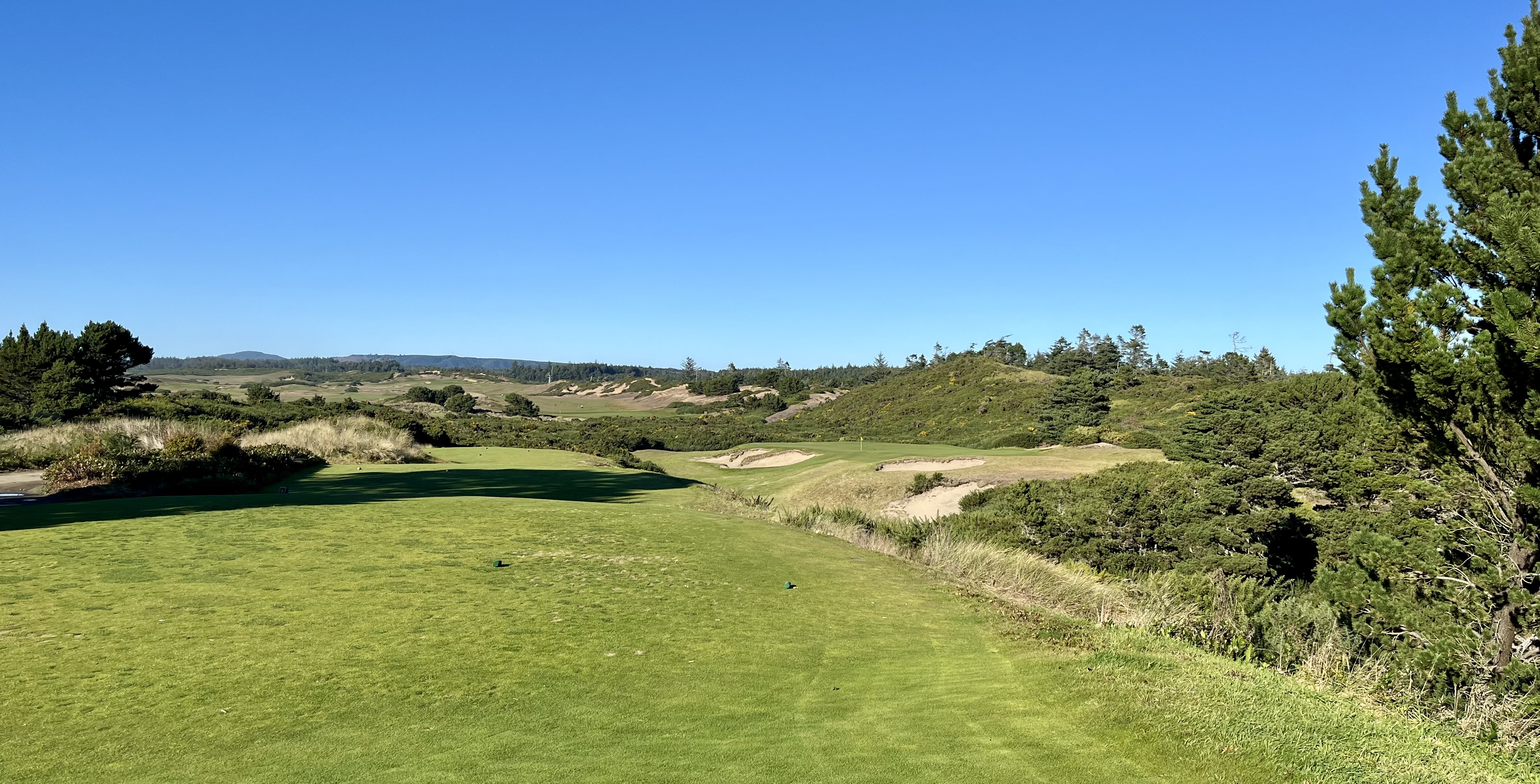
At 208 yards, Pacific Dune’s penultimate hole is its longest par 3 and another excellent hole. From an elevated teebox, this one-shotter plays over a valley to a Redan-like green defended by a devastating bunker short left. This was the site of my only birdie at Pacific Dunes, but I am quite proud of that one!
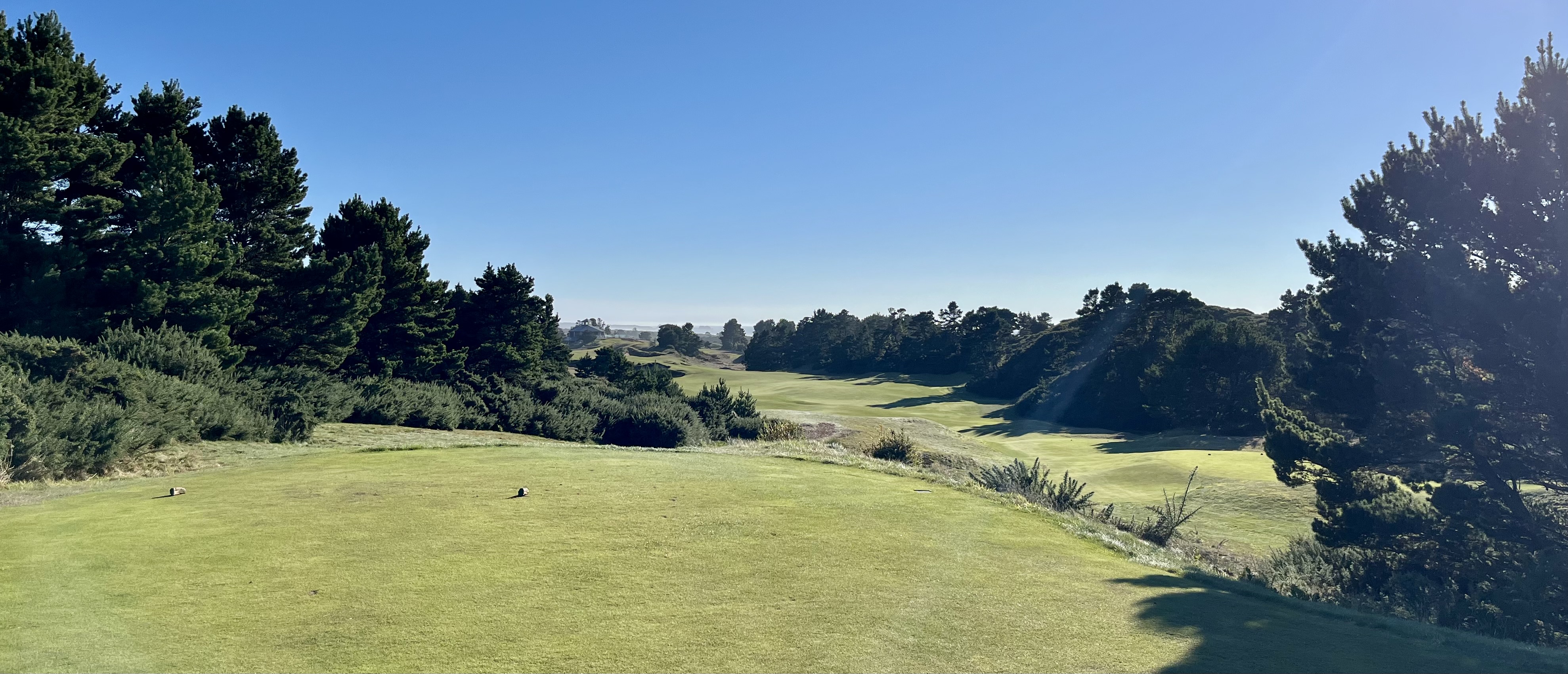
The 18th is the longest hole on the course as a 591 yard marathon par 5 ending by the clubhouse. A slight dogleg left, this hole begins with a generous, undulating fairway lined by forest down the right and a huge collection of bunkers left at 285 yards. This lay-up plays to a narrower fairway lined by dunes and bunkers. The diagonal green is open up front and has somewhat of a punchbowl feel with bunkers on either side.
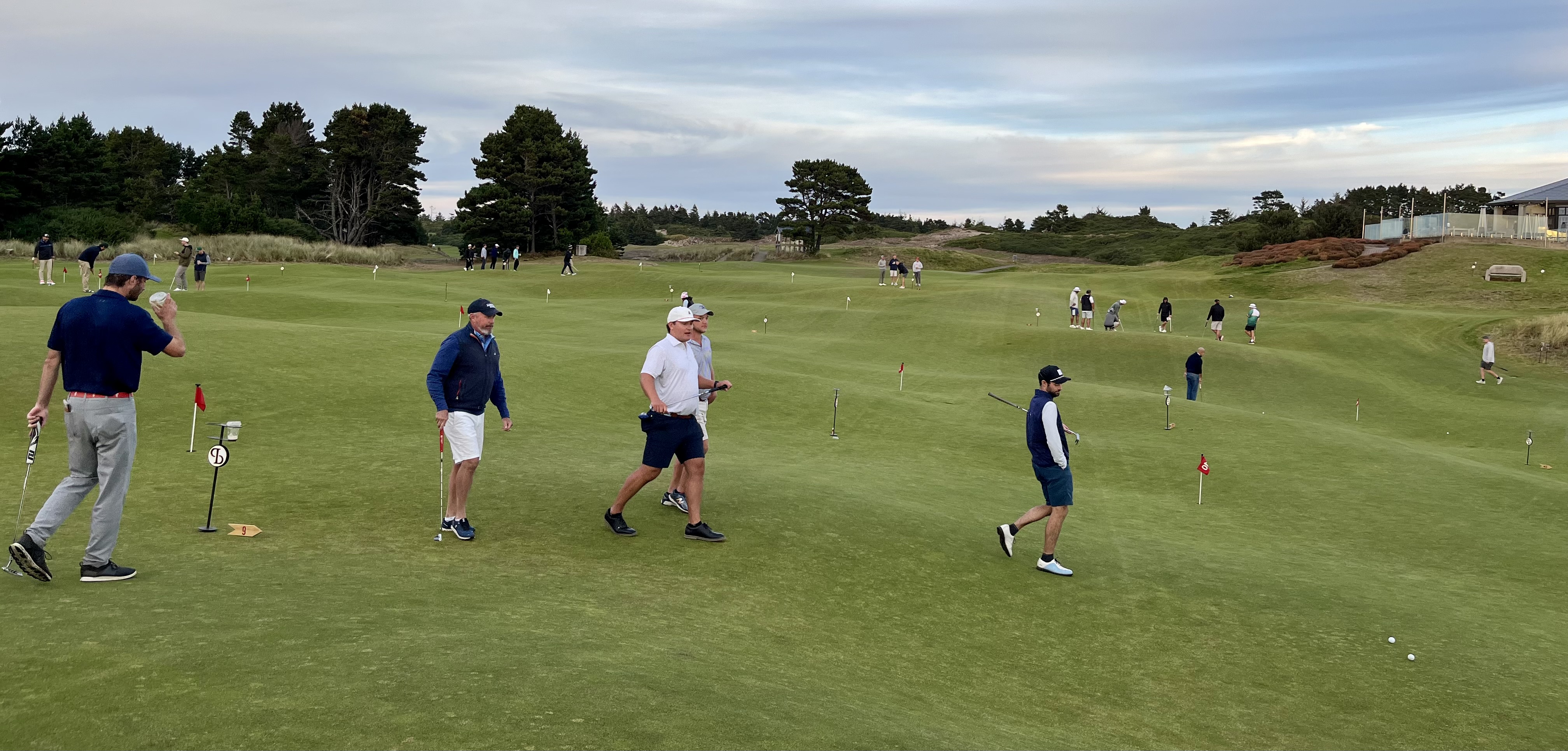
General Comments: To warm up before your round at Pacific Dunes, you’ll have to use the Resort’s practice center nearby including a full range, short game area, and warm-up course. Like all courses on property, Pacific Dunes is walking only and a very pleasant walk. The 36-hole Himalayas putting course named Punchbowl is adjacent to the 1st tee at Pacific Dunes and is an unreal place to unwind after your round.

Although the high quality golf is clearly the draw at Bandon, I really can’t say enough good things about the Resort as a whole. From the cozy, yet not over-the-top lodging, excellent food, friendly staff, and convenient shuttle system, this is truly a golfer’s paradise and the cream of the crop when it comes to golf resorts. It is definitely worth the long journey to get here.
Verdict: With breathtaking views and a wonderful routing maximizing strategy and variety, Pacific Dunes is a world-class course and easily my favorite at Bandon Dunes. If you only have time for one round at Bandon, this is the course to play.
 Worldgolfer's Golf Course Reviews
3 thoughts on “Review: Bandon Dunes Golf Resort (Pacific Dunes)”