Designer: George Fazio/Tom Fazio (1970), Tom Fazio (2006, Renovation), Tom Fazio/Logan Fazio (2020, Renovation)
Location: Tequesta, Florida
History: Jupiter Hills was the vision of golf professional and architect George Fazio, who was looking to find good land to built a course in Southeast Florida. He found suitable land in 1969 and quickly built a course with his nephew Tom Fazio in 1970 that is now known as the Hills Course. At first Jupiter Hills was only golf, but grew into a residential community by the late 1970s with an additional course, The Village Course, opening in 1978. Jupiter Hills hosted the 1987 U.S. Amateur won by Billy Mayfair, the 2018 U.S. Amateur Fourball, and is scheduled to host the 2027 U.S. Mid-Amateur and 2032 U.S. Women’s Mid-Amateur. It has also hosted numerous local tournaments including two Florida State Amateurs.
Architect Tom Fazio has designed hundreds of courses in his illustrious career, but it’s no secret that the Hills Course is one of his all-time favorites. He has tinkered on the course throughout the years and can frequently be found on property. The Hills Course is considered the better of the two courses at Jupiter Hills and currently owns the following accolades:
- #122 Best Course in America – Golf Digest (2025)
- #89 Best Modern Course in America – Golfweek (2025)
- #24 Best Residential Course in America – Golfweek (2026)
- #4 Best Course in Florida – Golf Digest (2025)
- #12 Best Course in Florida – Golf Magazine (2024)
- #9 Best Course in Florida – Top100golfcourses.com (2024)
- #9 Best Private Course in Florida – Golfweek (2025)
Conditions: 10/10, The Hills Course is in near-perfect condition, with wonderful firm and fast Bermuda fairways, slippery greens, and excellent bunkers.
Value: N/A, This is a private course.
Scorecard:
Tee Par Yardage Rating Slope
Black 70 7369 76.9 148
Gold 72 7016 75.3 144
Blue 72 6627 73.5 140
White 72 6204 71.5 135
Green 72 5560 68.7 128
Red 72 5232 72.0 132
Hole Descriptions: In the past, I have been critical of Florida golf, which typically features flat terrain, ample water and bunkers, and fairways lined by residential communities. These courses can be good and certainly are nice to play when it’s snowing back home, but rarely can this recipe lead to a great course. George Fazio, hailing from Philadelphia and its abundance of excellent hilly classic courses, probably felt the same way and seems to have been quite deliberate with his search for great land to build his course. He no doubt chose correctly, as the Hills Course occupies exceptionally hilly terrain for the area and is quite unique in this regard.
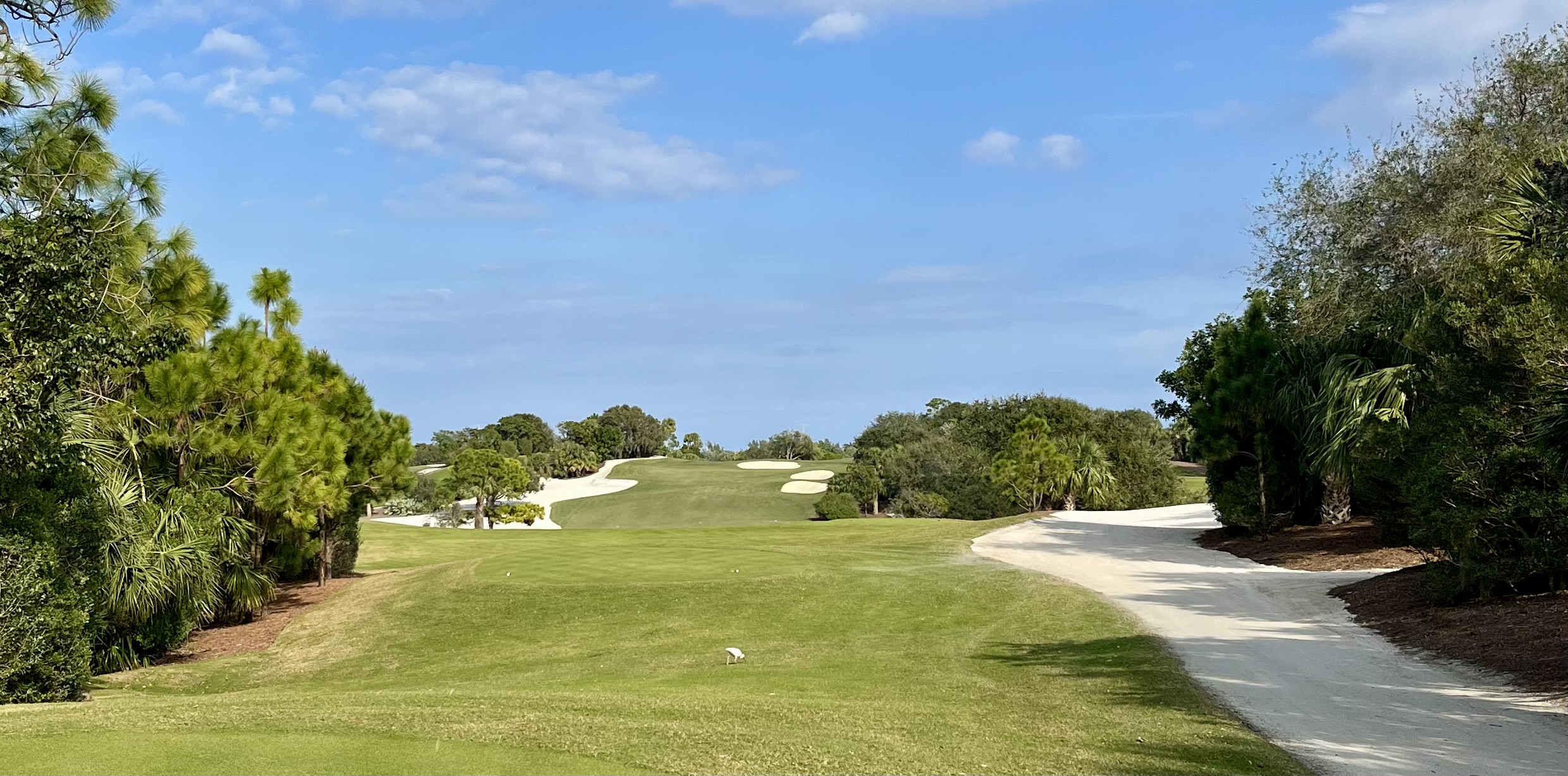
While the strong land movement is Jupiter Hills’ greatest strength in my opinion, the course excels in numerous other areas as well. Another major strength is the routing, which flows seamlessly between holes and is mostly free of residential houses unlike its sister course. Aesthetically, the course has somewhat of an Australian sandbelt appearance, with flashy tightlipped bunkers and large sandy wastebunkers dividing holes. The conditioning here is phenomenal and it is a difficult but fair test with ever present wind, capable of hosting USGA events and appealing to its older members at the same time. Overall, I loved my round at the Hills Course and consider it one of my favorite Florida courses because it looks and plays so differently. This is no doubt one of the finest residential courses in America and certainly one membership should be proud of.
The course opens with a 524 yard par 5 with an elevated teebox near the clubhouse. This is one of the most memorable opening teeshots in America, playing severely downhill to a tight fairway lined by sandy wastebunkers and trees. At about 290 yards, the fairway turns to the left and remains quite narrow for the remainder of the hole with large water hazards down either side for much of the lay-up area. This green is surrounded by a wastebunker and tight lies and contains two tiers, with a back-to-front sloped back tier and flatter front tier.
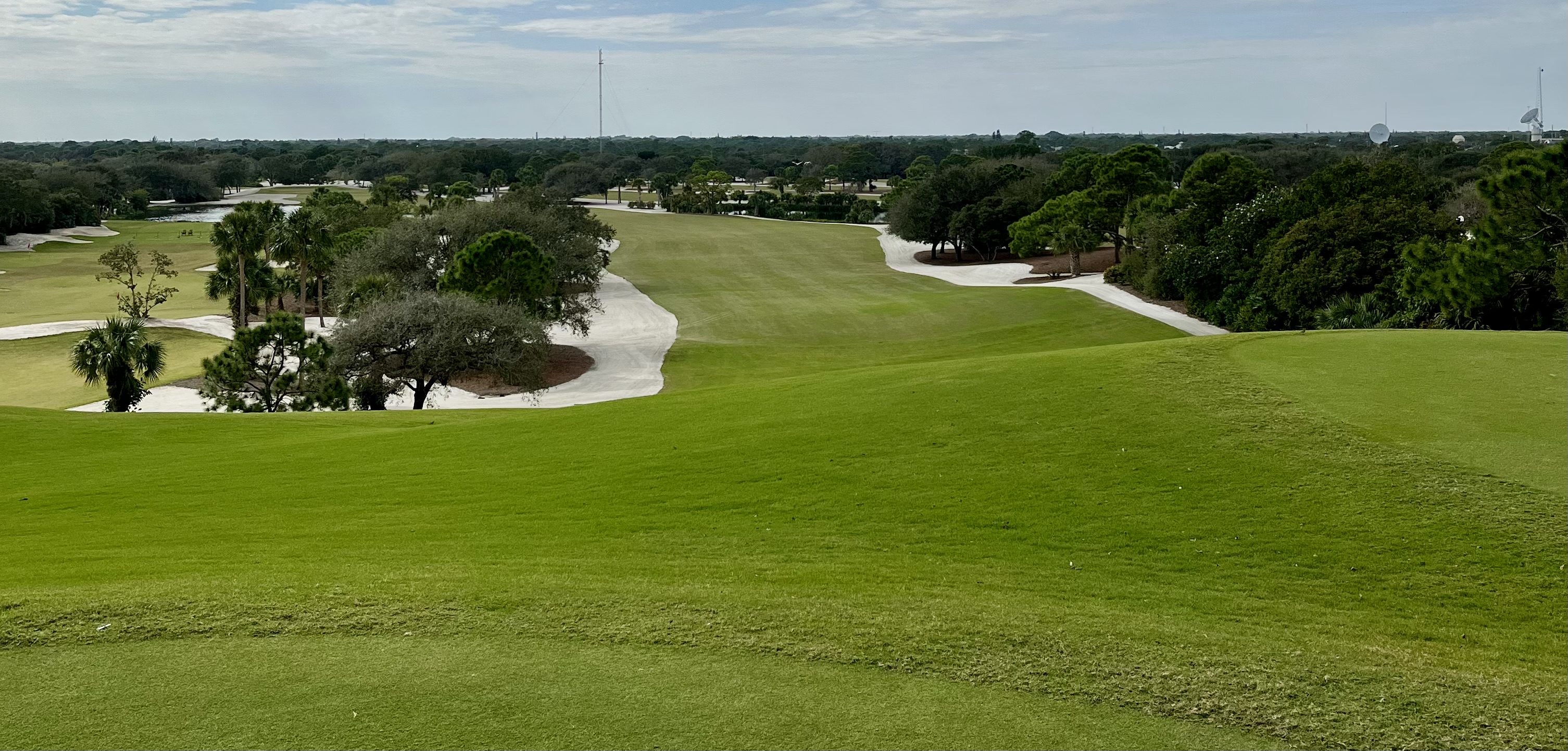
The 2nd hole continues in the same direction as the longest par 4 on the course at 424 yards. This number 1 handicap is also on the tighter side, with trees and houses down the left the entire way and sandy wastebunkers on the right. Bunkers defend this two-tiered, back-to-front sloped green left and short right.

At 160 yards, the 3rd hole is the Hills Course’s shortest and easiest par 3. This one-shotter plays over a water hazard to a large green containing a front right swale and defended by a back right bunker.
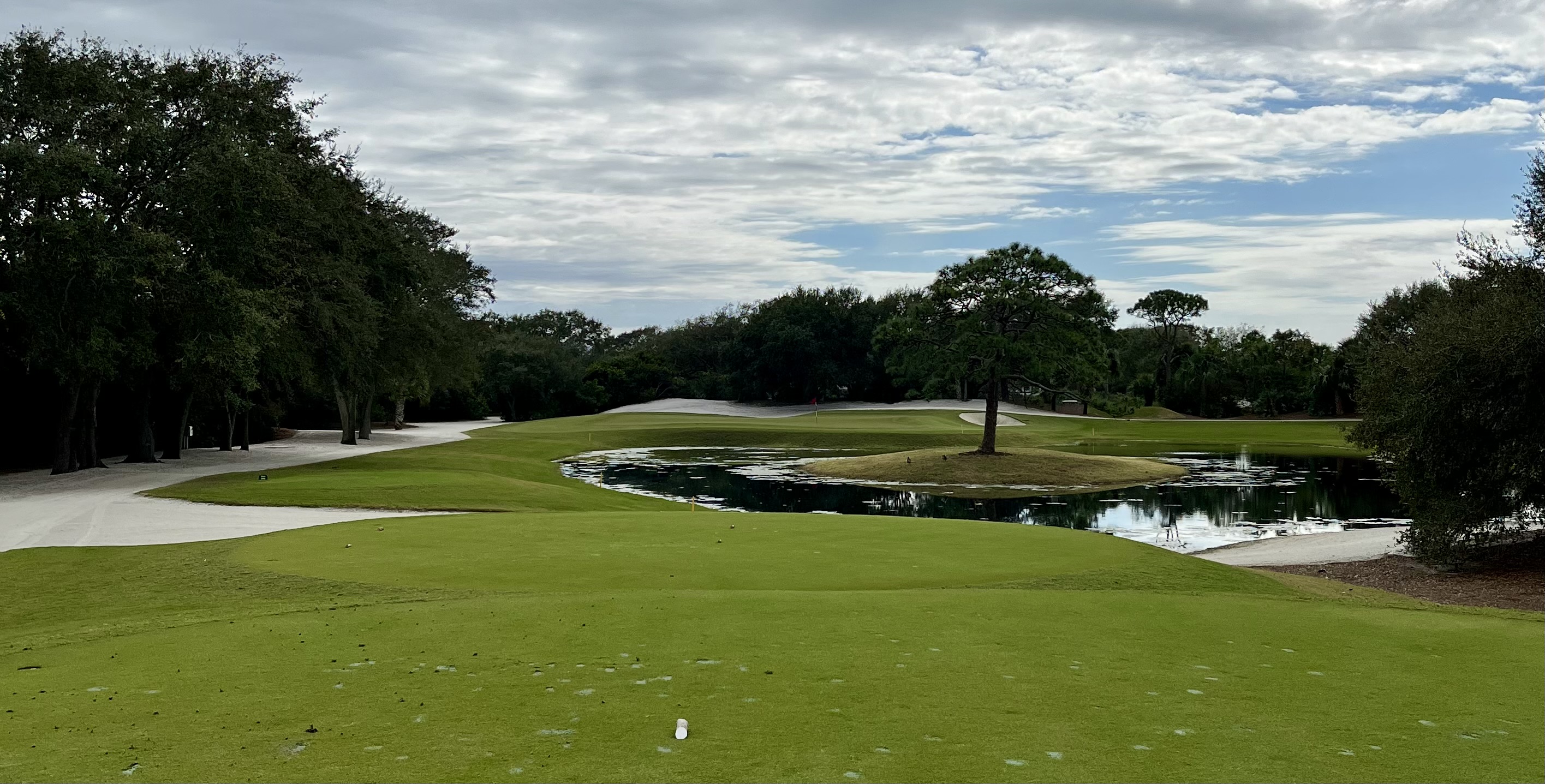
The 4th hole provides a good scoring opportunity as a shorter 502 yard par 5. This hole begins with another rather narrow fairway lined by OB and trees down the left and wastebunker on the right. A large crossbunker sits on the right half of the fairway around 245 yards and makes the landing area even tighter. The hole opens up on your second shot, with a heavily undulating, wide fairway in the lay-up area that invites you to swing away. This triangular green is well-defended with a tree short right and bunkers short, left, and right requiring an aerial approach.
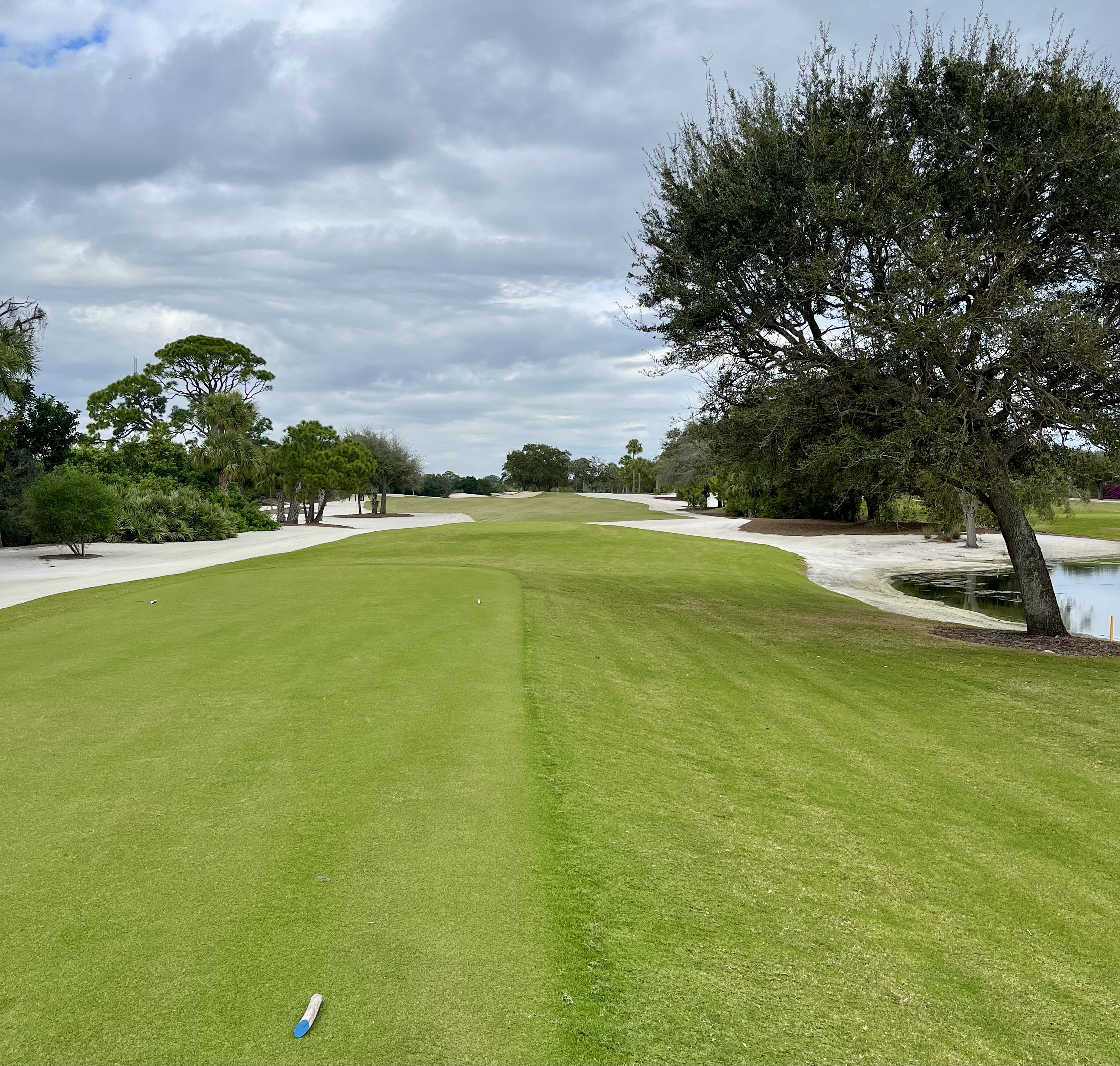
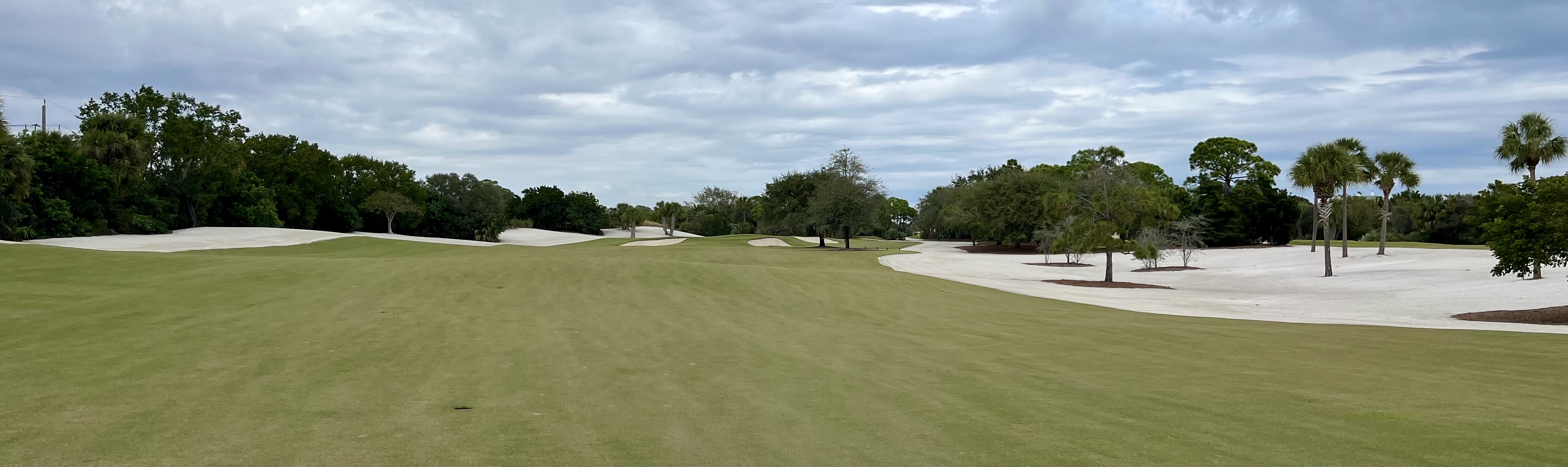
The course really starts to get good with the 5th, the first of three consecutive dogleg left par fours. At 403 yards, this is a strong hole playing over level terrain to a wastebunker-lined fairway that begins to turn left around 235 yards. Like the next few holes, the 5th sort of plays like a Cape, giving the golfer the chance to be aggressive and cut the corner. This green is slightly elevated, long, and narrow, sloping right-to-left with a pesky left bunker.
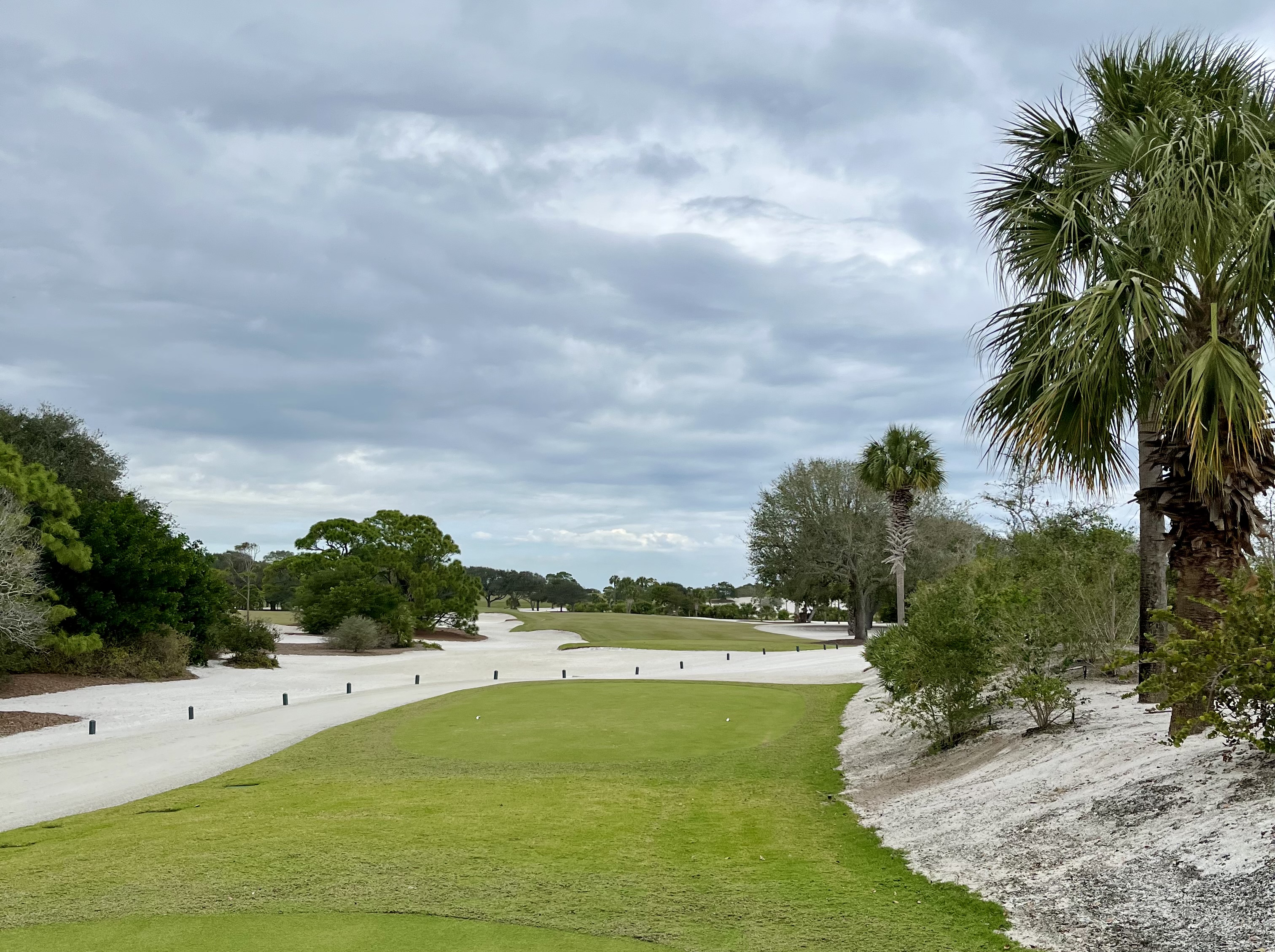
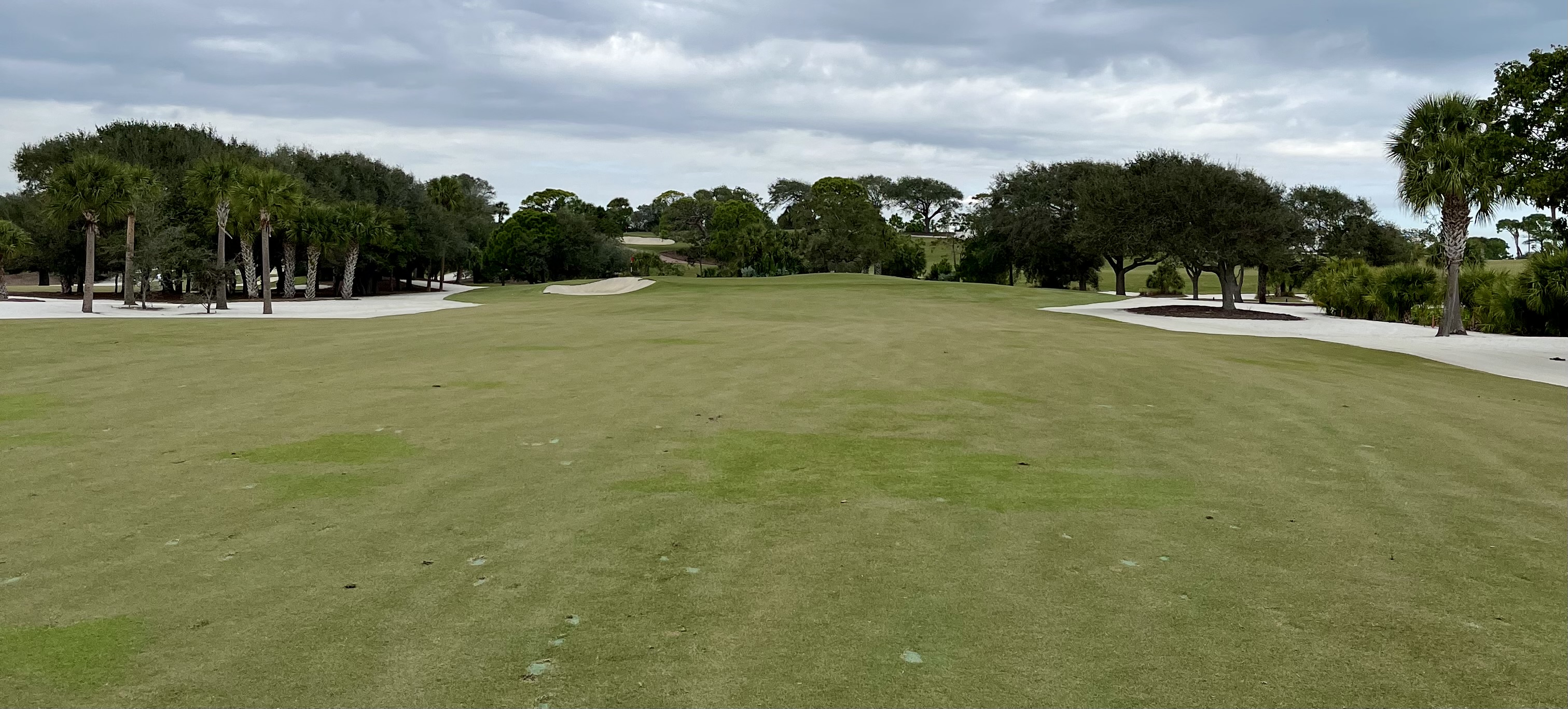
The 365 yard 6th hole is a shorter and more severe dogleg with a tighter fairway that turns left at only about 200 yards. While cutting the corner is again an option, you’ll need to be very precise as anything through the fairway or right will likely be blocked out by trees. This approach plays uphill to an elevated green that slopes hard from back left-to-front right with bunkers surrounding it.
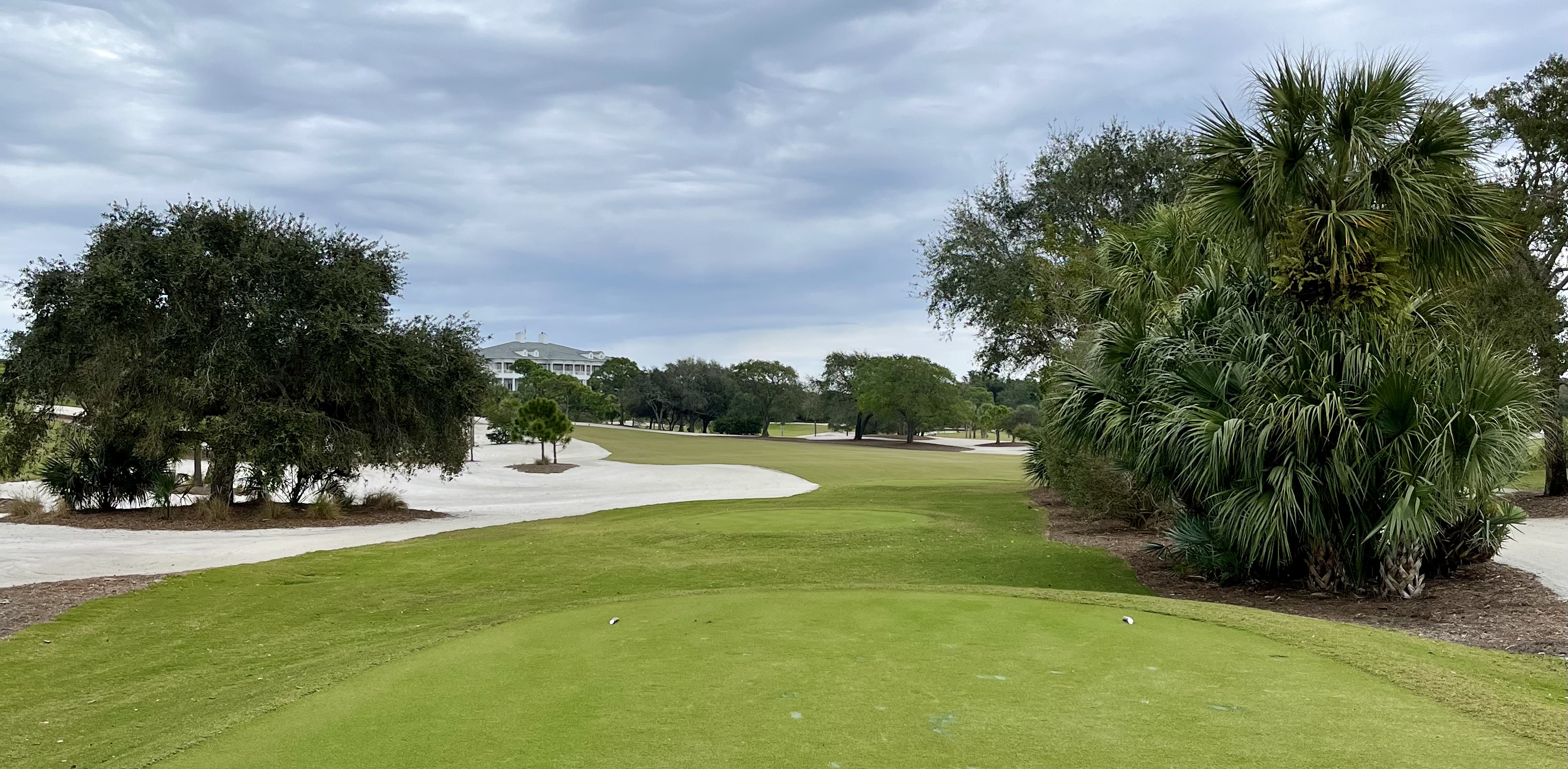
The 7th is my favorite hole on the front 9 as an excellent 412 yard dogleg left par 4. This teeshot is nothing short of exhilarating, playing over 160 yards of sandy wasteland to a fairway that turns 90 degrees left at 250 yards. While the fairway narrows quite a bit at this point, it also contains a speed slot, offering aggressive players significant extra roll on their teeshot. This approach is also superb, playing over a valley towards a wide, elevated, back-to-front sloped green that contains wild undulations. Bunkers short and left force you into an aerial approach here.
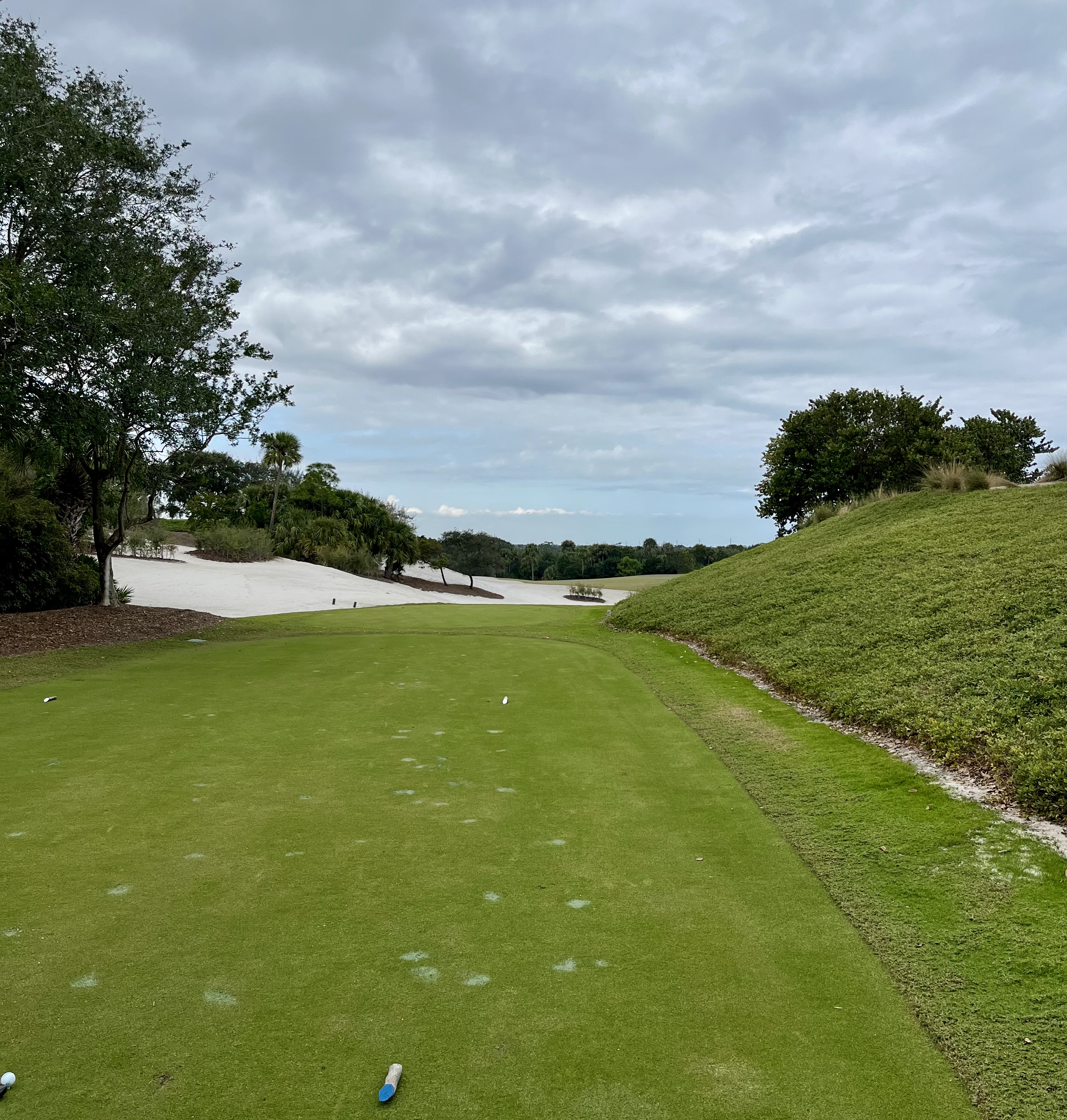
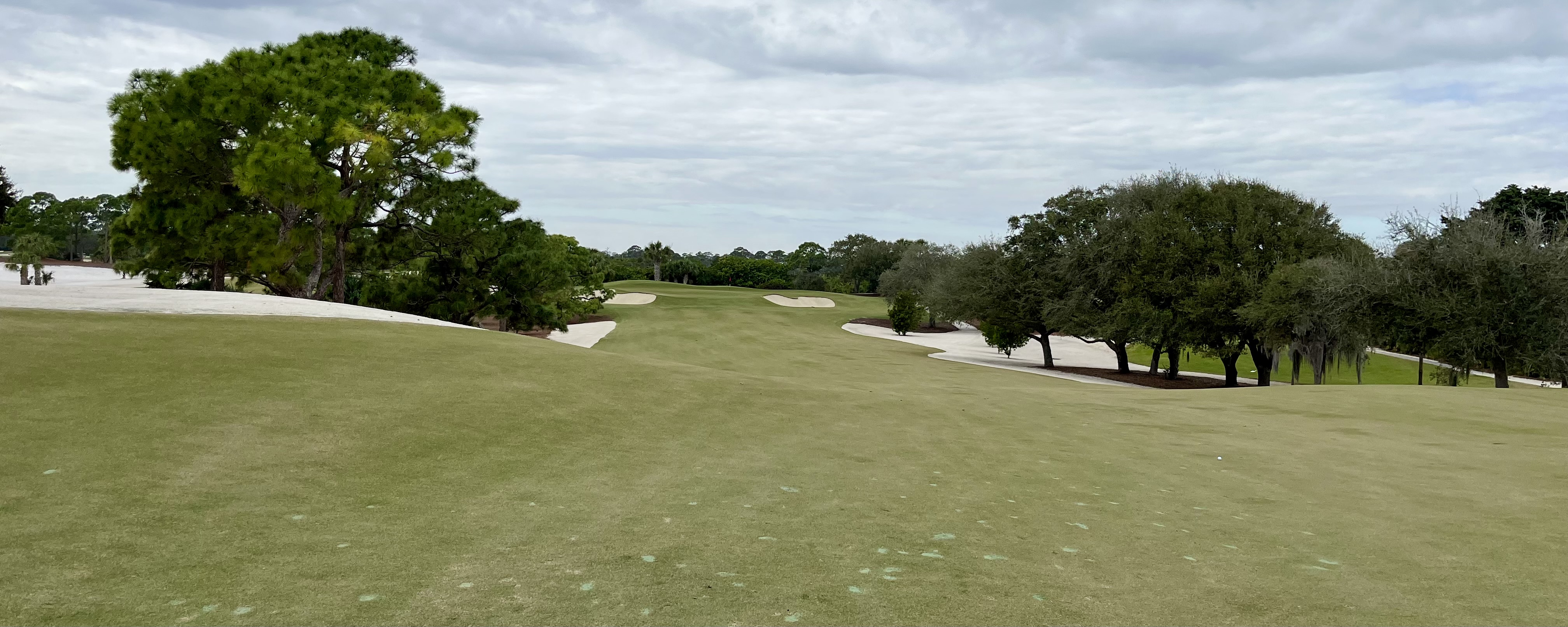
At 376 yards, the 8th hole is not a dogleg, but is yet another stellar par 4 that uses the land to its advantage. Playing straightaway, this medium-length par 4 features a generous fairway that forms a plateau followed by another significant speed slot. Those who wind up in the bottom of the valley will face another uphill approach towards a severely back-to-front sloped green fronted by two bunkers.
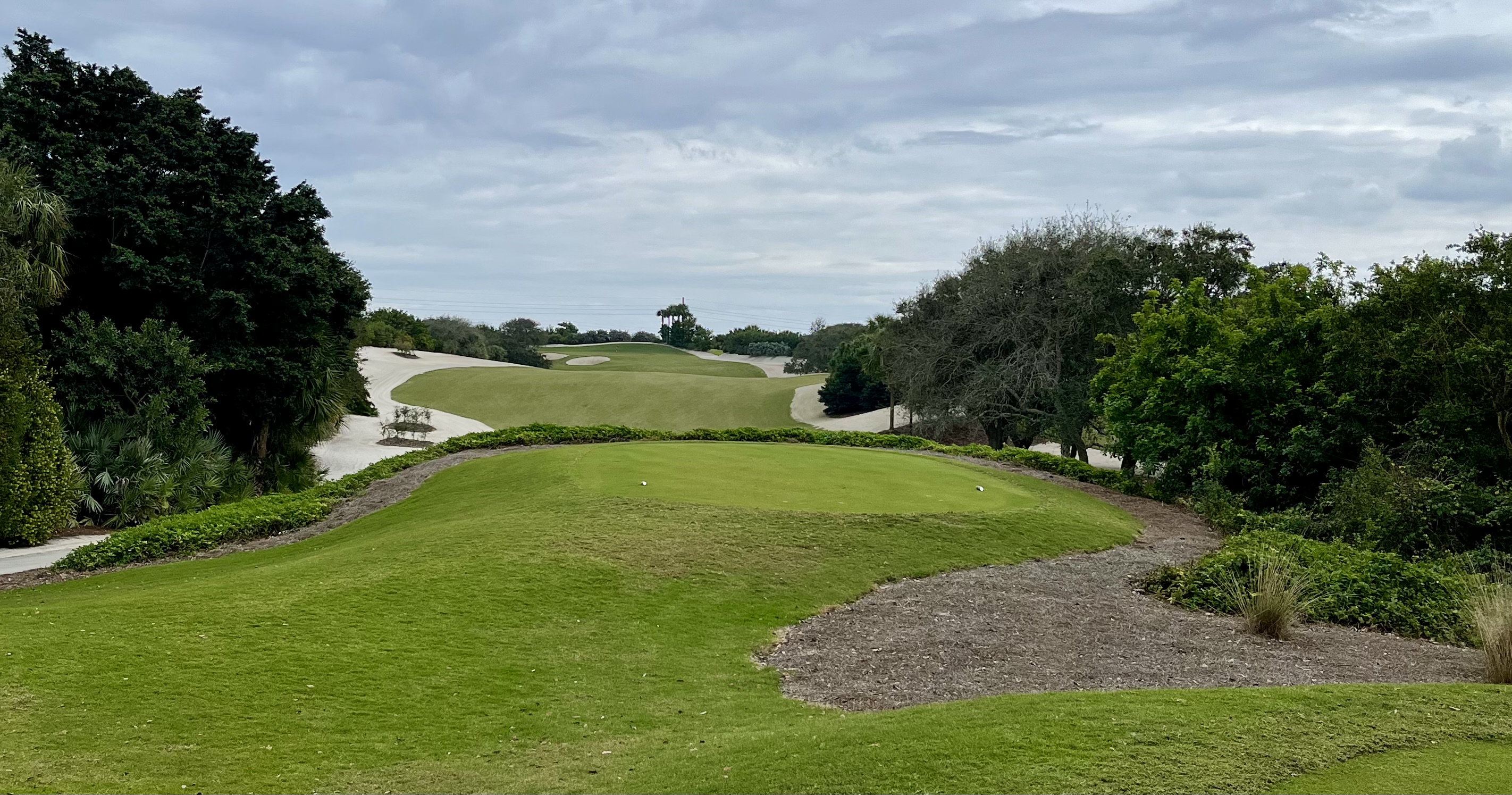
Jupiter Hills’ front 9 concludes with the most difficult par 3 on the course at 173 yards. Stretching to almost 230 yards from the Black Tees, this monster one-shotter plays at least a club longer uphill and is visually intimidating, with a giant valley of sandy wasteland between you and the green. The green itself is defended up front by two menacing bunkers and slopes both back-to-front and left-to-right.
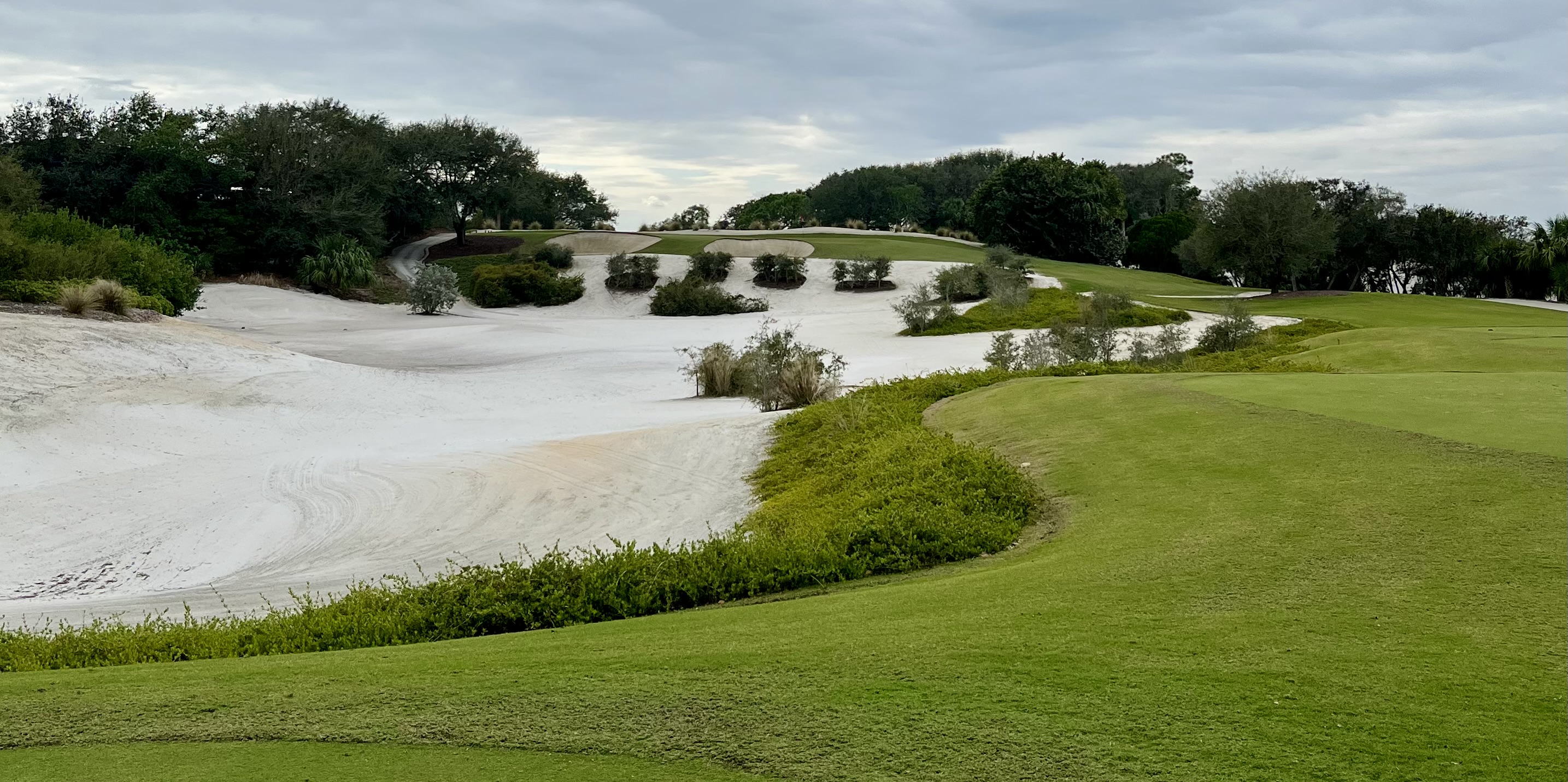
The back 9 is the better side and begins with another fantastic hole in the 392 yard par 4 10th. Playing from an elevated teebox, this is a gorgeous dogleg right featuring a wide fairway lined by wastebunkers. The fairway slopes right-to-left with the land and starts to narrow and turn uphill and to the right around 260 yards. This approach plays uphill and somewhat blind to a narrow green that slopes hard back-to-front and right-to-left with two bunkers left.
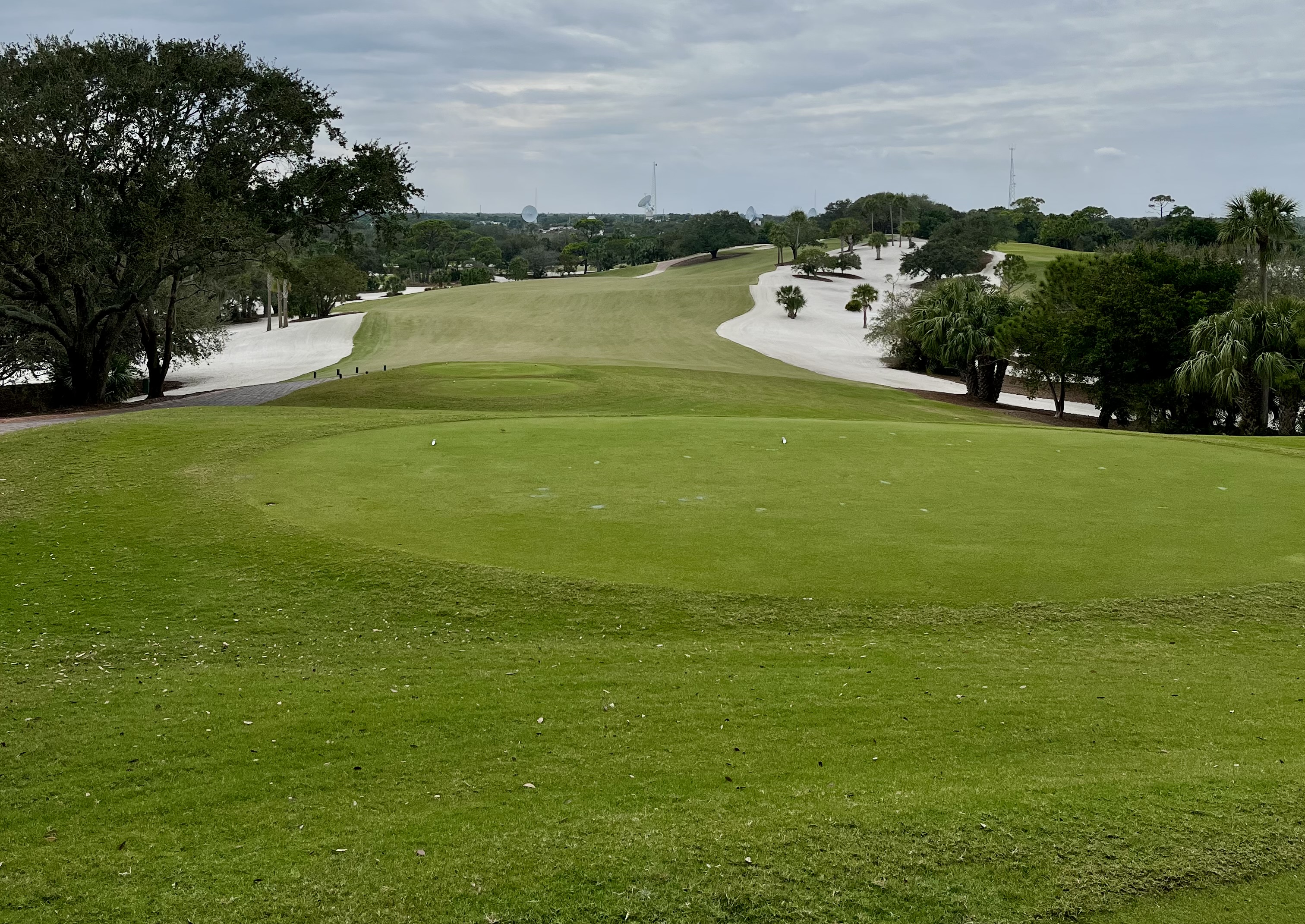
The 11th hole is a gorgeous par 3 that plays downhill at 183 yards. This peninsular green juts out into a hazard, with water lining it short, right, and long and bunkers short and right. The putting surface itself mostly slopes left-to-right towards the water and is absolutely huge, allowing this hole to play dramatically different depending on the pin position.
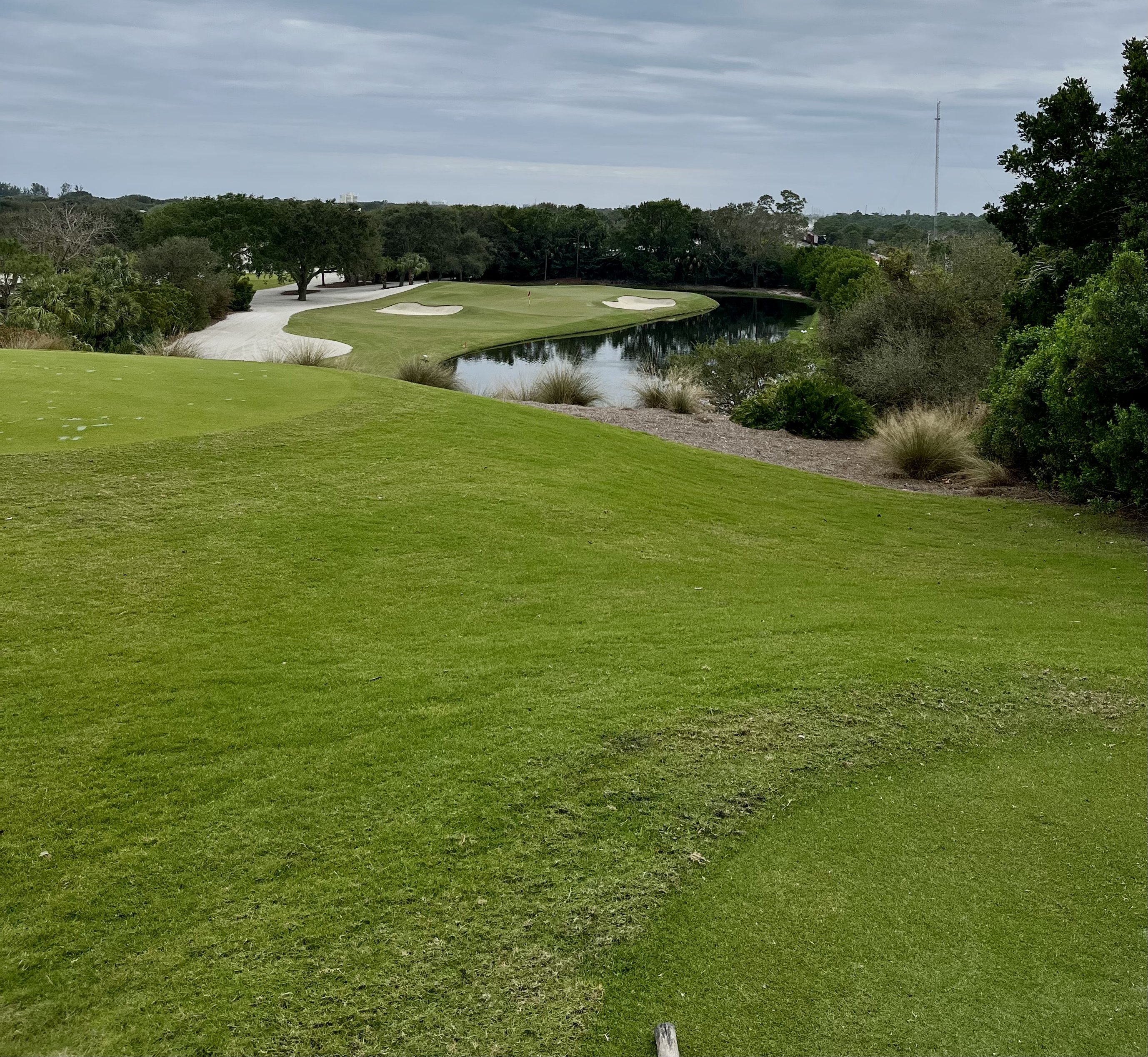
The 12th is not one of the more memorable holes on the course, but is still a solid par 4 at 392 yards. Playing straightaway over level terrain, this hole is somewhat narrow, with OB down the right the entire way and wastebunker down the left. While a small bunker and tree defend short right of this elongated green, the tight lie mounding surrounding this green creates arguably a more difficult up-and-down.

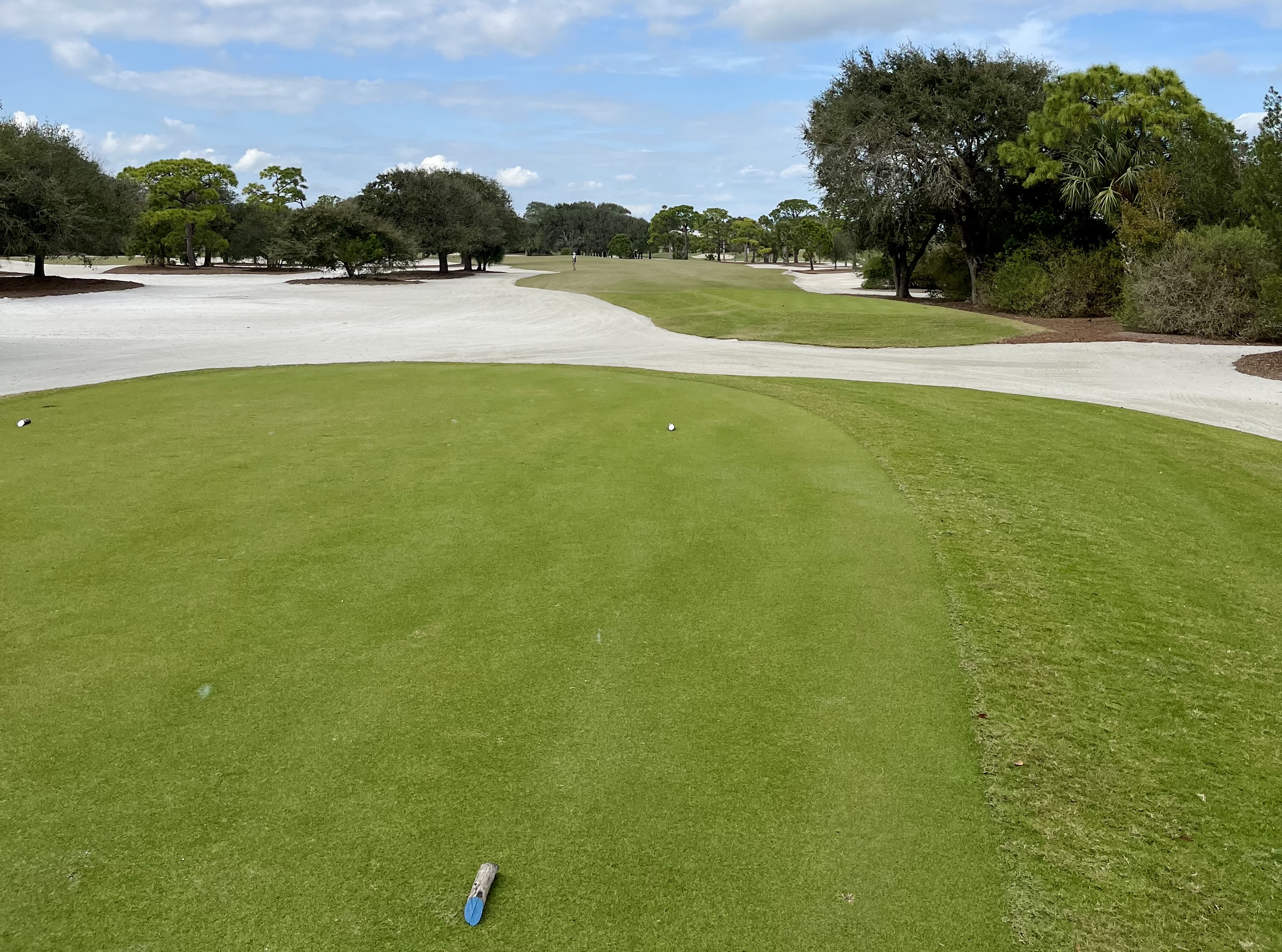
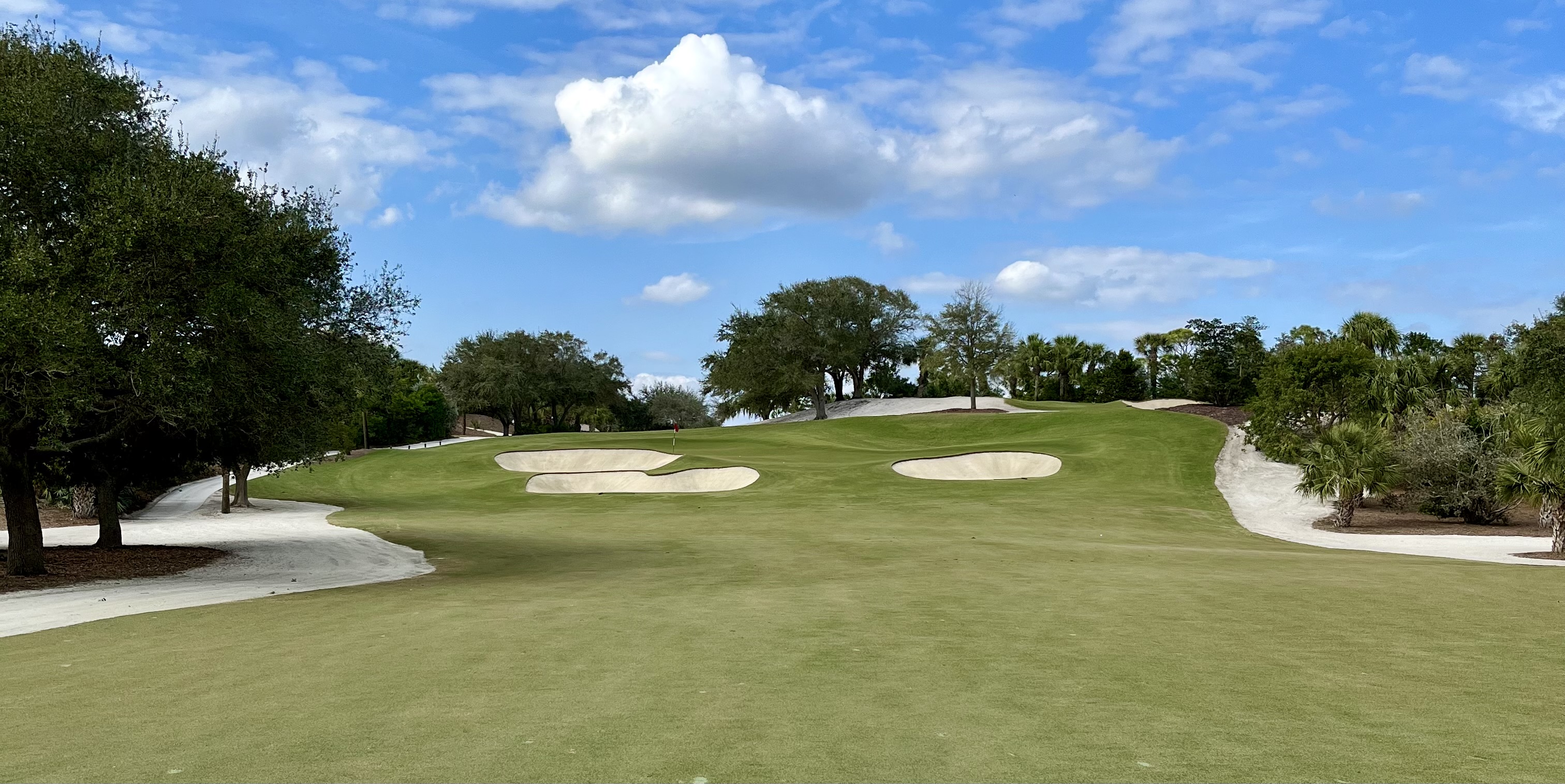
Sandwiched between several other holes, the 13th is a tight 510 yard dogleg left par 5 lined by wastebunker and sporadic trees. While the fairway is narrow, aggressive teeshots can reach the dogleg around 245 yards and give the golfer an opportunity to reach this green in two. Those who opt to lay up will contend with a continued narrow, treelined fairway containing a right crossbunker about 100 yards short. This elevated green is quite severe, sloping left-to-right with multiple tiers and three giant bunkers short. I love the way this green sits in somewhat of a natural amphitheater.
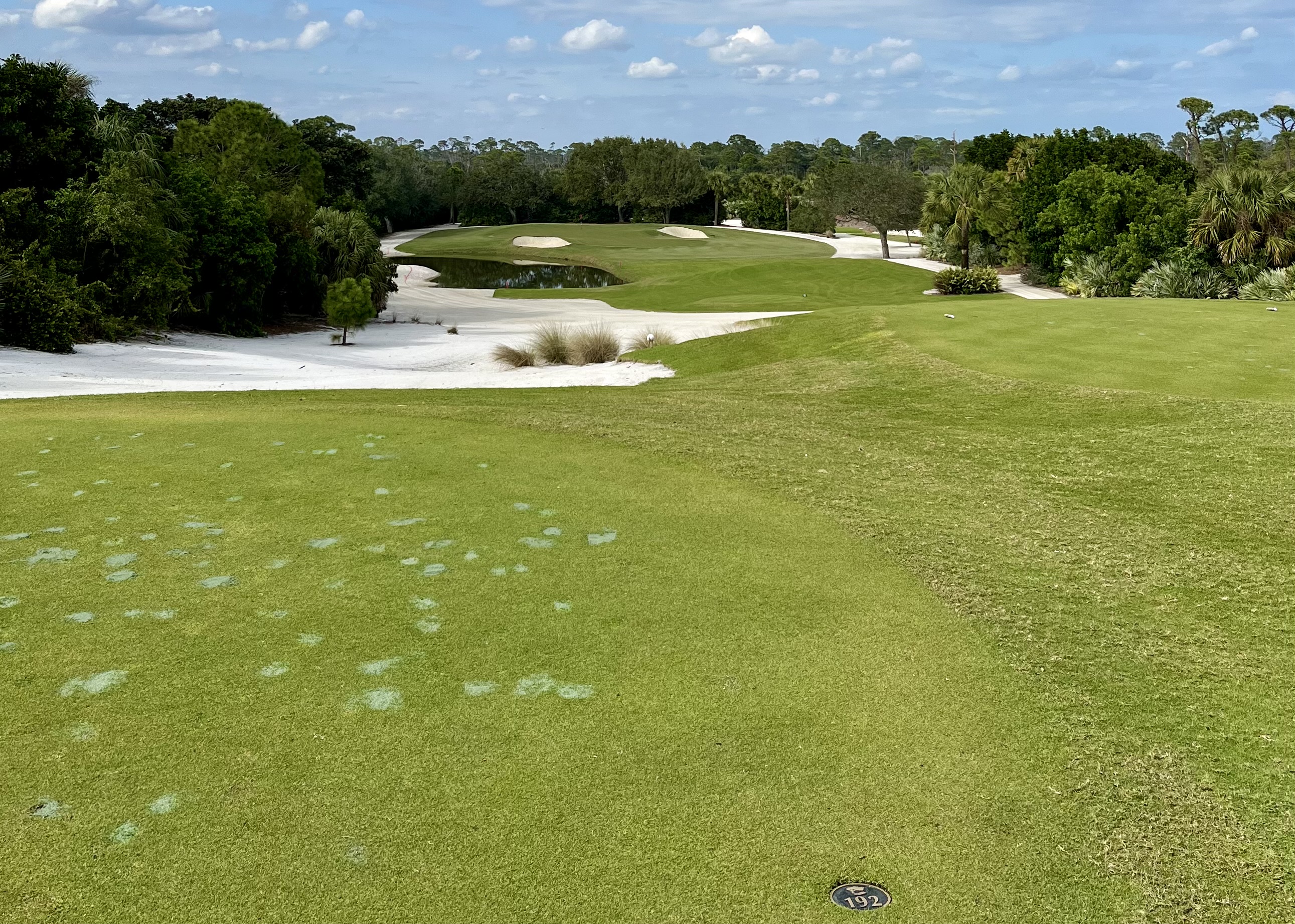
At 192 yards, the 14th is another long and difficult par 3 playing downhill from an elevated teebox. This is a nerveracking approach, with a water hazard short left and bunkers on either side of a narrow, back-to-front sloped green.
The 15th hole is one of the best and most memorable on the course as a sweeping 401 yard dogleg left par 4. Featuring an extremely intimidating teeshot, this fairway runs almost perpendicular to the teebox, with a significant water hazard to cover depending on how aggressively you attempt to cut distance off. A bunker on the left side of the fairway sits around 235 yards and is a good barometer for the distance it requires to aim left or right of it. This approach plays to somewhat of a Lion’s Mouth, with a bunker in the front center of a green that mostly slopes left-to-right.
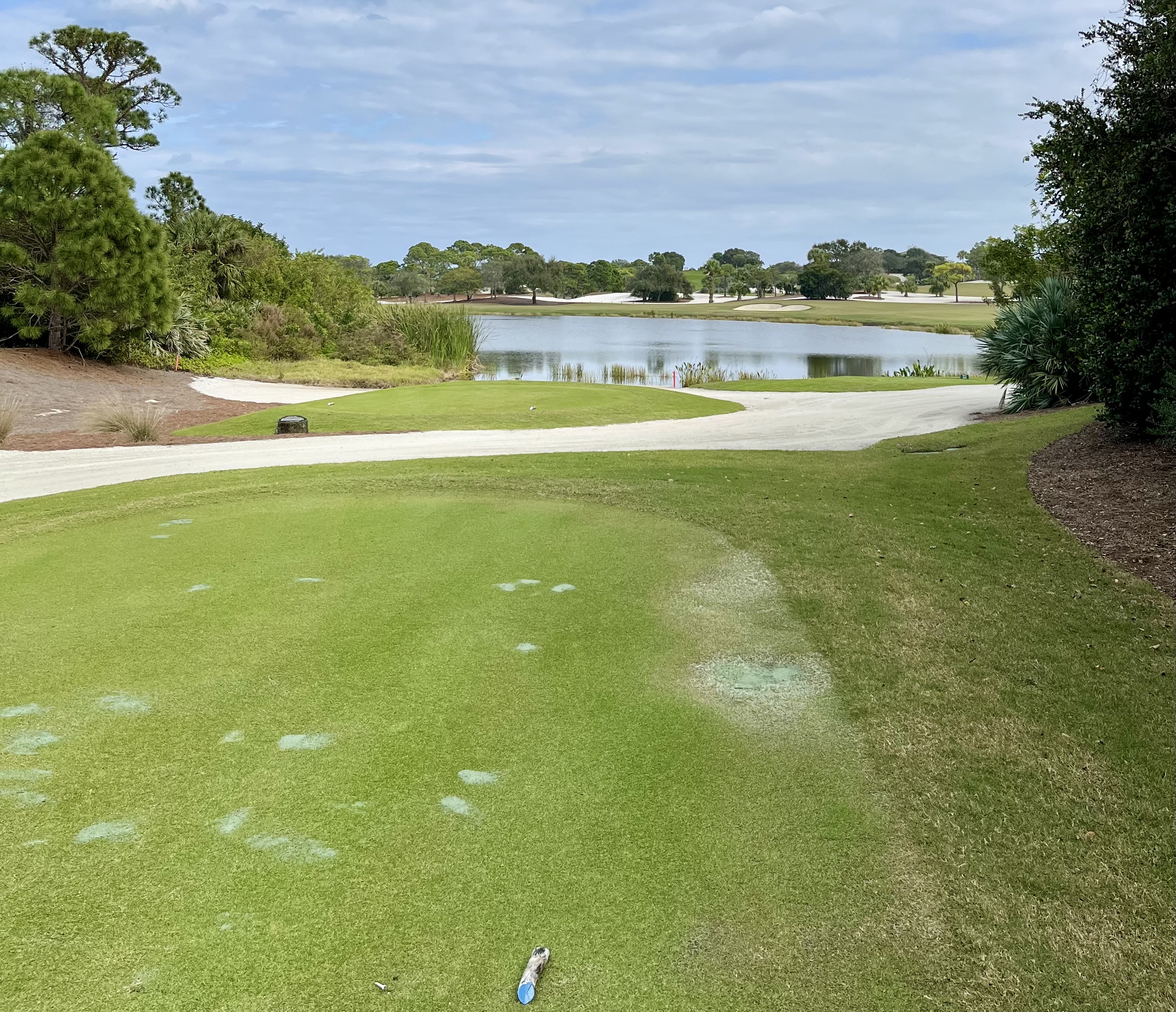
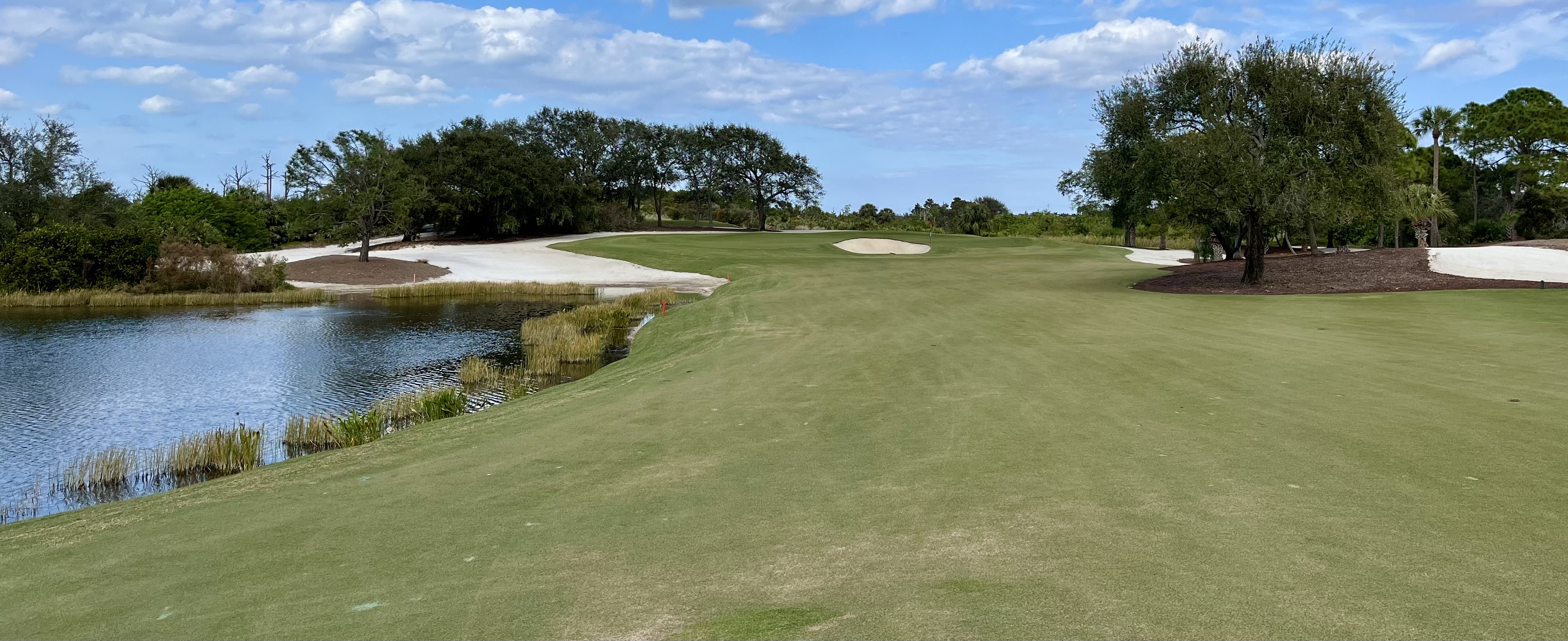
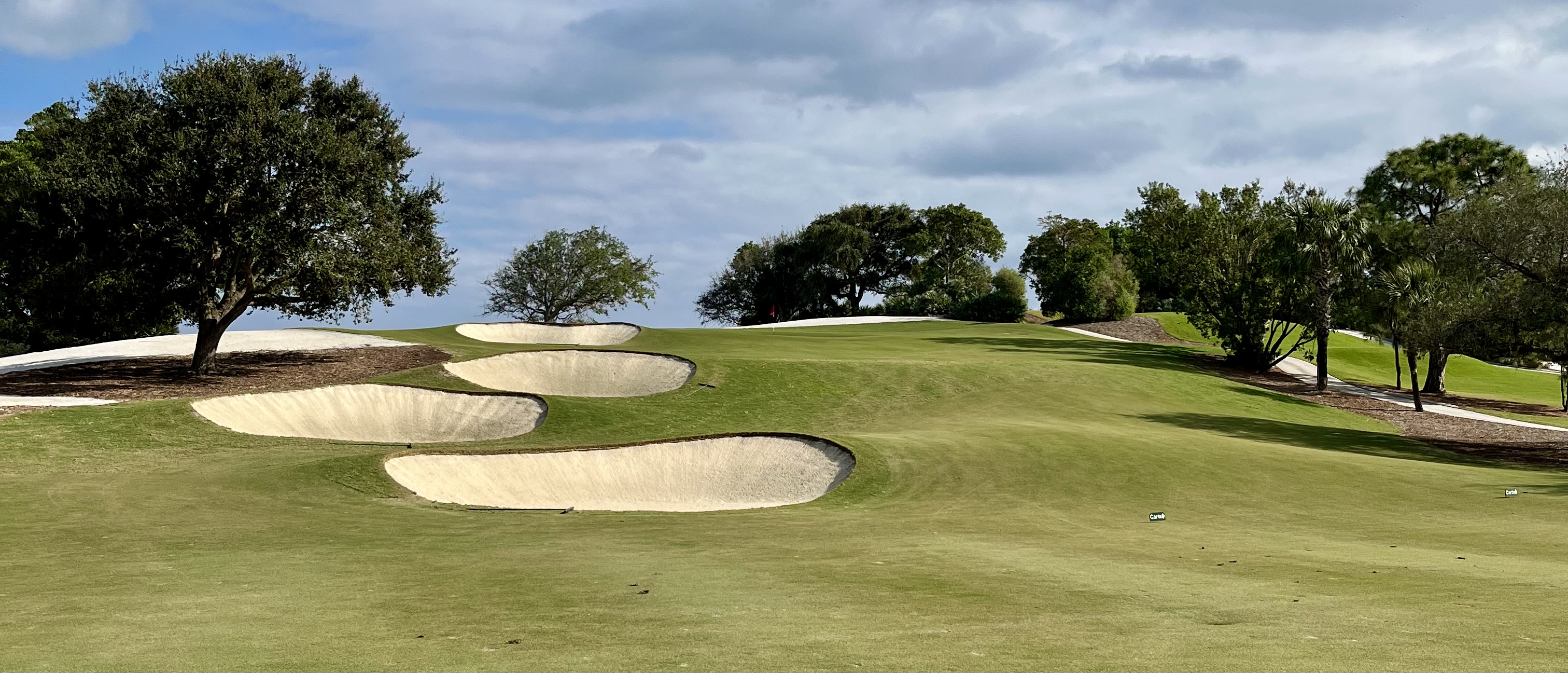
The 16th is another hole that gives the golfer options as the shortest par 4 on the course at 326 yards. Requiring a brief forced carry over water, this fairway is initially quite generous up until about 260 yards when a string of four bunkers begins down the left. This semi-blind approach runs uphill towards a back-to-front sloped green.
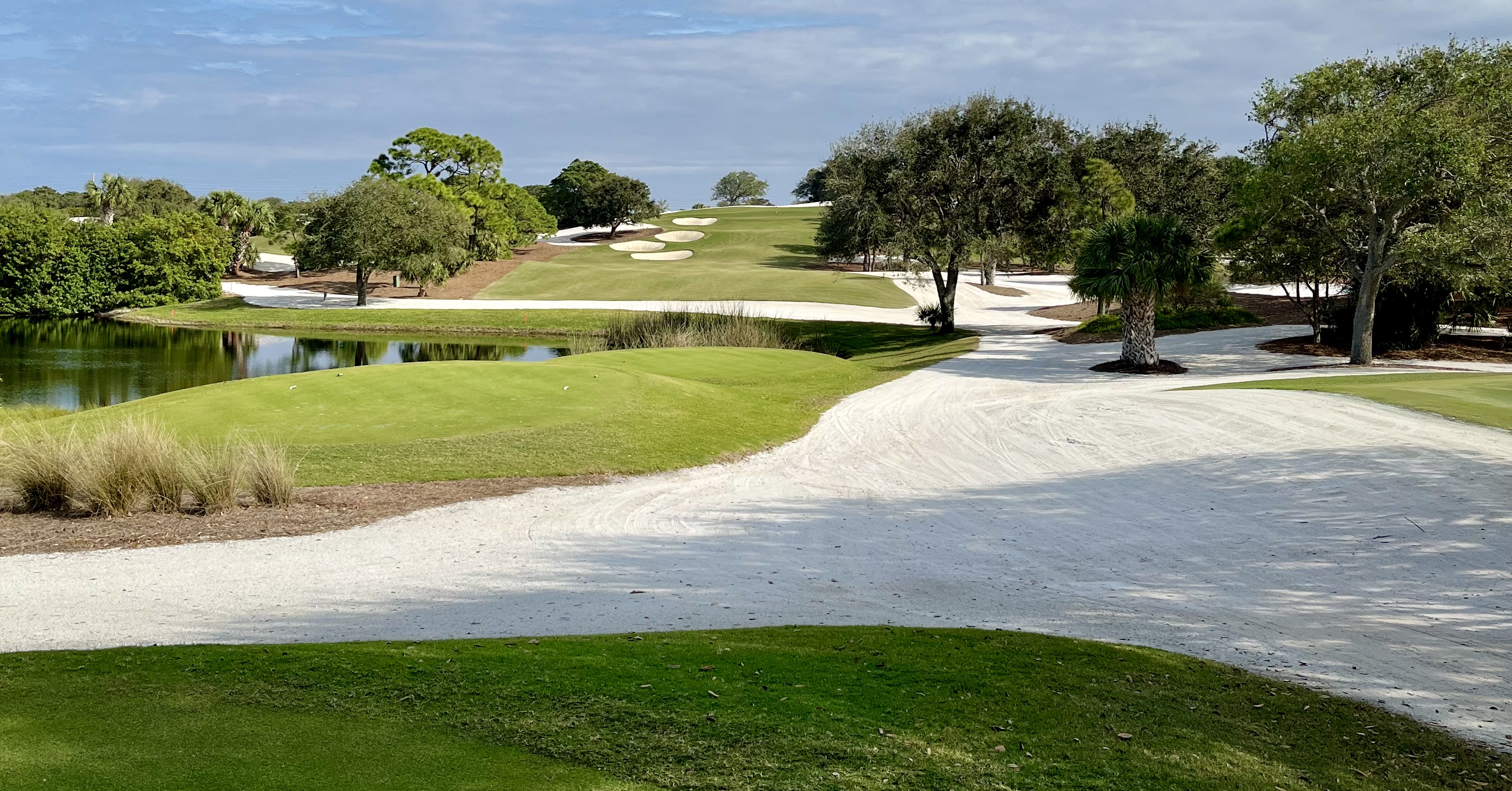
One of two par fives converted to par fours from the Black Tees, the 17th offers the last good scoring opportunity of the day at 499 yards. This is a fun hole with a downhill teeshot to a narrow, snaking fairway that turns slightly left around 250 yards. The fairway continues downhill and possibly blind on the second shot, with a green tucked off to the right at its terminus. This putting surface is lined by several bunkers short and contains a right swale, leading to some interesting pins.
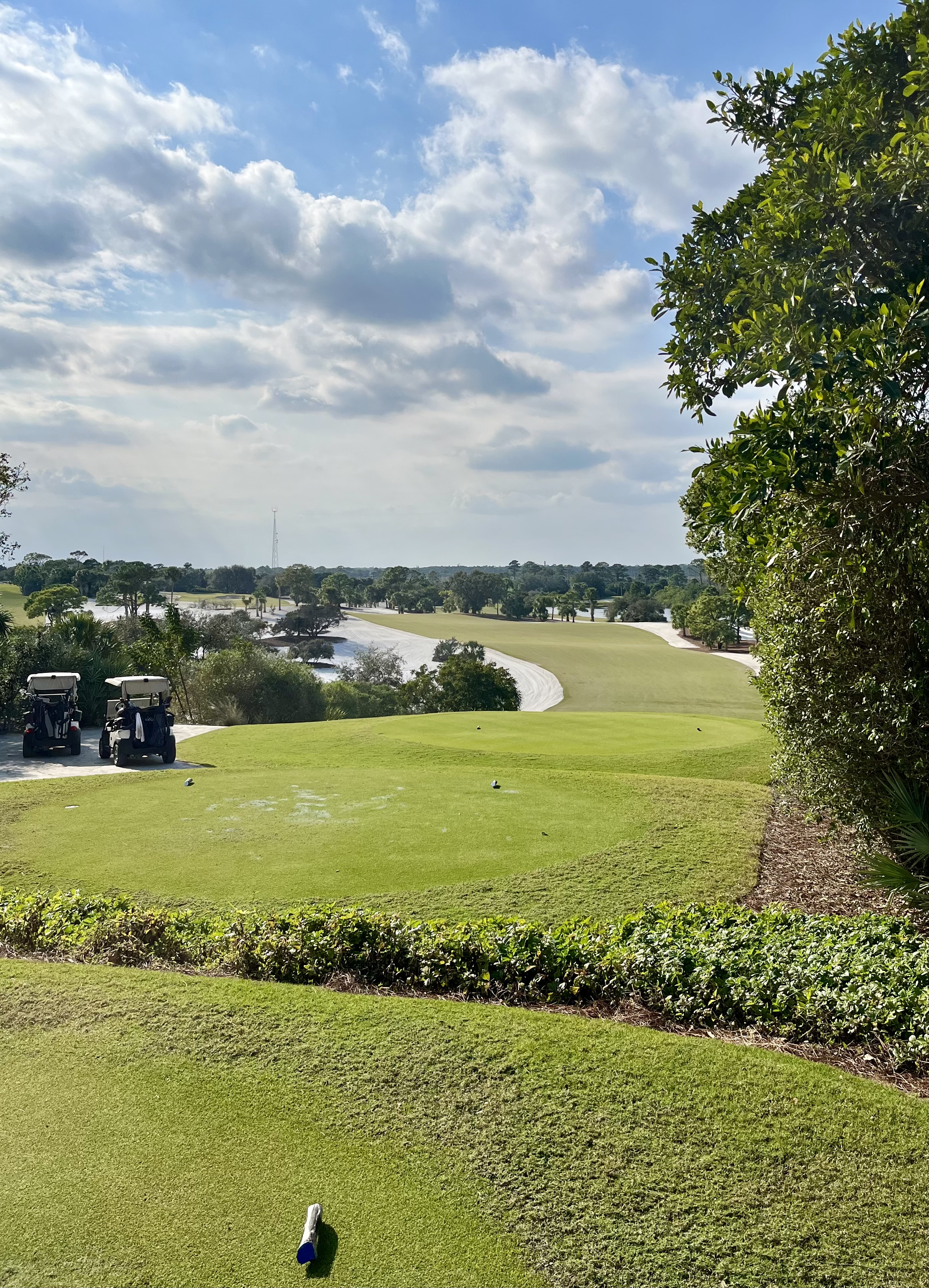
At 393 yards, the Hills Course closes with a tough, straightaway par 4. This teeshot is blind and plays from an elevated teebox into a valley of relatively forgiving fairway. This approach is one of the most challenging on the course, running back uphill to an elevated, right-to-left sloped green defended by a bunker short. Pars are well-earned on solid finisher.
General Comments: Jupiter Hills’ stately clubhouse sits on the highest point on the property and offers exceptional views of the course and Atlantic Ocean in the distance. Practice facilities are extensive and include a full grass range, short game area, putting green, and simulators. While many members take carts, the caddie program is robust as well. The clubhouse seems like an amazing hang and I spotted Tom Fazio playing cards after my round here.
Verdict: Tom Fazio considers the Hills Course to be among his favorite courses, and it’s not hard to see why with a wonderful routing, phenomenal conditioning, and hilly terrain that makes it quite unique and memorable for Florida. This is an elite residential course and one I highly recommend if you get the opportunity.
 Worldgolfer's Golf Course Reviews