Designer: John Duncan Dunn (1931), Alfred Tull (1955, Redesign, New Holes), Kipp Schulties (2007, Renovation)
Location: Oceanside, New York
History: The story of Middle Bay is one of resilience. The first course on the property was designed by John Duncan Dunn in 1931 and named Oceanside Golf & Country Club. Spanning both sides of Waukena Avenue, this course was a parkland design with only one hole on the water. The fledgling course struggled with membership during the Great Depression and switched from private to public several times over its first few decades. In 1952, the town took 35 acres and six holes north of Waukena Avenue to build a high school. Numerous members left at this point (with many joining Engineers) but the remaining members remained committed and hired Alfred Tull to redesign the course and build 6 new holes along the water.
This course named Middle Bay opened in 1955 and remained private for many years until disaster struck again in 2012 with Hurricane Sandy. The Club was decimated and was forced to close, but soon re-opened as a semi-private course under the name South Bay Country Club. The course soon changed hands and has been known as The Golf Club at Middle Bay since 2013.
Conditions: 8/10, Middle Bay is in overall strong condition with carpet-like fairways and teeboxes and greens that roll true.
Value: 7/10, This course offers good value with rates between $50-80 depending on the time and day.
Scorecard:
Tee Par Yardage Rating Slope
Blue 72 6819 73.7 135
White 72 6521 72.4 132
Gold 72 6092 70.0 129
Red 72 5459 72.2 130
Hole Descriptions: Situated on the southern shoreline of Long Island’s Nassau County, Middle Bay is an interesting course with many changes occurring since its inception in 1931. As of result of these changes, the course feels a bit disjointed in places, with about half the holes playing inland and parkland with tree-lined fairways and the other half playing almost linksy and very windy along the shores of Middle Bay. The end result is a fairly challenging course that requires both accuracy and length given the numerous water hazards, wind, and very tight corridors as a result of tree overgrowth. Other features worth noting include strong greenside bunkering and mounding, which is the only real land movement on otherwise very flat terrain. While it can’t quite compete with the nearby private courses, I’d argue Middle Bay is a somewhat underrated public course in the New York City area and is worth a play given the strong conditions, challenge, and fun holes along the water.
Similar to my first time playing Lido across Middle Bay, getting here from New York City can be very difficult despite the short distance and we arrived late to our teetime. Due to this, we came in HOT on the 2nd hole and played the opening hole at the end of our round. The 1st is one of the easier holes on the course as a slight dogleg right at 332 yards. This par 4 is notable for an immediate forced carry over a pond to narrow fairway lined by mounds of rough and bunkers down either side between 200 and 230 yards. This green slopes back-to-front and is well-defended with bunkers short, left, and right.
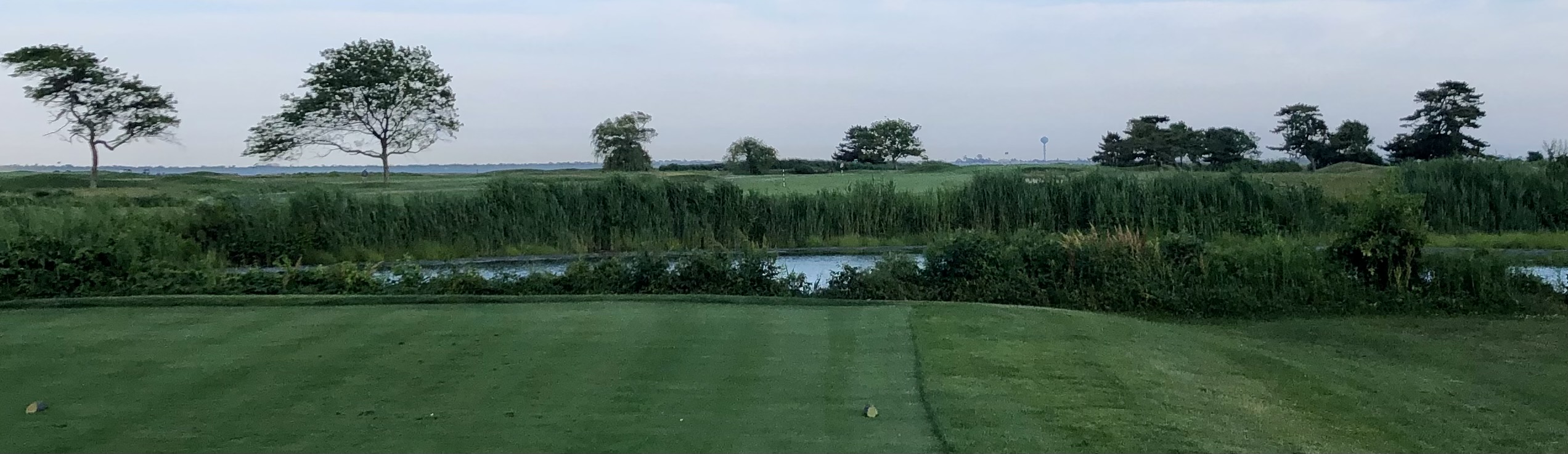
The 2nd hole takes you to the water’s edge as a nice 356 yard Cape-style par 4. A dogleg left, this fairway turns at about 220 yards with mounds of rough down the right and water down the left for the first 230 yards. Longer hitters can certainly carry the water here and the golfer is given numerous options on this tee. This green is slightly elevated, slopes back-to-front and is well-defended with a false front short and five bunkers surrounding it.

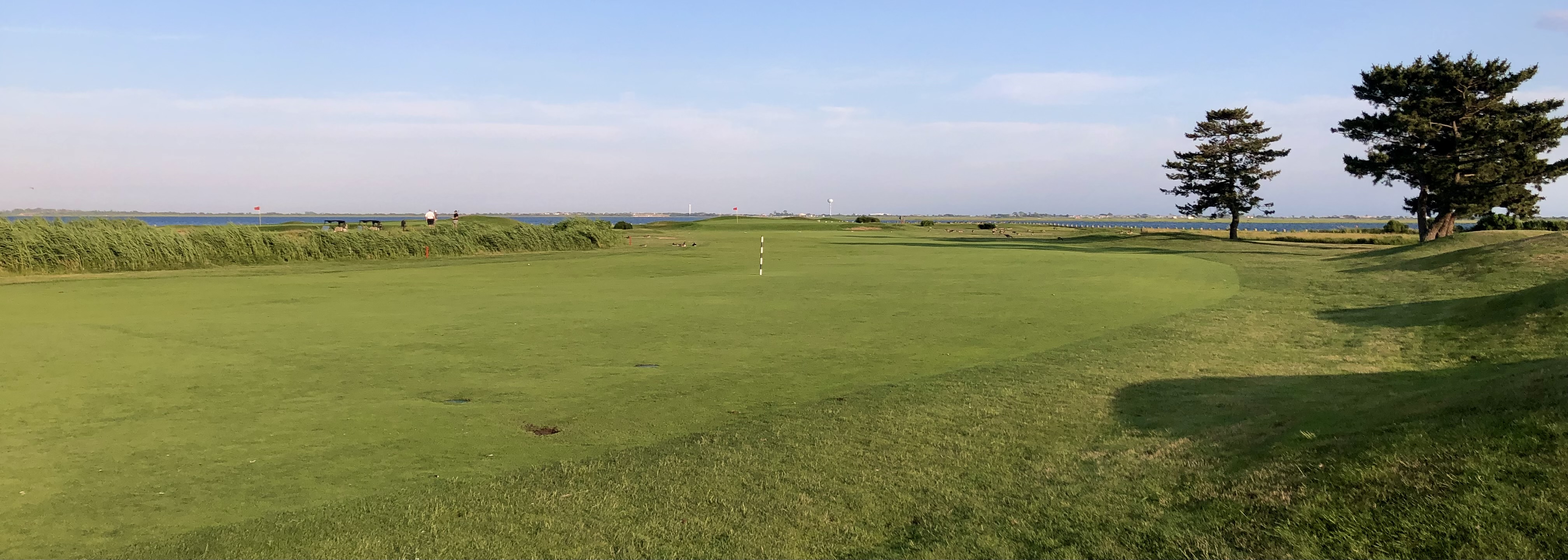
After a brief glimpse of Middle Bay early in the round, the 3rd hole takes you back inland the opposite direction as an 168 yard par 3. This is a visually attractive hole partially playing over a creek down the left to a slightly left-to-right sloped green flanked by bunkers.
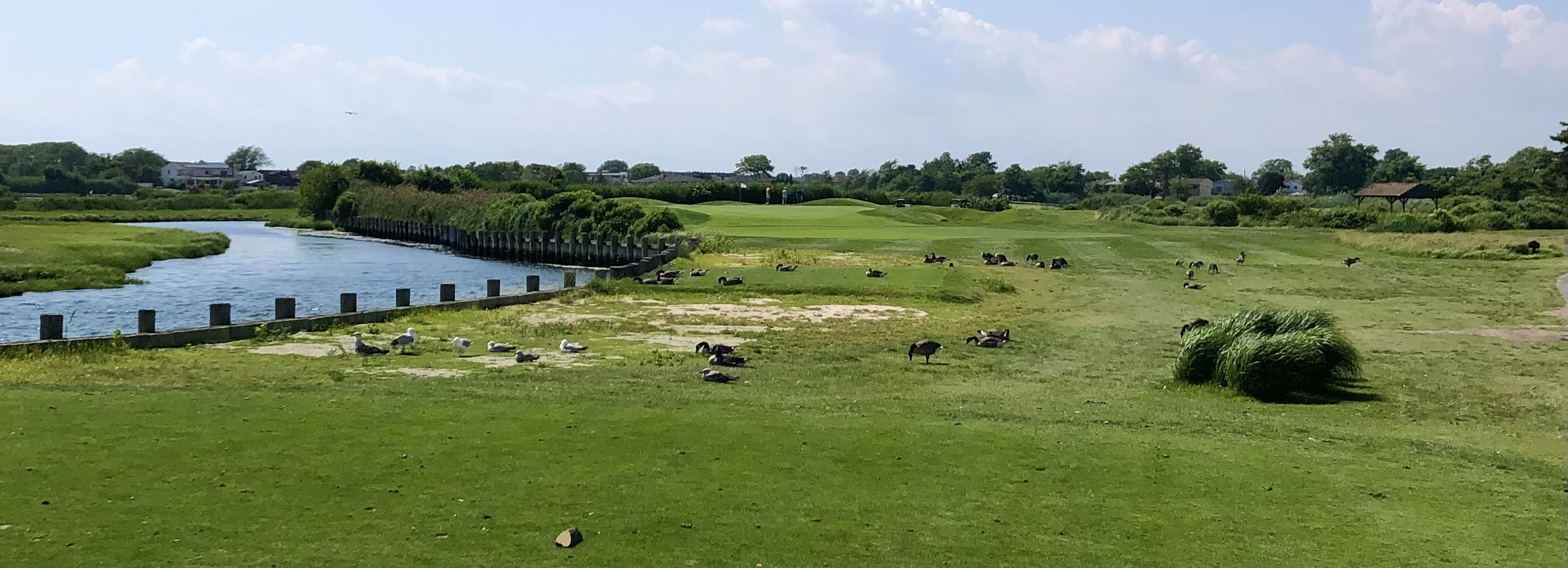
The 4th hole continues inland and is another nice hole as a 376 yard dogleg left par 4. This strong par 4 plays immediately over marshland to a narrow fairway that turns left with the hazard continuing down the left for the first 260 yards. Once in the fairway, this approach is more straightforward towards a back-to-front sloped green lined by bunkers on either side.

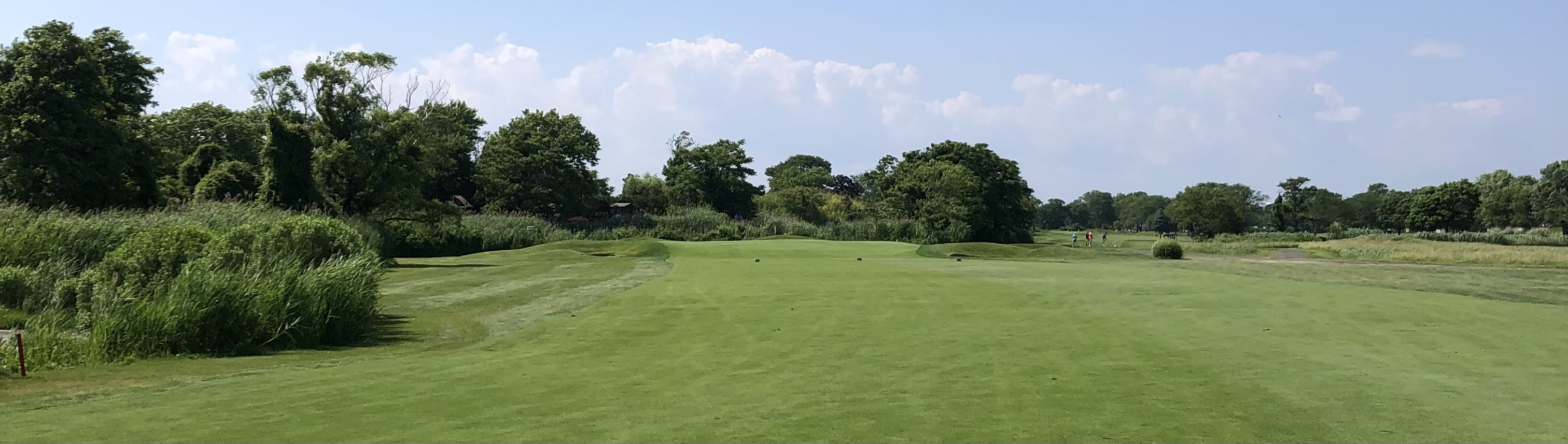
At 553 yards, the 5th hole is the first of four long par fives at Middle Bay. Long and narrow, this number 1 handicap plays dead straight with OB lining the left side the entire way and bunkers on either side of the fairway around 200 yards. Perhaps the most interesting feature of this hole is a tame version of a Great Hazard, with numerous mounds of rough bisecting the fairway about 170 yards short of the green, forcing the golfer into a decision on their second shot. This green is also very narrow and slopes back-to-front with bunkers on either side.
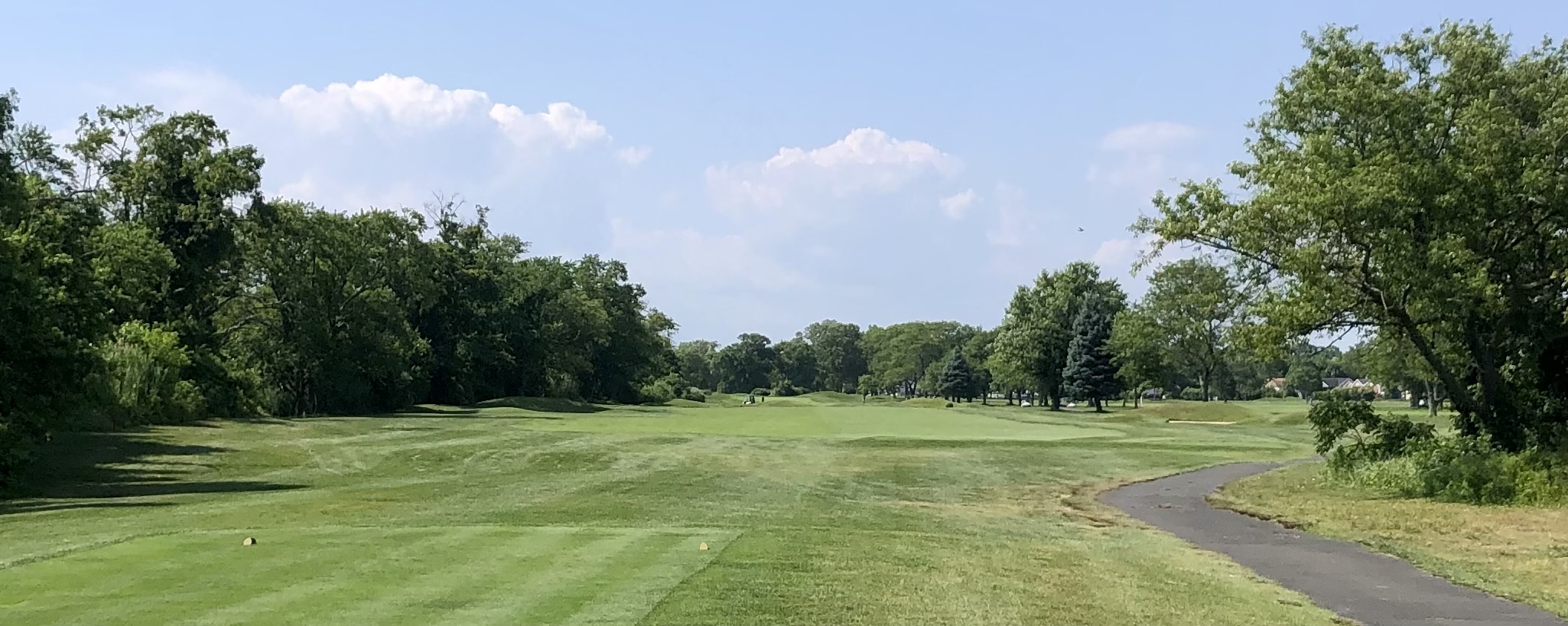
The 6th is the shortest hole at Middle Bay as an 140 yard par 3. Essentially playing in an open field, this one-shotter features a large, very flat green defended by bunkers short, left, and right. Like many holes here, this green is surrounded by mounds which greatly enhance the visuals.

The 7th is one of the tougher holes on the course as another dogleg left par 4 at 408 yards. With OB down the left and tall trees on the right beginning at 230 yards, accuracy is imperative on this teeshot. This green slopes severely back-to-front with a left bunker and crown of rough long.

Tree overgrowth plays an unfortunate role on the parkland holes at Middle Bay, and this is first experienced on the 387 yard 8th. This par 4 is overall tight and claustrophobic, with tall trees on both sides and even further narrowing of the fairway at about 210 yards with bunkers on either side. After this point, the fairway turns to the left and plays toward a flatter green defended by bunkers on either side. It almost feels as if two holes were combined here as a result of the land lost and this hole is definitely a bit awkward.


The 9th is another difficult and awkward hole as a lengthy 553 yard par 5. Beginning with an immediate forced carry over a pond, this hole features a tight, tree-lined fairway the entire way that snakes to the right around 240 yards. For whatever reason, this teeshot did not suit my eye and calls for a high fade, as teeshots left or long will run through the fairway. The driving range lines the left for the final 250 yards and the only bunkers here defend a back-to-front sloped green short and left.
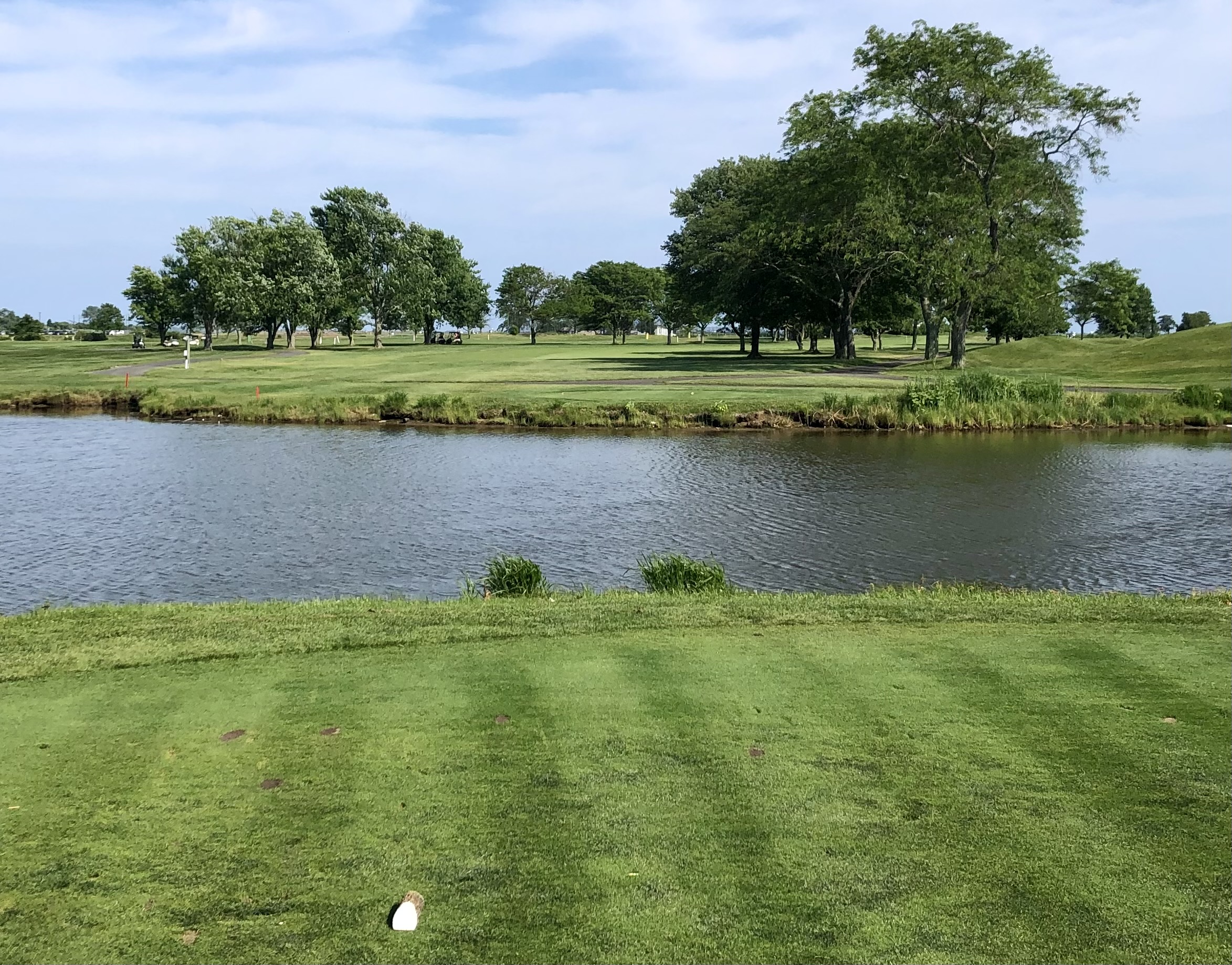
The 10th hole begins the most memorable stretch of holes at Middle Bay as an 190 yard par 3. This one-shotter plays directly at the Bay with water down the left the entire way and a large, back-to-front sloped green defended by deep bunkers on either side. The wind is always a factor on this hole and this is easily the best and most difficult par 3 on the course.

I have to imagine the 11th is the signature hole for the course as a risk/reward 308 yard par 4. Playing directly on Middle Bay, this is a gorgeous hole with a brief carry over water to a narrow fairway lined by the Bay to the left the entire way and two bunkers on the right between 205 and 250 yards. At about 250 yards, the fairway ends and golfers hitting driver here will have to navigate somewhat of an island green completely surrounded by bunkers. This is an excellent and memorable hole that somewhat resembles another famous short par 4 on Long Island at The Creek.


At 437 yards, the 12th hole is the longest par 4 on the course and another strong offering. With its teebox wedged between the 2nd and 11th holes, this stout dogleg left begins with an immediate forced carry over a pond to a generous fairway that bends left around 260 yards. This hole is notable for its elevated green, which features two distinct tiers and slopes back-to-front with deep bunkers on either side. Although not directly on the Bay, this hole is close enough to be quite windy and par is a great score here.


The 13th hole takes you back inland and the remaining holes play in a mostly parkland style. This hole is a 520 yard dogleg left par 5 that bends to the left the entire way with the driving range down the left, a left bunker at 220 yards, and a water hazard beginning to the far right at 250 yards. This green is large and plays as somewhat of a punchbowl with bunkers on either side.
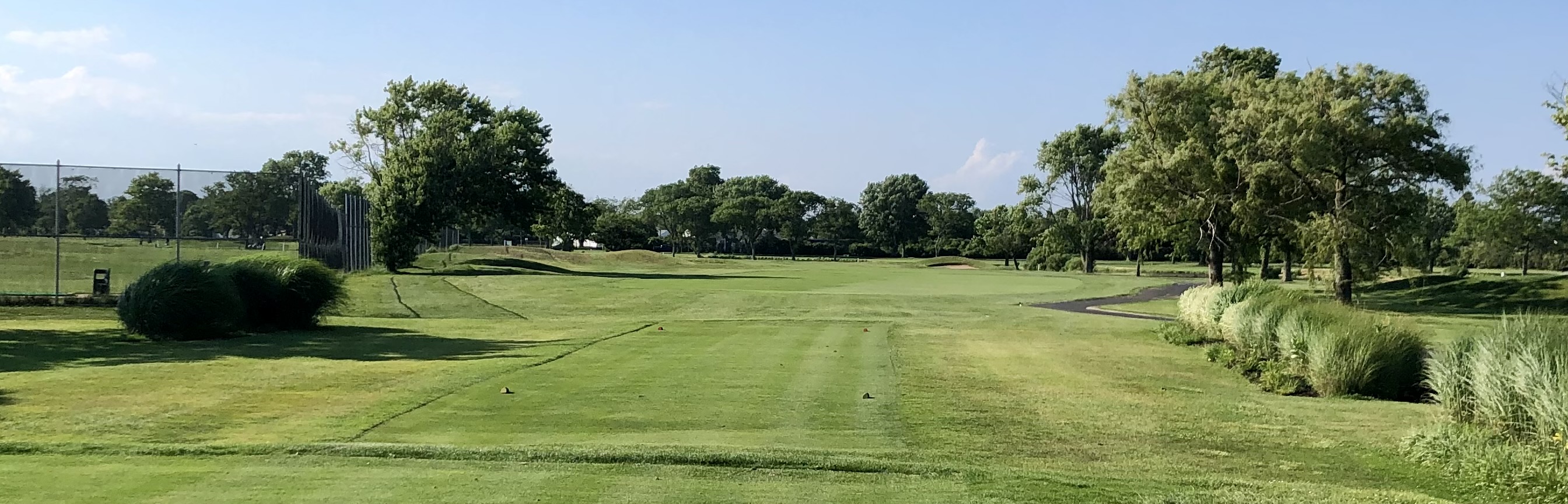
The 14th hole is a slight dogleg left 367 yard par 4 that features a tough teeshot with a tight fairway lined by water down the left for much of the landing area and a right bunker at 240 yards. The remainder of the hole is flat and straightforward with a narrow, flatter green flanked by bunkers.
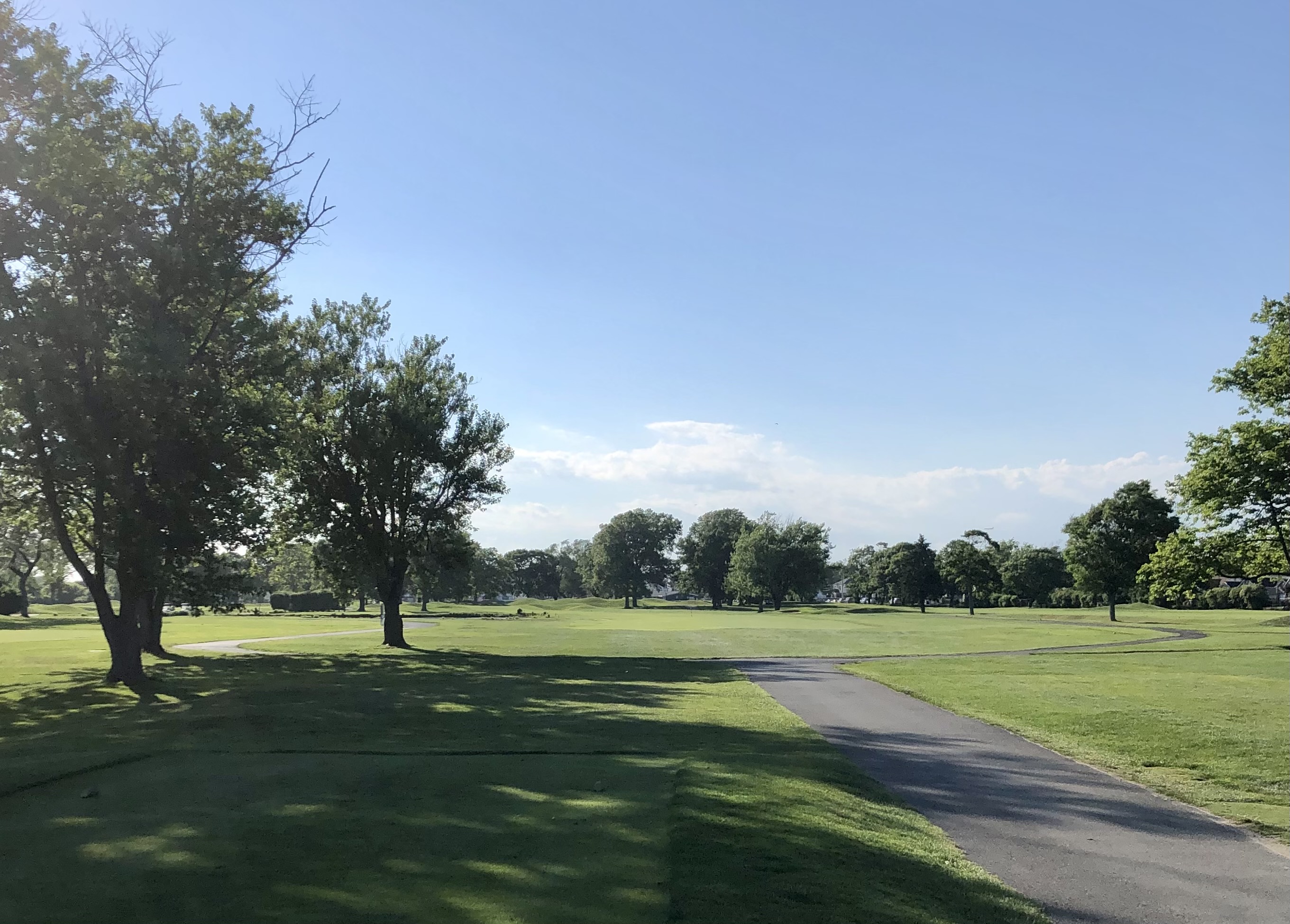
The 15th hole is one of the shorter par fours at Middle Bay at 331 yards, but demands accuracy with a very tight fairway lined by numerous bunkers and trees down either side. This green is also quite small and well-defended, with bunkers and mounds of rough surrounding it.


In the corner of the property, the 16th hole is the final par 3 on the course at 180 yards. This is a rather straightforward and forgettable hole with trees down either side and a back-to-front sloped green lined by bunkers.
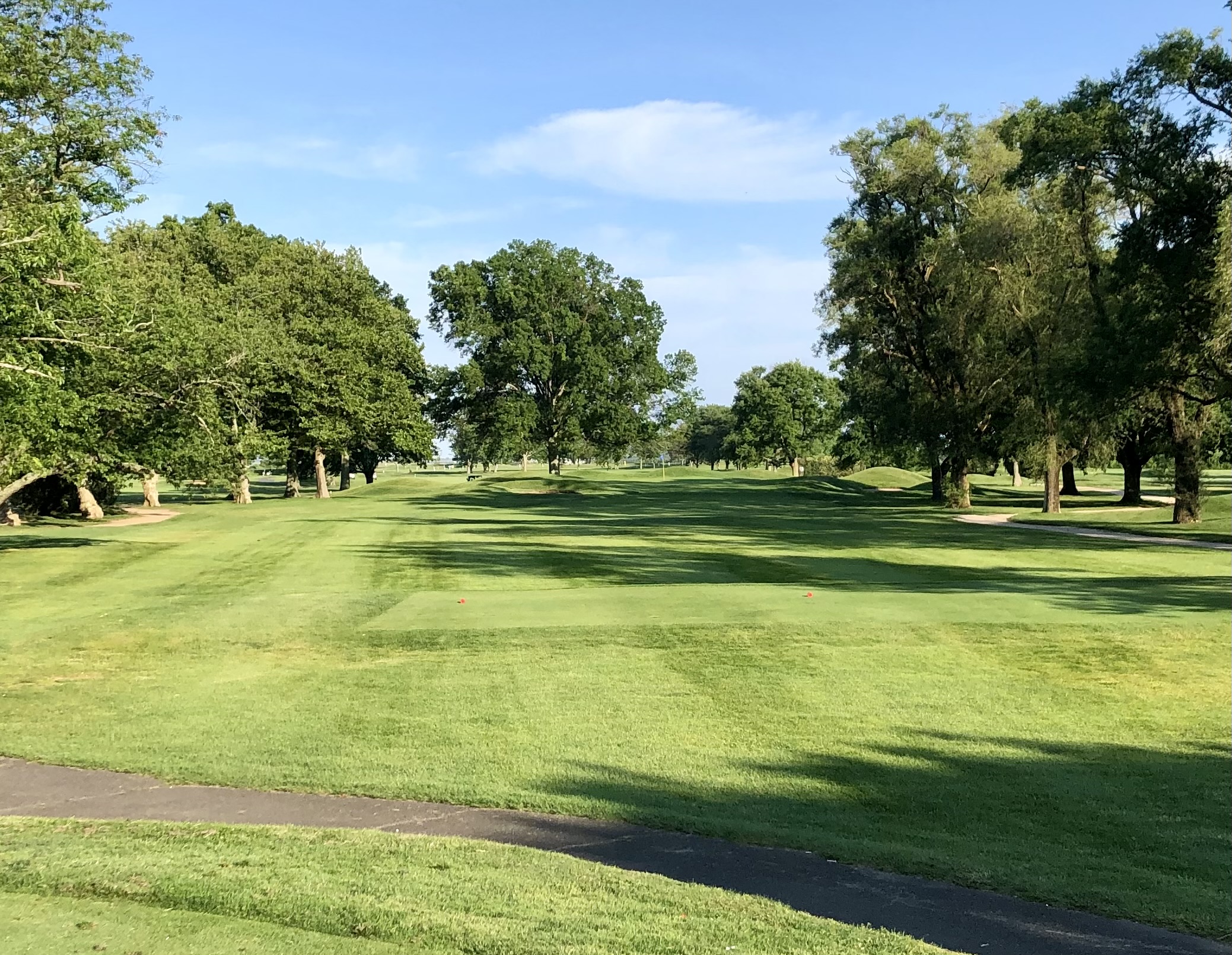
At 378 yards, the 17th hole is a solid straightaway par 4 with a street down the left the entire way and a fairway tightened by bunkers on either side around 215 yards. This approach must be aerial to a back-to-front sloped green defended by numerous bunkers short and on either side.
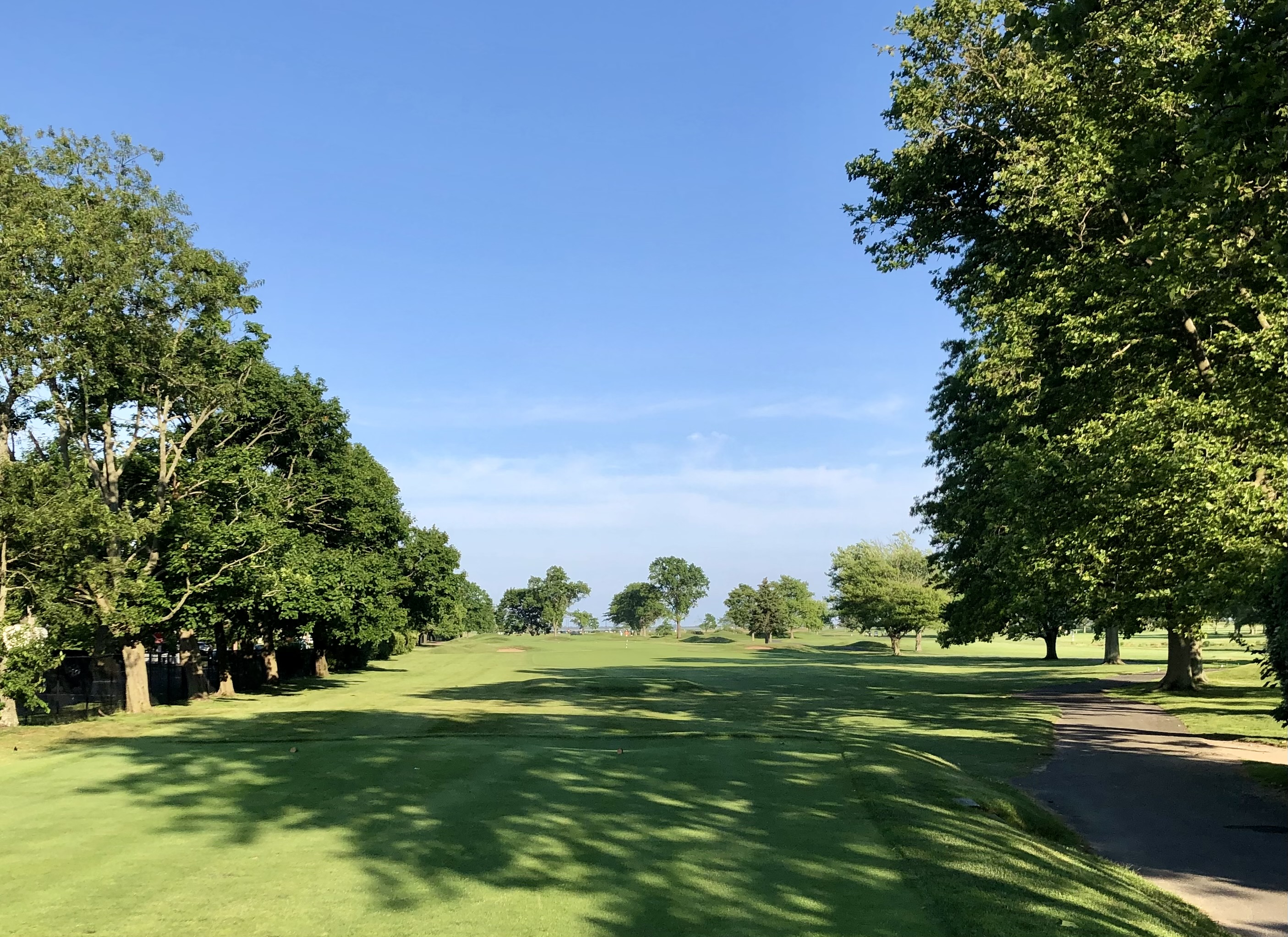
Middle Bay closes with one of its more interesting holes in a 537 yard par 5. This is a large, sweeping dogleg right with a tight fairway that begins to turn right around 220 yards. A giant water hazard begins down the right at 140 yards and continues on this side all the way to the lay-up area. Longer hitters may consider cutting the corner of the dogleg here, but this requires longer carries over the water. While the teeshot is difficult, the lay-up is equally as challenging with another hazard starting down the left about 150 yards short of the green. This green is very large with numerous undulations and bunkers on either side. This is a fun hole and one that gives the golfer numerous options.


General Comments: While the clubhouse was little more than a glorified trailer when I visited, Middle Bay features solid practice facilities with a full range, practice green, and short game area. Pace of play was about average and the course is a very easy walk.
Verdict: Located on Nassau County’s southern shore, Middle Bay is an interesting course that features a mixture of tree-lined parkland holes and linksy holes along the water as a result of its numerous architectural changes throughout the years. The course is well-conditioned, challenging, and offers great value and is one of the more underrated public courses in the New York City area.
 Worldgolfer's Golf Course Reviews