Designer: Willard G. Wilkinson (1928), Robert Trent Jones Sr. (1948, modifications), Alfred Tull (1953, modifications), Stephen Kay (1998, Renovation), Rees Jones/Steve Weisser (2013, Renovation)
Location: Kenilworth, New Jersey
History: Galloping Hill was originally built in 1928 by Willard G. Wilkinson and has undergone numerous modifications through the years by different architects. Most recently, the course was renovated by Rees Jones and Steve Weisser in 2013. It became the first public course to host the New Jersey State Open in 2016 and the New Jersey State Golf Association is headquartered here.
Conditions: 7/10, While a bit soggy in places, Galloping Hill is in overall solid condition with lush fairways, well-manicured bunkers, and true greens.
Value: 7/10, For the quality, Galloping Hill is one of the better values in the area with peak prices at $70 for non-cardholders and numerous discounts for Union County card-holders, twilight, seniors, and juniors.
Scorecard:
Tee Par Yardage Rating Slope
Black 71 6855 73.4 134
Blue 71 6273 70.5 131
White 71 5570 67.2 120
Gold 73 5103 69.8 118
Hole Descriptions: Located about 30 minutes west of Manhattan, Galloping Hill is a solid course, and one of the better public offerings in the area. As its name implies, the course traverses hilly terrain and features numerous downhill teeshots and elevated greens. While this gets a bit repetitive in places, it is a good challenge for better golfers and is usually in good shape. New Jersey golf is dominated by private courses, but I’d recommend Galloping Hill to those visiting the area without access to private options.
Galloping Hill begins with an easy opener in the 329 yard par 4 1st. This hole plays steadily downhill on the teeshot to a snaking fairway lined by rough and a bunker left at 270 yards. This approach then runs back uphill to a narrow, back-to-front sloped green defended by two bunkers right.

Although only 332 yards, the par 4 2nd hole is fairly intimidating, playing up the side of a steep hill the entire way. Accuracy is required here, with a tall tree down the right at 220 yards and crossbunkers on either side between 220 and 250 yards. This hole requires another aerial approach to a generally flat green lined by bunkers right.

At 439 yards, the number 1 handicap 3rd hole is the longest par 4 on the course but plays shorter with an exhilarating downhill teeshot. This fairway is quite generous but beware of a pond to the far left and left crossbunker at 285 yards. This approach must play over a small creek to a flat green lined by bunkers on either side.

The 4th hole is the fourth consecutive par 4 to open your round as a 350 yard slight dogleg right. This teeshot is a bit awkward, with tall trees down the right the entire way and two bunkers down the left between 220 and 250 yards. Two bunkers guard short right of an interesting two-tiered, back-to-front sloped green.
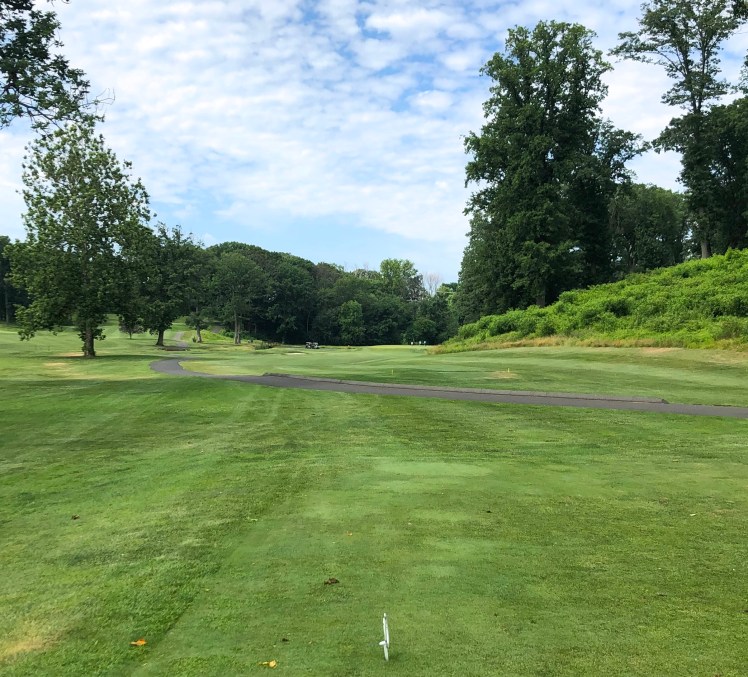

Galloping Hill only contains three par threes and the 5th is the shortest and best at 127 yards. Playing significantly uphill, this shallow green is wedged into the hillside and slopes severely back-to-front with two tiers. Bunkers defend this green short and long and anything above the hole makes for a very scary next shot.
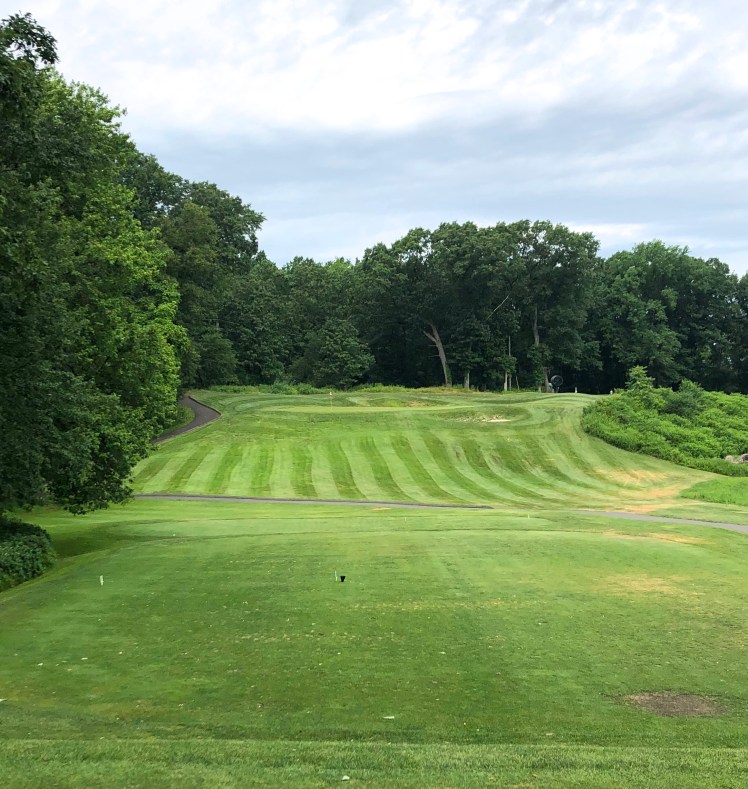
The 6th is the longest hole on the course as a 533 yard par 5 and is definitely one of the tougher holes here. From an elevated teebox, this hole requires an 150 yard forced carry over a valley to a tight fairway lined by thick trees down either side. Those who play down the left may get a nice bounce into the fairway but the only guaranteed safe play here is a straight teeshot. From the fairway, this hole flattens and remains quite narrow before opening up near a back-to-front sloped green lined by a bunker short right.
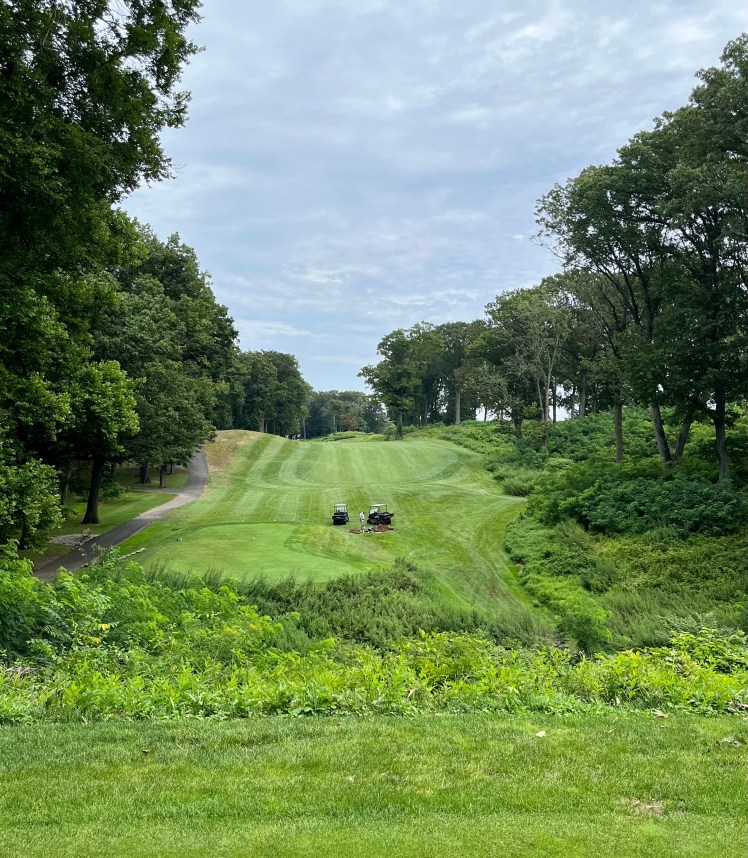

The 7th hole is a straightaway 372 yard par 4 with a mild forced carry over a creek to a generous fairway lined by sporadic trees and crossbunkers down the right at 225 yards and left at 265 yards. This hole is most notable for its elevated green which sits well-above the fairway and slopes steadily back-to-front.
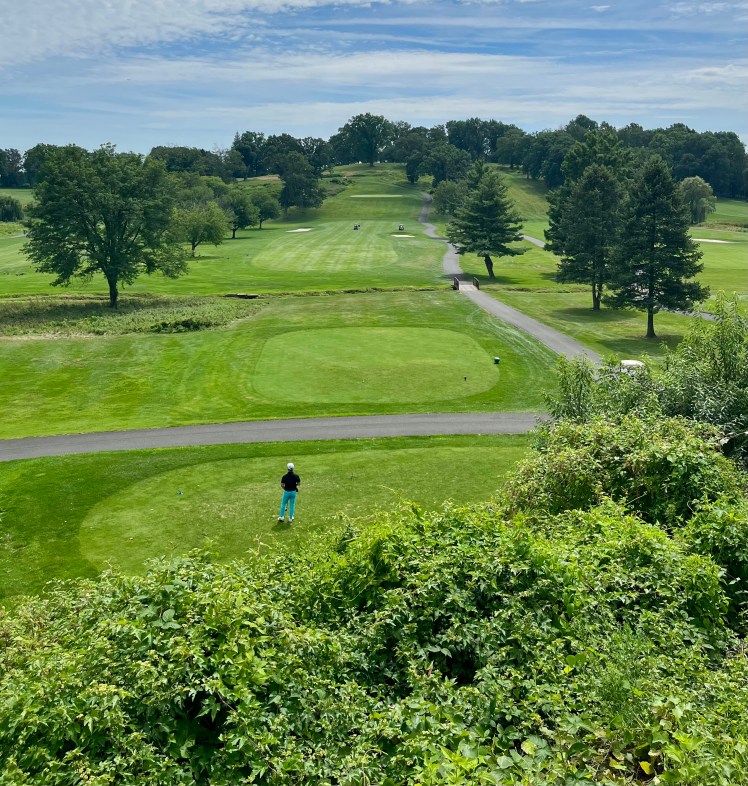
Probably my favorite hole at Galloping Hill, the 8th is a sporty 376 yard dogleg left Cape par 4. From an elevated teebox, this is a very pretty hole with a fairway that sweeps to the left beginning around 200 yards. There’s a hazard down the left the entire way but a bigger concern is a tall tree down the left side of the fairway at around 210 yards that forces the golfer to make a decision. A crossbunker down the right at 250 yards is another consideration. This green is on the flatter side and is defended by a bunker left.
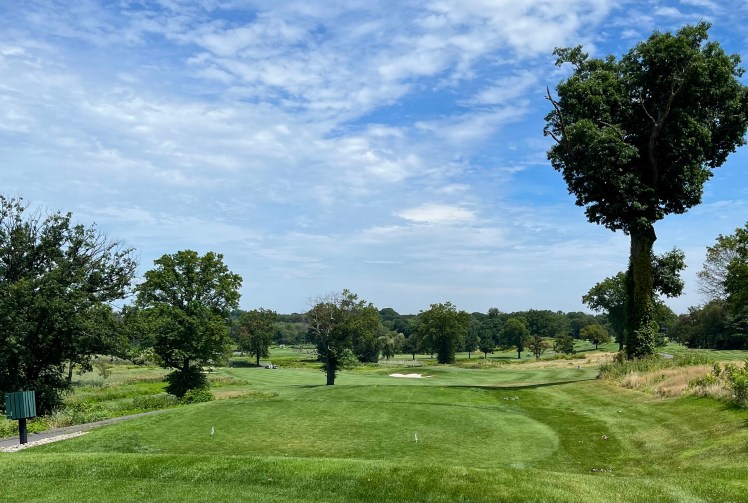
The 9th hole returns you to the clubhouse as a 369 yard straightaway par 4. While short on the scorecard, this is one of the more difficult holes on the course playing much longer uphill the entire way. This fairway is initially generous but forms a bottleneck around 215 yards with a pair of bunkers down the right and fescue left at this point. This approach plays at least one club extra to a back-to-front sloped green lined by bunkers on either side.
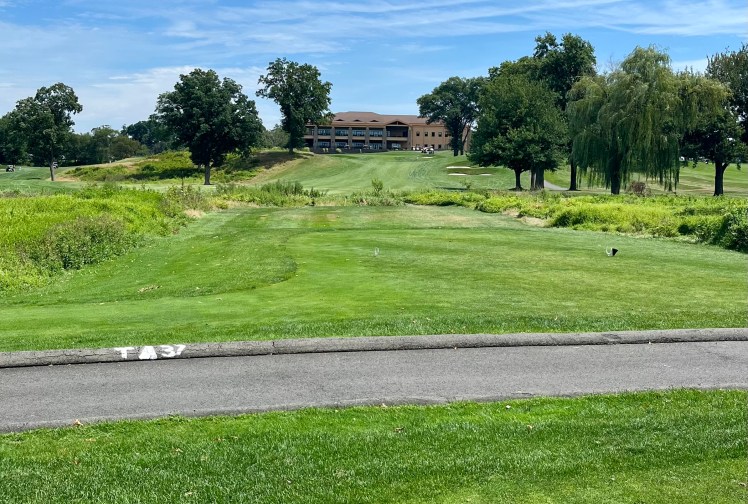
The 10th is another strong hole as a downhill, dogleg right 390 yard par 4. With thick forest down the right the entire way, this hole turns right around 200 yards with a big clump of trees sticking out at this point. This green is one of the more creative on the course and features several mounds defended by two bunkers short.

At 184 yards, the 11th hole is the longest par 3 at Galloping Hill but is sort of a forgettable hole playing level with a large left-to-right sloped green defended by a bunker short. It is a better hole from the Black Tees.
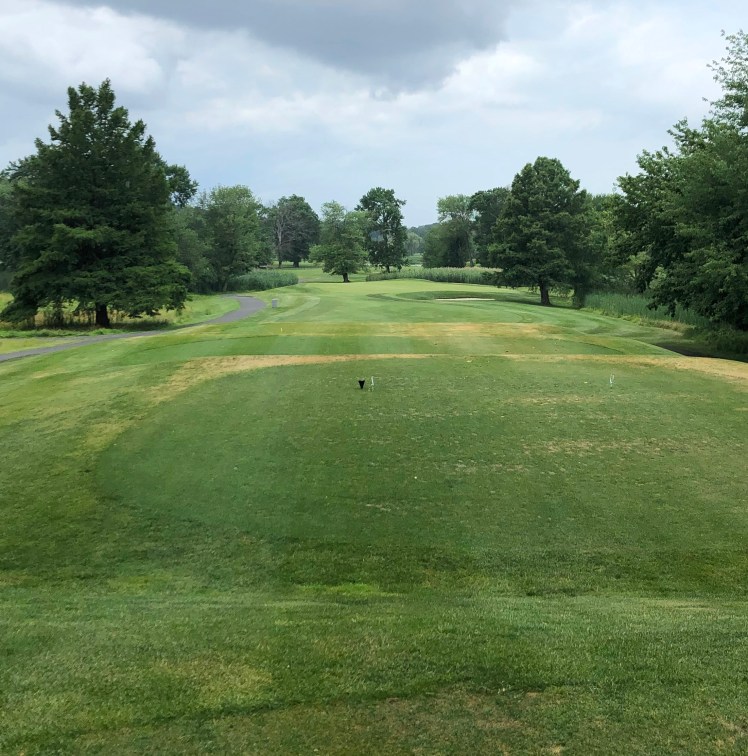
The 12th hole is an interesting par 4 and begins the most demanding stretch at Galloping Hill. At 385 yards, this is a dogleg left featuring a lengthy 200 yard forced carry over two ponds. There is a pair of bunkers down the right beginning at 245 yards, but this fairway is usually quite soggy so don’t worry too much about rolling through into them. This approach plays towards a Redan-like green defended by a bunker left.
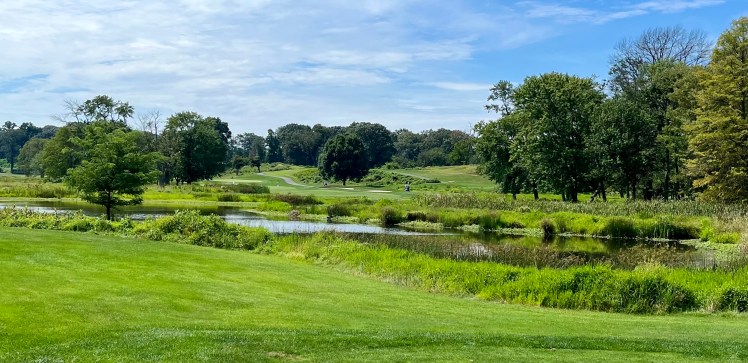
Despite its short distance, the 373 yard par 4 13th hole is another tough design that is sure to confuse first-time players. From an elevated teebox, this hole plays as a sweeping, semi-blind dogleg left with a water hazard down the right beginning at 210 yards. The real problem with this hole is a line of trees down the left that blocks your view and makes cutting the corner more difficult. Unless you hook the ball here, there’s not much advantage to hitting more than a 200 yard club and risk running through into the water. This back-to-front sloped green juts out down the right defended by water and a bunker right.

At 400 yards, the 14th hole is another intimidating par 4 and easily one of the best holes on the course. Playing straightaway, this hole features a tight fairway with a plateau at about 220 yards and steep slopes of rough on either side as well as a bunker right at 220 yards. If you can catch a speed slot after this plateau, you’ll find yourself in a valley with a blind approach over another hump of fairway. This green tilts both back-to-front and right-to-left and is defended by a severe false front and bunkers on either side. This is a very unique hole with compelling land movement and significant challenge.
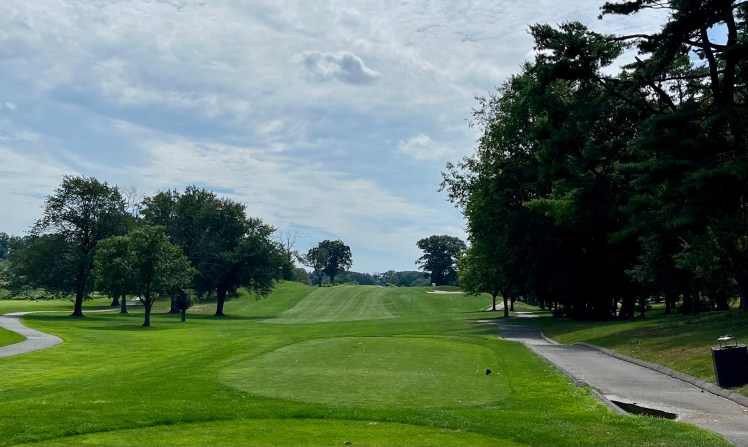
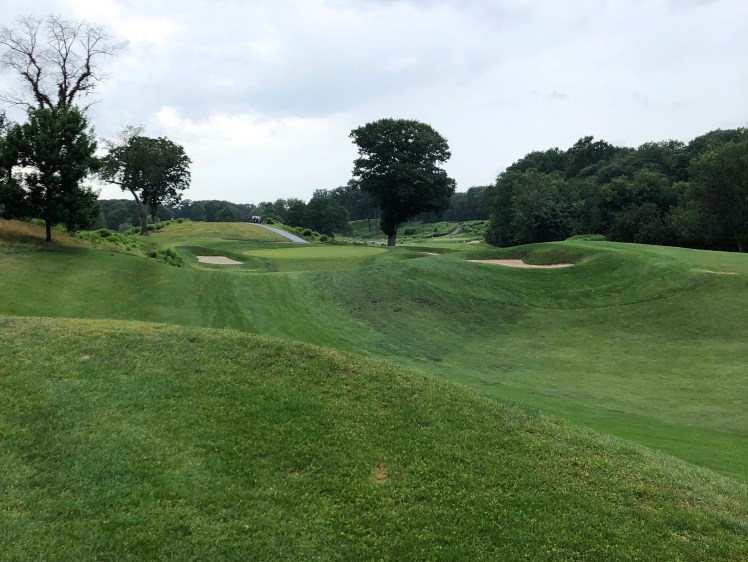
The 15th hole is the final par 3 at Galloping Hill at 183 yards. This hole features two different teebox angles but both play over a valley and creek to a narrow, right-to-left sloping green defended by bunkers on either side. It is the most difficult one-shotter on the course and the close of a very challenging stretch.

The 16th hole is a decent par 4 at 359 yards whose value is dampened by the fact that it is essentially a mirror image of the hole it runs alongside, the 7th. Like the 7th, this teeshot plays over a creek to a fairway lined by sporadic trees down the right but this time contains a hazard down the left. This approach is a bit softer to a back-to-front sloped green defended by a bunker short.

There are only five non-par fours at Galloping Hill and I think they missed an opportunity for a good par 3 with the 17th. Instead, they built a 280 yard par 4 that is readily reachable and feels somewhat cheap squished in at the end of your round. I’m not really sure what the options are on this straightaway hole featuring an 170 yard carry to reach the fairway and a giant midline bunker at 230 yards. This green slopes severely back left-to-front right and is defended by bunkers on either side.
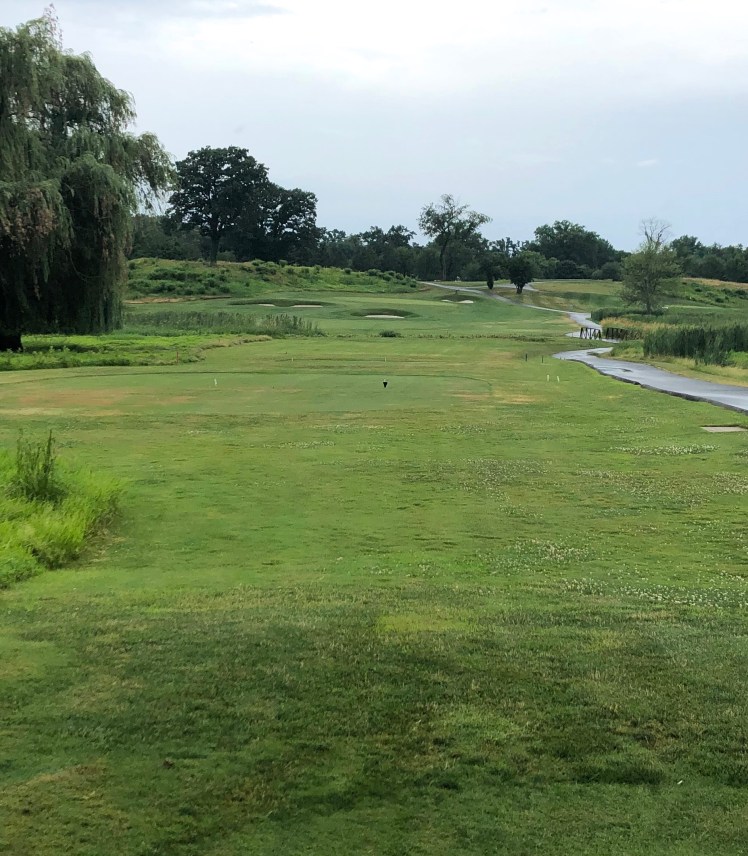
Galloping Hill’s closing hole is a 492 yard dogleg right par 5 playing back up the hill. This is one of the more intimidating teeshots on the course with an immediate 190 yard forced carry over water to a fairway that begins to slide right soon after. Once you reach a trio of bunkers down the left about 130 yards from the green, this fairway narrows considerably and runs quite uphill, making the lay-up more complicated. This green is defended by bunkers on either side and plays subtly back-to-front.

General Comments: In addition to the championship course, Galloping Hill features a 9-hole short course and extensive practice facilities which are some of the best in New Jersey. The course is a difficult walk and pace of play has been average when I’ve played here.
Verdict: While not perfect, Galloping Hill is one of the better public layouts and values in the greater NYC area and is worth a play with its hilly topography and strong challenge for better golfers.
 Worldgolfer's Golf Course Reviews