Designer: Robert Trent Jones Sr. (1956)
Location: Lido Beach, New York
History: Located down the street and inspired by C.B. Macdonald’s extinct Lido Golf Club, the current Lido was built in 1956 by Robert Trent Jones Sr. The course was private for many years before being sold to the town of Hempstead.
Conditions: 5/10, The conditioning at Lido is fairly average with burnt out fairways and true yet very slow greens.
Value: 9/10, Lido offers good value for the area at $47 to walk weekend mornings and even more discounts for twilight and locals.
Scorecard:
Tee Par Yardage Rating Slope
Blue 72 6528 71.9 126
White 72 6162 70.4 121
Red 72 4910 68.7 118
Hole Descriptions: When C.B. Macdonald’s original Lido was unveiled in 1914, it was universally acclaimed and widely considered one of the top 3 courses in the world. Sadly, this course did not survive the war but its influence continues to live on. Most notably, a replica of the original Lido opened in 2023 at Sand Valley Resort in Wisconsin. What most people don’t know, however, is that there is another Lido Golf Club on Long Island located down the street from the original. This course was built after the war by Robert Trent Jones Sr. and also features some influence from the original.
While golfers shouldn’t expect anything close to the original in terms of quality, the current course is an interesting one and one of the better public courses in the NYC area. Built on extremely flat land on the inner side of a barrier island, this course has a linksy feel with few trees, firm conditions, and wind often playing a factor. Thoughtful bunkering is seen throughout and the stretch of holes surrounding water from 13-17 is as tough and memorable as any in the area. Pace of play, lackluster conditioning, and a relatively simplistic design hold this course back, but I would recommend it if in the area.
Lido’s opening hole is a short 470 yard dogleg right par 5 that is probably the easiest hole on the course and deserving of its 18th handicap. Playing dead flat and wide open, this hole turns right around 265 yards with bunkers on either side at this point. From here, the fairway continues to a tricky, elevated green that features a right plateau. This hole should be reachable in regulation for most golfers and is a gentle start.
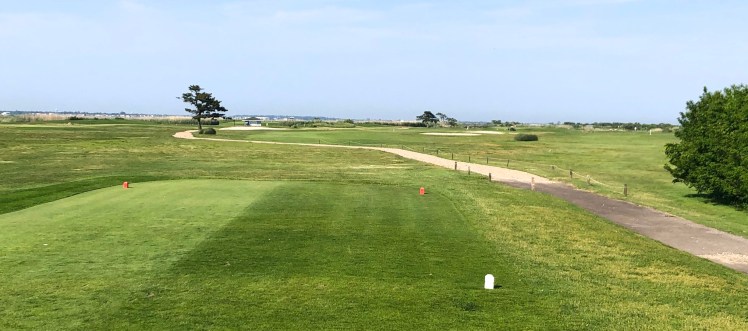
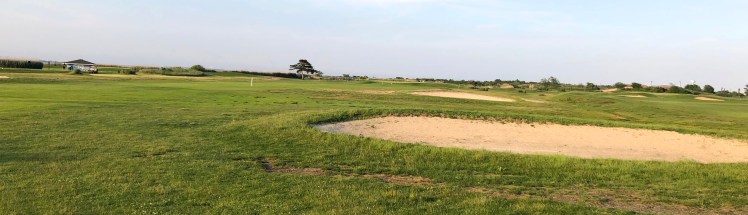
The 2nd hole is short dogleg left par 4 at 347 yards that introduces you to the swampy marshland that is more prevalent on the back side. This hole features a tight fairway that turns left around a pond at about 180 yards. Longer hitters can cut the corner over this hazard but the safe play is a lay-up down the right. This leaves a mid-iron into a shallow green that falls off on the left and is defended by a bunker short.
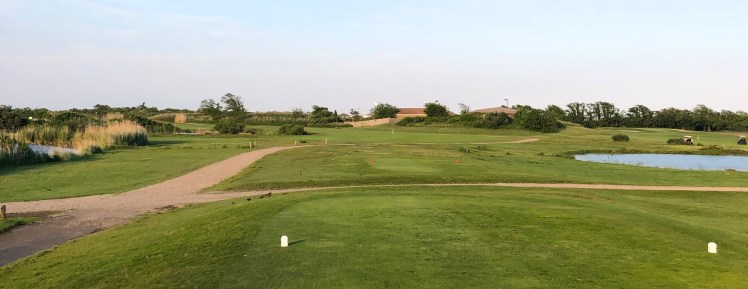
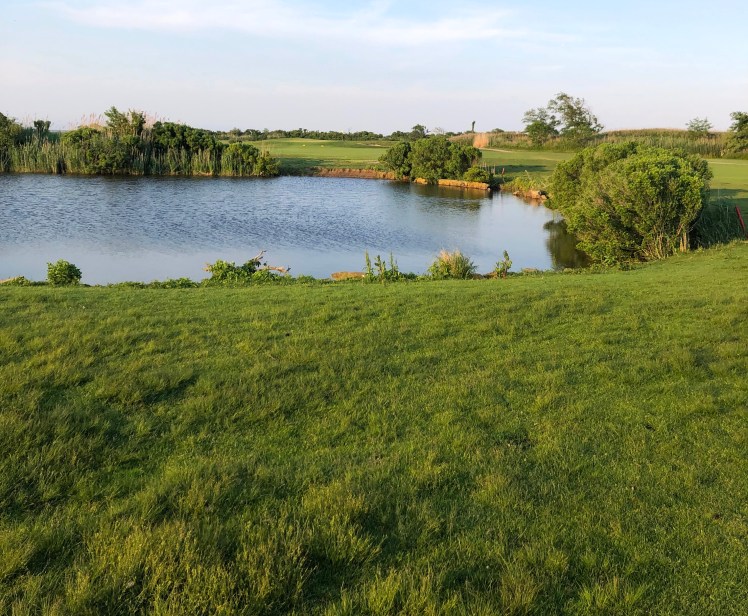
The 3rd hole is another shorter par 4 at 358 yards but demands accuracy with an immediate 150 yard carry over water to a tight fairway lined by water down either side and a bunker left at 200 yards. Once safely in the fairway, this hole is rather straightforward with a slight back-to-front sloped green lined by bunkers short and left.
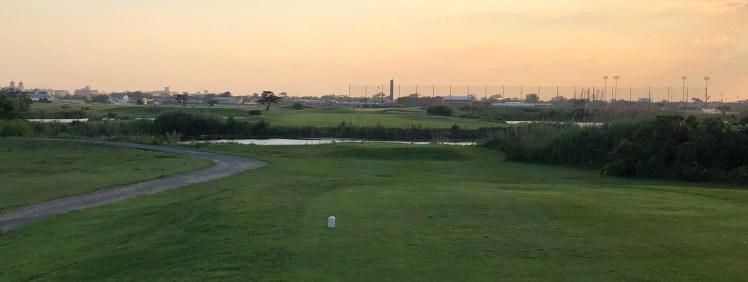
The 4th hole is a 356 yard dogleg right par 4 that plays similarly to the 1st with a flat, open layout and fairway lined by numerous bunkers at the dogleg around 230 yards. This green is well-protected with bunkers short, left, and right and water long. It is arguably the firmest on the course and slopes less back-to-front than it appears.
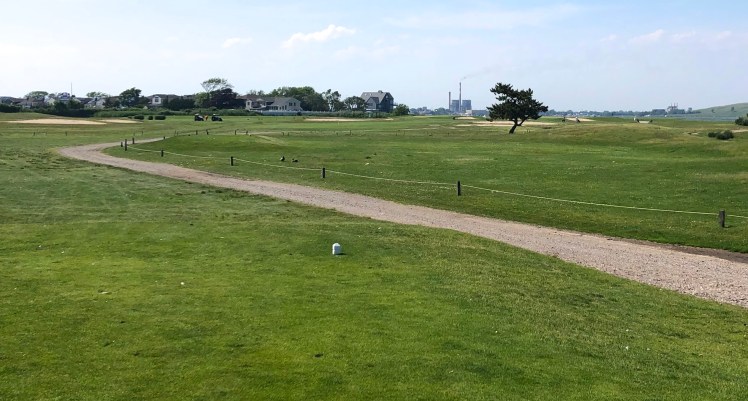
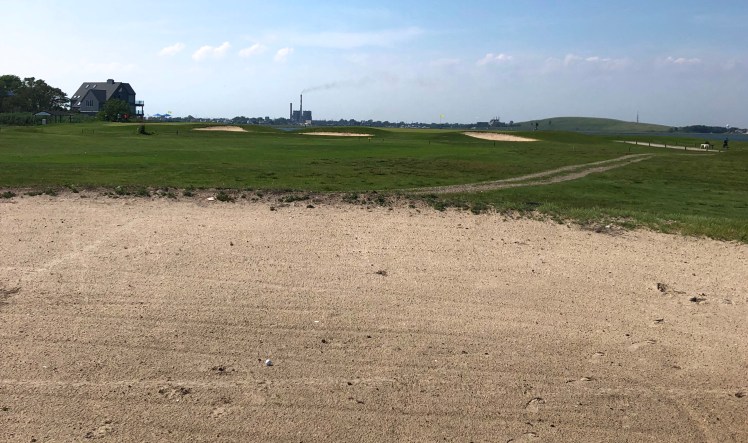
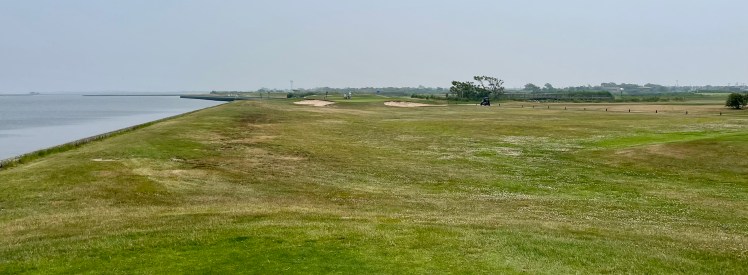
At 152 yards, the 5th is the first par 3 at Lido and the shortest hole on the course. On the surface, this is a very simplistic hole with a somewhat flat green buttressed by bunkers short and water down the left the whole way. However, the setting playing along the channel makes this one of the more memorable and windy holes here.
Playing away from the water, the 6th hole is a 365 yard dogleg left par 4 that’s likely the most difficult hole on a fairly easy front 9. This hole plays over water on the teeshot but the bigger danger is another hazard that hugs the left side of the fairway for much of the landing area and begins at 190 yards. Needless to say, it is better to miss right here, but doing so leaves a longer approach into an elevated, back-to-front sloped green lined by a bunker short left.

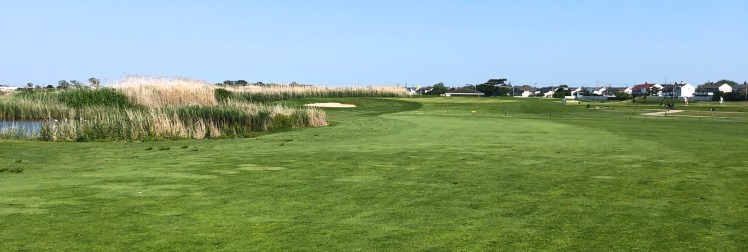
The 7th hole is the longest par 3 at Lido at 194 yards but plays essentially in an open field. A good strike is required to hit this large, wide green defended by bunkers short and right.
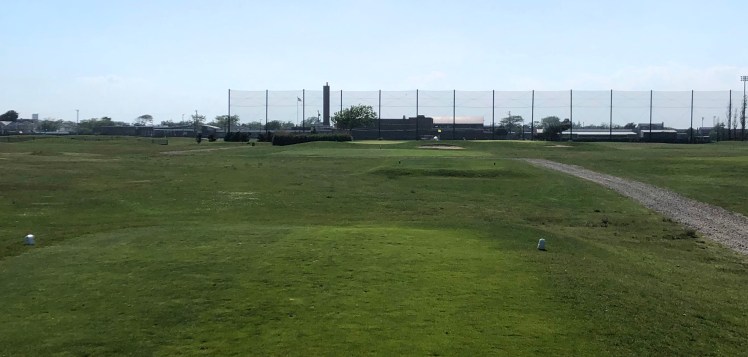
The 8th hole is a straightaway 390 yard par 4 featuring numerous bunkers down the right between 175 and 280 yards and mounds of rough on the left. This green is relatively flat but sits right at the water’s edge with bunkers on either side.
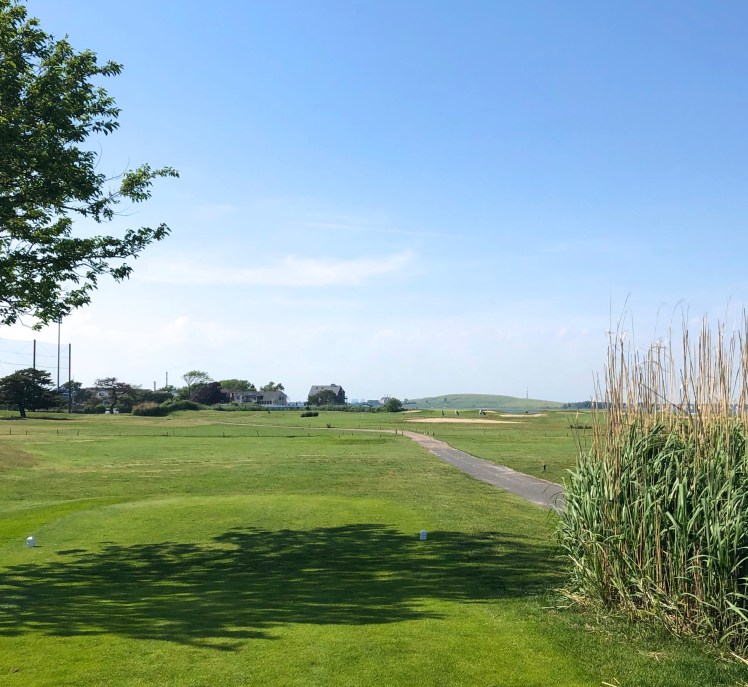
At 575 yards, the 9th hole is a monster par 5 and the longest at Lido. This hole plays straightaway and very tight with OB right and an eyesore of a net running down the right the entire way. This is a three-shot hole for almost everybody and you’ll need to be wary of a small creek running diagonally across this fairway about 160 yards short of the green. This green is well-defended by bunkers on either side and slopes steadily back-to-front. Pars are well-earned here but overall I am not a fan of this hole.
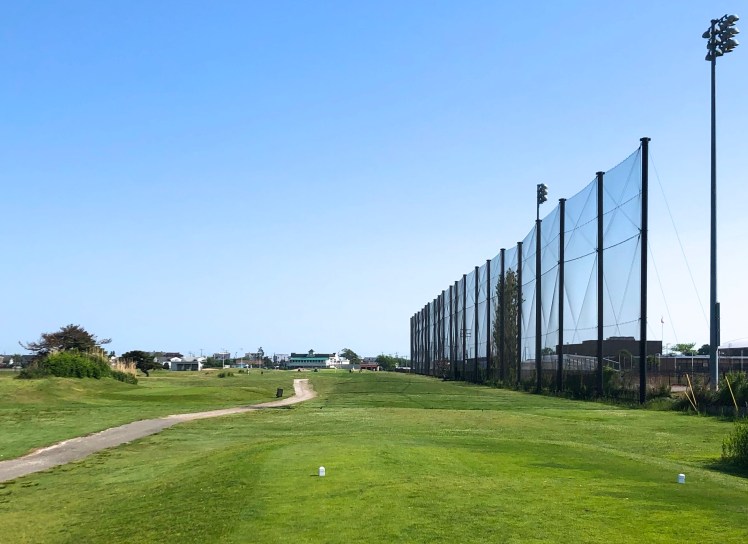
The 10th hole is a 396 yard slight dogleg right par 4 playing along the edge of the property. OB lines the far right but there’s lots of room to miss down the left with the 1st hole’s fairway and several bunkers. This approach is a pretty one to an elevated, narrow, back-to-front sloped green lined by bunkers on either side.
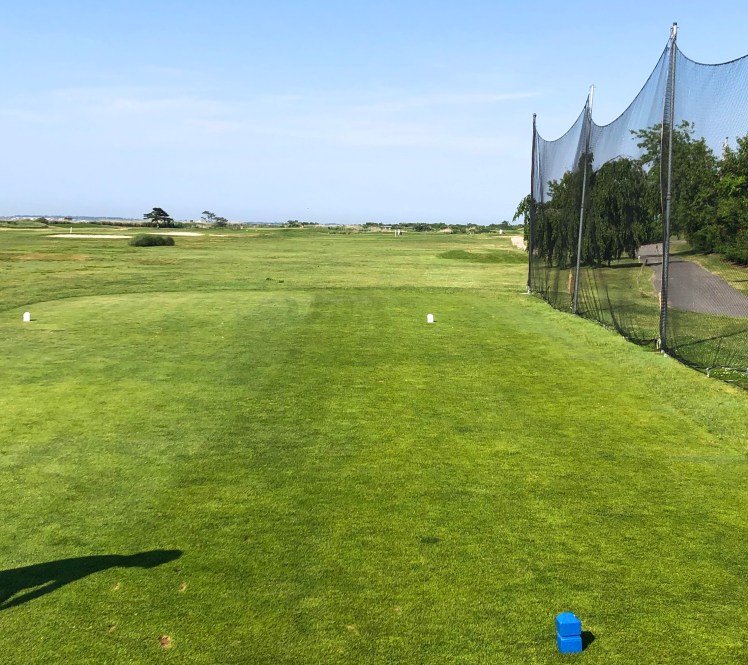
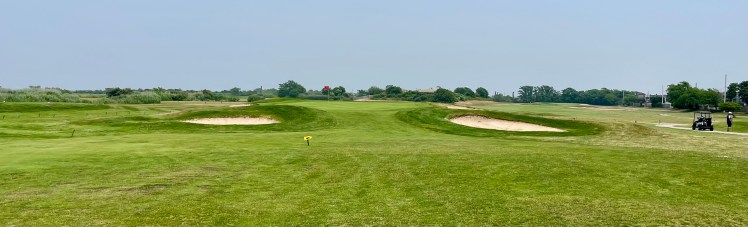
The 11th hole continues in this direction as a 385 yard straightaway par 4. This is a nice hole featuring a pair of crossbunkers down the right beginning at 215 yards. Another elevated, back-to-front sloped green defended by bunkers on either side awaits.
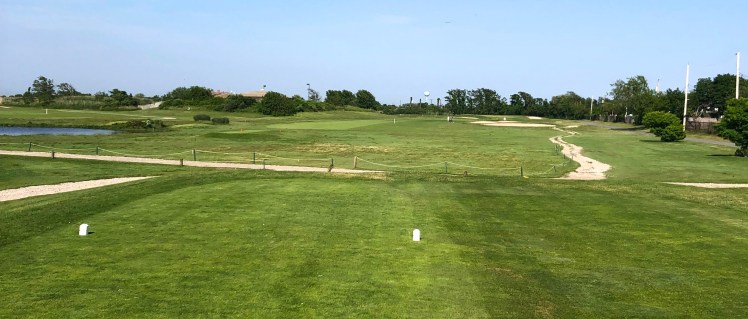
The 12th hole turns back towards the water as a 522 yard straightaway par 5. OB runs down the right side the entire way but the hole is fairly open down the left and features only one fairway bunker down the right at 260 yards. This green is lined by bunkers on either side and features several mounds.
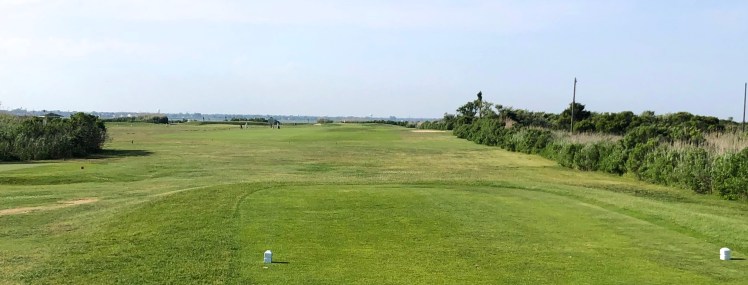
The first twelve holes at Lido are somewhat simplistic and easy but the tenor of the course changes beginning with the 413 yard par 4 13th. From this point on, there’s no real easy hole as the closing stretch plays long and surrounds hazards. The 13th is the longest par 4 on the course and features an intimidating teeshot with water down the right the entire way and water on the left for the first 175 yards. With the wind ripping, it can be very difficult to find this fairway. This green sits right on the water and slopes back-to-front with bunkers on either side.

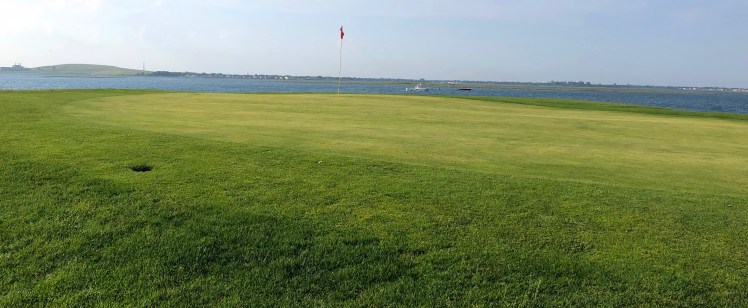
While not as long as the previous hole, the 14th is a tricky dogleg left par 4 at 376 yards. This hole features a tight fairway lined by water down the right the entire way and another hazard beginning on the left at 250 yards. Golfers will need to choose their distance and line carefully here, as bailouts too far left lead to blind or blocked approaches to a green that juts out over the water down the left. This green is elevated, slopes right-to-left with two tiers, and is defended by a bunker short right. This is one of the better holes on the course and one where par usually wins.
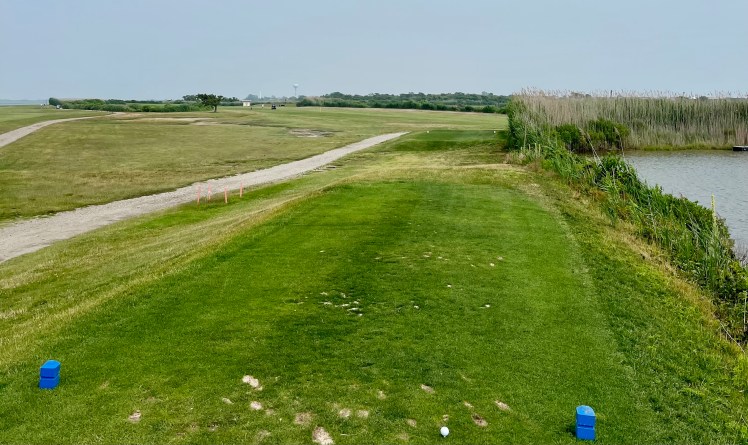
The 15th hole is an 168 yard par 3 featuring water down the right the entire way and a bunker short of a small green with a central hump. This hole usually plays into the wind and much tougher than it appears.
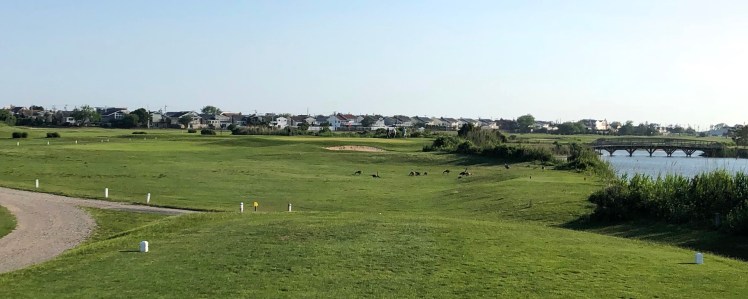
Without a doubt the most interesting and memorable hole at Lido, the 16th is a fascinating 460 yard par 5 that plays as the number 1 handicap. This is a replica of Macdonald’s famous Channel hole on the original Lido and can be quite confusing for first time golfers. This teeshot plays over a large water hazard to a bizarrely-shaped wide fairway. The safe play is down the left, as a narrow slab of fairway stretches up to about 260 yards down this side. The more aggressive play is down the right, which requires a longer 200+ yard carry to an even smaller slab of fairway. While most golfers should aim down the left, there is an advantage down the right as it offers a more direct and shorter line to the green. No matter which option you choose, you’ll need another carry over water on your second shot to a narrow slab of fairway leading to the green. This green slopes steadily back-to-front and is defended by water and three bunkers long. This is a fun and strategic hole but one I’m not entirely sure I love.
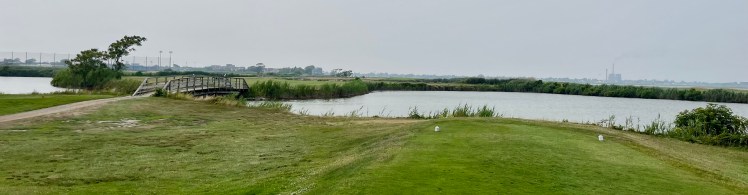
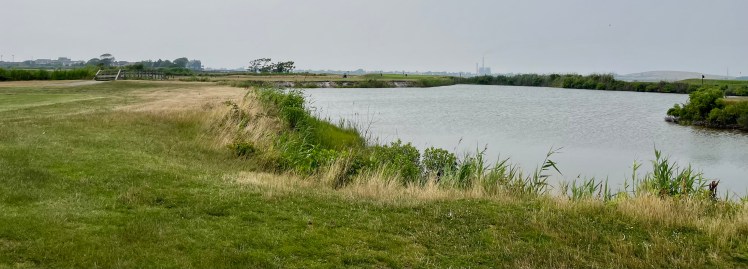
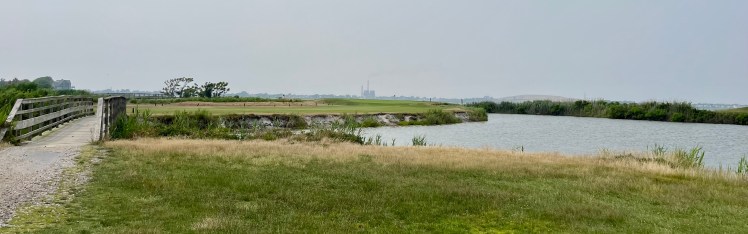
The 17th hole is another memorable and difficult one as an 193 yard par 3. Playing over water the entire way to a peninsular green that slopes back-to-front, this is an intimidating hole but even more so when you experience it in the 1-2 club normal crosswind. My playing partner told me a story of a member who once dumped 23 balls into this water before finally reaching the green.
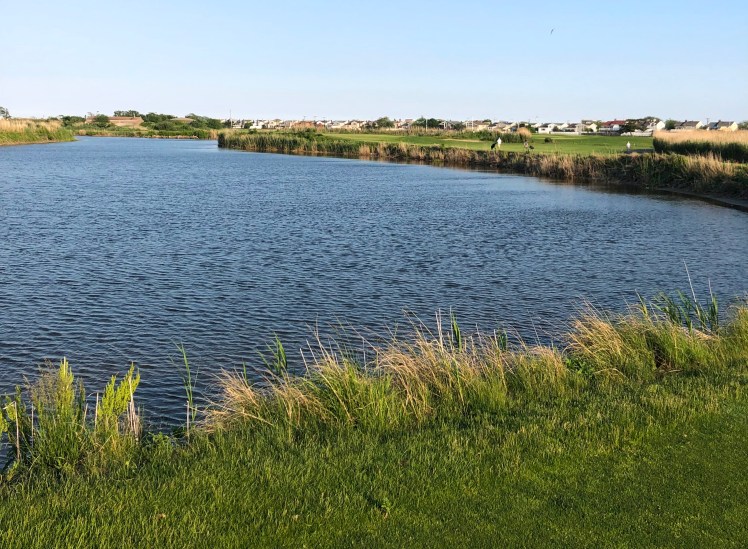
Lido’s closing hole turns back towards the clubhouse and plays more similarly to the front side with flat, unmemorable terrain. Despite its benign appearance, this 408 yard straightaway par 4 usually plays into the wind and long with crossbunkers lining either side at 230 yards. This green also runs back-to-front and is defended by bunkers short on either side.
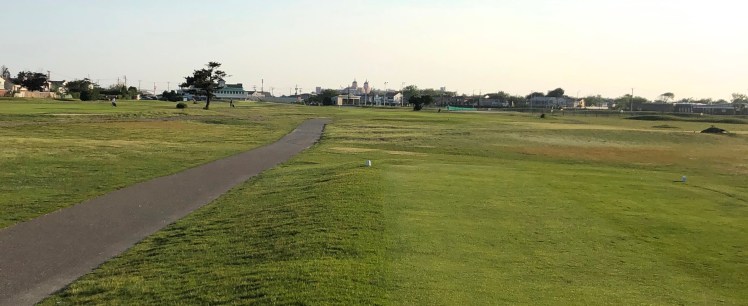
General Comments: While once a private club, Lido’s current clubhouse is a glorified trailer. Practice facilities include a range along the 9th hole and small practice green. This course is usually very busy, so don’t expect a quick round here.
Verdict: A fascinating linksy design on Long Island’s south shore, Lido Golf Club is undoubtedly the worst golf course ever named “Lido” but has some tough competition. It is one of the better public courses in the greater NYC area and is worth a play with its unique setting and difficult closing stretch.
 Worldgolfer's Golf Course Reviews
One thought on “Review: Lido Golf Club”