Designer: Lawrence Van Etten (1901, 9 holes), John Van Kleek (1935, Redesign)
Location: Bronx, New York
History: With golf blossoming at nearby Van Cortlandt Park, The New York Athletic Club turned to nearby Pelham Bay Park and architect Lawrence Van Etten. Van Etten designed a 9-hole course which opened in 1901 and likely grew to 18 holes soon after. In 1935, President Roosevelt’s WPA program worked on Pelham Bay and built another 18-hole municipal course, Split Rock, next door. John Van Kleek did both courses and both are operated by New York City currently.
Conditions: 6/10, Like most NYC munis, Pelham is in decent shape but a bit rough around the edges. The greens roll true but are on the slower side.
Value: 6/10, Pelham and Split Rock are the same price and offer solid value for public golfers between $37 and $57 to play with further discounts for twilight, seniors, and juniors.
Scorecard:
Tee Par Yardage Rating Slope
Blue 71 6480 70.7 124
White 71 6216 69.5 120
Gray 73 5418 70.7 123
Hole Descriptions: New York City’s public golf scene leaves much to be desired compared to its elite private options, but that’s not to say there isn’t worthwhile architecture to be found. Bronx’s Split Rock and Pelham Bay are two of the best municipal courses in the City and are fairly well-preserved from John Van Kleek’s design almost a century ago. While Split Rock is tight, lengthy, and muscular, Pelham Bay is a more playable, fun option for the masses. While fairly open tee-to-green, the defining features of this course are wonderful green complexes and bunkering. The greens, in particular, are quite varied and undulating and are the best designs in New York City in my opinion. Pace of play is notoriously horrendous here as is the golf etiquette of your fellow golfers, but Pelham is worth a visit at least once to see these greens.
Pelham Bay opens with a 409 yard straightaway par 4. Accuracy and length are required here as OB lines the left side the entire way and sporadic trees run down the right. This green is surrounded by mounds of rough and slopes right-to-left.


The 2nd hole continues in the same direction as a tight 475 yard par 5. While reachable in two for longer hitters, golfers will want to find the fairway here with OB left the entire way and trees down the right as well. This green is two-tiered and slopes back-to-front defended by bunkers on either side.

At 190 yards, the 3rd hole is Pelham Bay’s first par 3 playing level to an interesting green defended by a bunker right. This green is basically a double plateau template with several pinnable mounds.
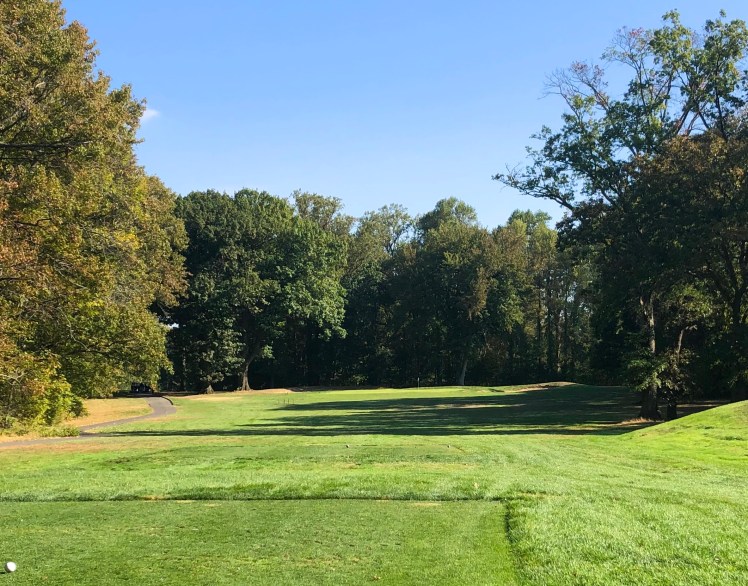
The first few holes are satisfactory yet hardly inspiring but the course picks up some steam beginning with the par 4 4th. At 373 yards, this is a sharp, tree-lined dogleg right that turns hard right around 220 yards. While I am not a huge fan of the forced lay-up and limited options off the tee here, this approach is first-rate, playing uphill to a narrow, two-tiered, severely back-to-front sloped green defended by deep bunkers on either side. The severity of this green makes it the most memorable on the course.
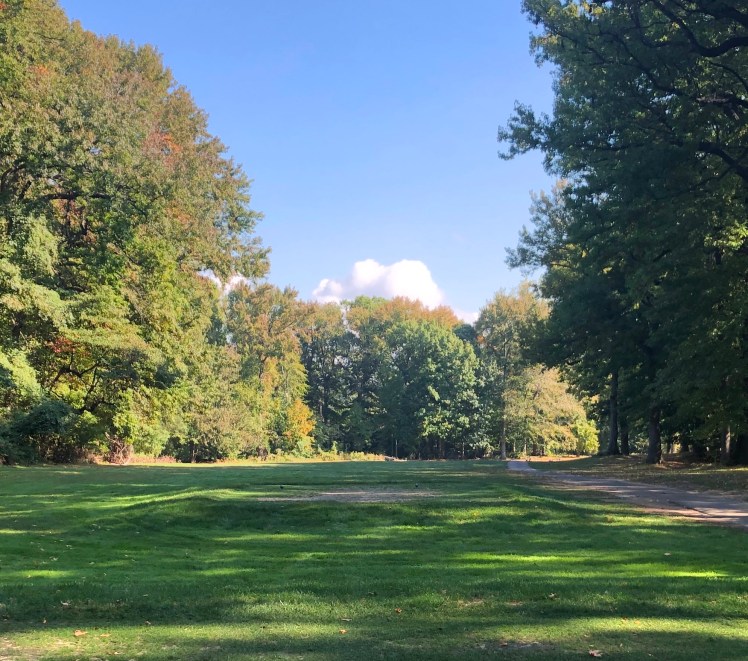
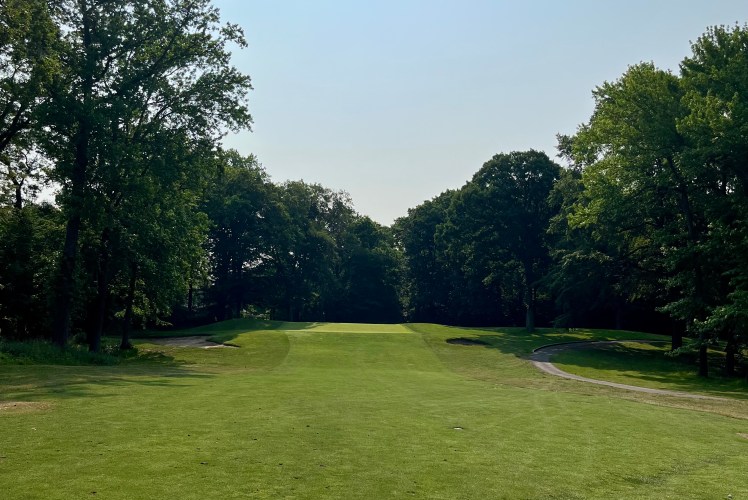

The 5th hole is another strong one as a lengthy 432 yard par 4. A dogleg left from an elevated teebox, this hole invites the golfer to cut the corner with an attractive teeshot. This approach plays uphill towards a subtle green that slopes both back-to-front and right-to-left. Par is a strong score here.


I am also fond of the 6th hole, the shortest par 4 on the course at just 290 yards. This hole is quite open and very easy but gives the golfer options from the teebox from laying up with iron to going for the green with driver. This green is small, runs back-to-front, and is defended by a bunker right and fantastic tight slope long.

The 7th hole is a 393 yard par 4 that plays as a slight dogleg left over flat terrain. Fairly open with a split fairway with 11, golfers will want to beware of a large left bunker around 250 yards that yields a difficult approach. This green is very severely tilted back-to-front with two tiers, a false front, and bunkers flanking either side.

Pelham Bay’s shortest hole is also my personal favorite in the 154 yard par 3 8th. This hole’s bunkering is simply gorgeous and is an example of how strong bunkering can really enhance flat landforms. This green is also excellent, sloping back-to-front with a difficult central ridge.


The 9th hole is another reachable par 5 at just 472 yards from the Blue Tees. This hole features a somewhat awkward teeshot to a tight fairway that bends right with trees down the right. This second shot will be blind for most and golfers must be aware of a left-sided crossbunker about 100 yards from the green. This green slopes back-to-front and is one of the most aesthetically pleasing on the course, framed by mounds and the clubhouse in the distance.

At 454 yards, the 10th hole is a long, straightaway par 4 from an elevated teebox. What you see is what you get on this hole, but the length alone will cause problems for many golfers. This green sits surrounded by trees and runs back-to-front.
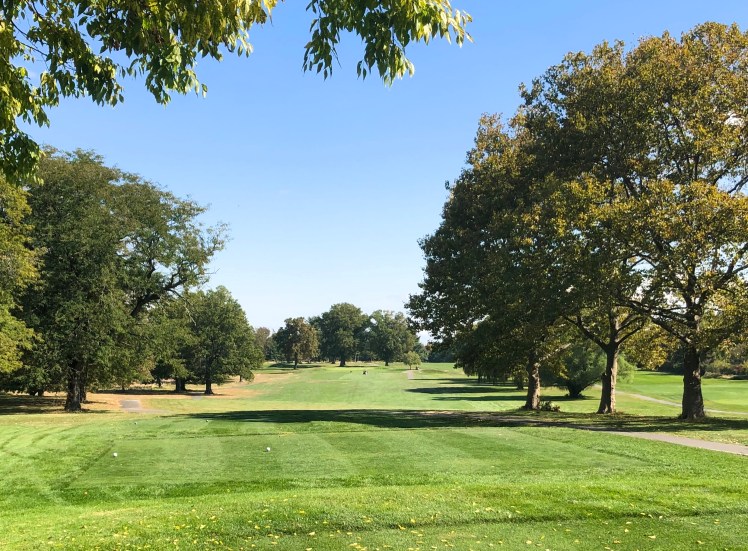
The 11th hole is a nice dogleg right 374 yard par 4 featuring a split fairway with the 7th. This fairway is generous but turns right around 200 yards so longer hitters may want to consider cutting the corner or hitting less than driver. This green features a front plateau and is defended by a large bunker left.


The 12th hole is a quality par 3 playing 156 yards with a similar green to the 4th, sloping severely back-to-front with two tiers and defended by bunkers on either side.

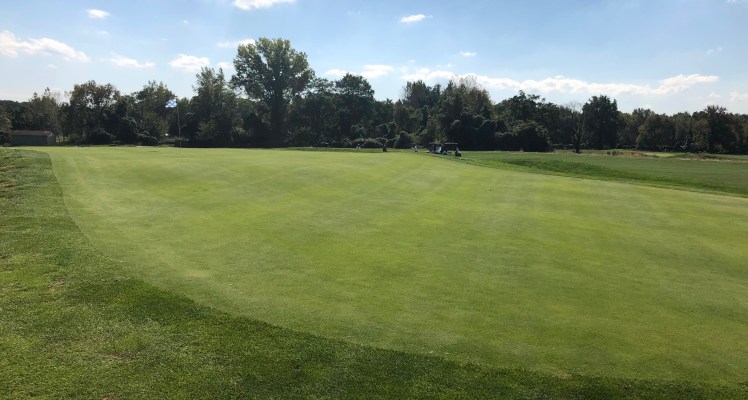
Pelham Bay diverges a bit into the forest on the next few holes which are some of the toughest on the course. First is the par 4 13th, playing 441 yards as a slight dogleg right. While this teeshot is generous, trees encroach on both side as you progress and this fairway runs out into a creek about 60 yards short of the green. Your approach here will need to carry this creek and valley to a back-to-front sloped green. Pars are strong scores here.

Pelham Bay’s longest hole, the par 5 14th is another tough one at 542 yards. This teeshot is quite tight with OB lining the left the entire way and a nearly 200 yard carry required to reach the fairway. This fairway continues to be tight and hilly and turns slightly left after the teeshot. This green slopes steadily back-to-front and is surrounded by a moat-like bunker long.

The 15th hole plays a lot more open than the previous few as a 331 yard dogleg right par 4. While a short hole, this teeshot is a bit demanding with an immediate 170 yard forced carry over water to reach this fairway. For those going for the green, this hole is well-bunkered with large bunkers down the right and left between 240 and 280 yards. This green again features two tiers and is defended by bunkers on both sides.
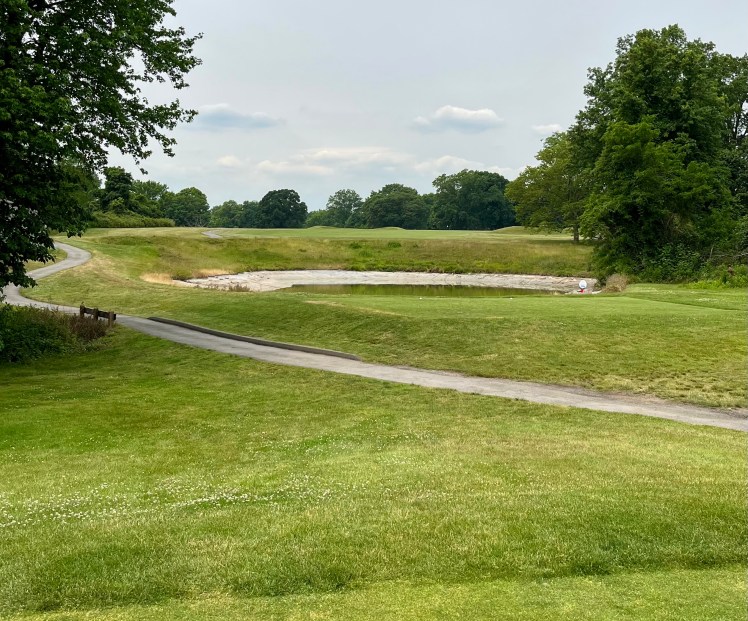
The 16th hole is the final par 3 on the course and another good one at a lengthy 217 yards. Bunkers flank well-short of the green but otherwise this green is fairly receptive and open, sloping back-to-front with a notable back center mound.

The 17th hole offers one final chance for birdie as a short 338 yard yard par 4. This teeshot is semi-blind but golfers should feel confident here, with little danger besides a left crossbunker at 255 yards. This back-to-front sloped green is angled diagonally and is defended by bunkers right and left.
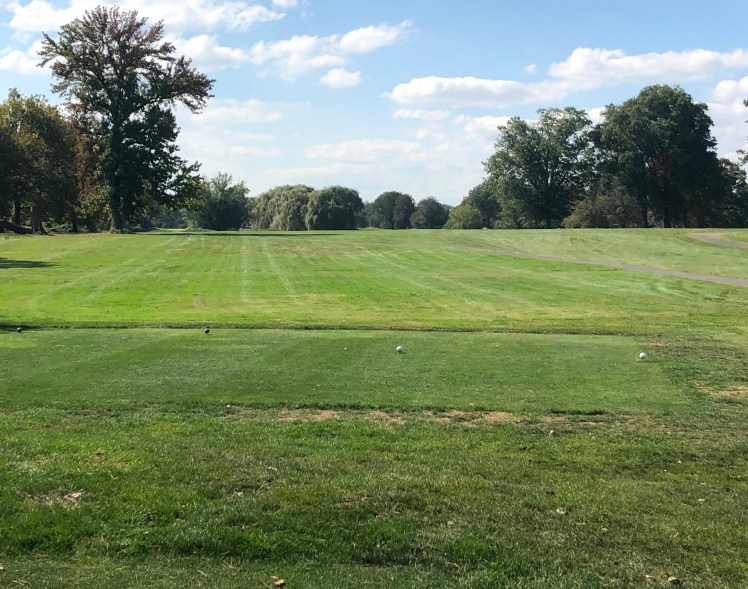

At a prodigious 439 yards, Pelham Bay closes with a very strong par 4 that is certainly one of the best holes on the course. OB runs down the left side the entire way but otherwise this teeshot is rather straight and uneventful. This approach, however, is quite good playing uphill to a perched green containing several mounds. This hole reminds me a bit of the closer at nearby Wykagyl.

General Comments: Split Rock and Pelham Bay share a beautiful Greek revival clubhouse but practice facilities are limited at the property. There is, however, a large practice green in front of the clubhouse closer to Pelham Bay. Pelham Bay and Split Rock are among the most-played courses in the country and pace of play can be absolutely brutal here.
Verdict: Architecturally, Pelham Bay is one of the most interesting and sophisticated of the NYC municipal options with its interesting greens and strategic bunkering. It is also more playable and fun than its neighbor Split Rock. However, Pelham falls into similar pitfalls as many NYC courses with very poor pace of play and suboptimal conditions. If you are interested in architecture and can look past a lengthy round, Pelham Bay is one of the better public options near the City.
 Worldgolfer's Golf Course Reviews
One thought on “Review: Pelham Bay Golf Course”